

Needs and possibilities for integrated military cooperation to protect the Neptun Deep, Han Asparuhov, and Sakarya platforms
Maritime Security Forum
Introduction
This brief analysis aims to identify and assess opportunities for military cooperation to ensure the effective protection of the platforms in question, given their strategic importance and the associated geopolitical risks.
In the current context, where maritime regions are becoming areas of increased interest for multiple actors, cooperation between states and organizations is essential for strengthening defense capabilities and rapid response to potential incidents.
An analysis of the potential for developing common mechanisms for monitoring, intervention, and information exchange, as well as ways to strengthen interoperability between participating forces, is required. In addition, it is necessary to identify priority areas for strengthening military resources and equipment, in research and development, in order to respond to operational challenges.
In this context, the importance of training forces and conducting joint exercises, as well as the continuous exchange of information, is highlighted. Consequently, a well-defined operational framework adapted to the specificities of each platform and the circumstantial environment will increase the effectiveness of responses and minimize vulnerabilities. Ultimately, this integrated and coordinated approach serves not only to protect energy and maritime infrastructure, but also to strengthen regional security and promote a climate of stability and collaboration among relevant actors.
Objectives to be protected. Arguments
Source: FSM
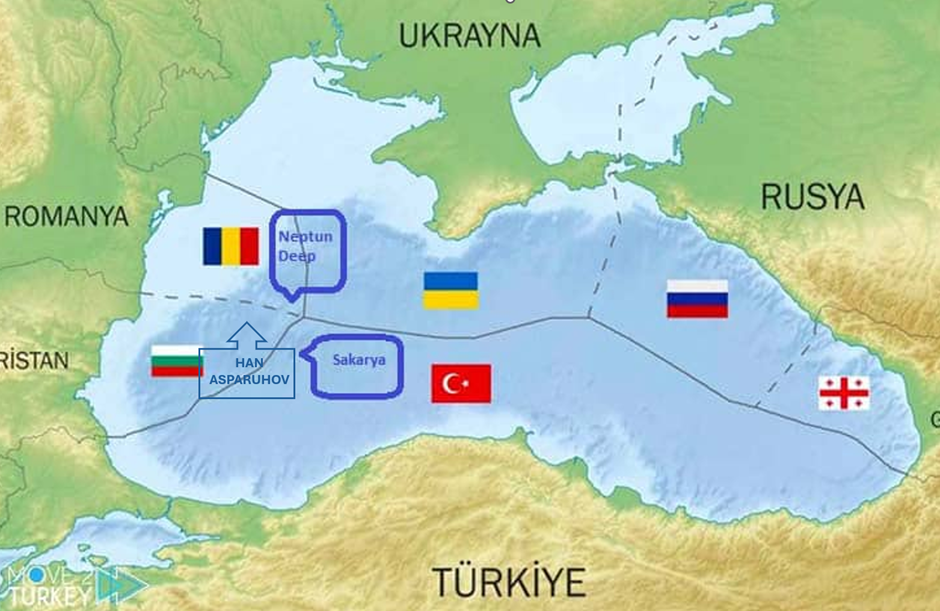
The gas extraction platforms in the Exclusive Economic Zones of Romania, Bulgaria, and Turkey are relatively close to each other and at similar distances from the coast. Of particular importance, these extraction areas, platforms, and transport pipelines are economic targets that must be protected.
The Han Asparuh offshore perimeter in the Bulgarian sector of the Black Sea, operated by TotalEnergies (57.14%) and OMV Petrom (42.86%), has an estimated annual extraction potential of 13 billion cubic meters of natural gas in two blocks. The Vinekh block, located close to Turkish waters, is estimated to produce around 5 billion cubic meters per year between 2030 and 2040, followed by 3 billion cubic meters per year until 2050.
The Krum block, in turn, has an estimated production potential of 8 billion cubic meters per year between 2031 and 2044 and 4 billion cubic meters per year thereafter until 2050. In total, the Bulgarian offshore deposit is expected to produce 221 billion cubic meters of natural gas, of which OMV Petrom would receive 42.86%, or 94.7 billion cubic meters.
The Neptun Deep offshore block in the Black Sea is estimated to produce a total of 100 billion cubic meters of gas, divided equally between OMV Petrom and Romgaz, each with a 50% stake in the concession, with OMV Petrom as the operator. Last year, OMV Petrom transferred control of exploration in Bulgaria from Vienna to Bucharest.
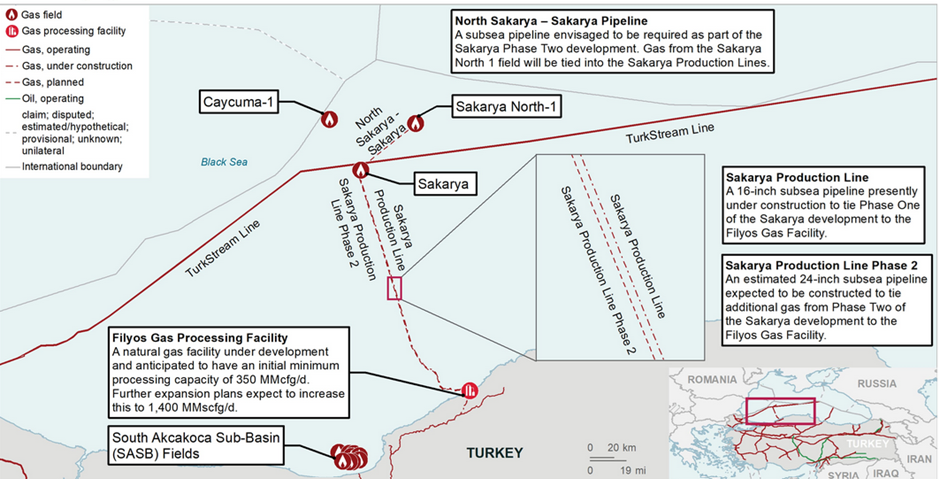
The Sakarya field is the largest natural gas field discovered in the Black Sea by Turkey and represents a significant strategic energy discovery for the country.
Source: S&P GLOBAL
The Sakarya gas field, located in the Black Sea 165–170 km off the coast of Turkey, was discovered in August 2020 following drilling at the Tuna-1 well. The area reaches depths of up to 2,200 meters. Production began in 2023 and is planned in several phases. The main reserves are estimated at approximately 405 billion cubic meters, but other estimates indicate potentially higher values due to additional exploration. The extracted gas is transported via subsea pipeline to the Filyos station. Current daily production reaches 9.5 million m³, with plans for growth. Once fully developed, Sakarya could cover up to 30% of Turkey’s annual consumption, significantly reducing its dependence on imports.
The Sakarya gas field in the Black Sea benefits from a layered protection system that combines naval and air forces, drones, underwater surveillance, and advanced command and control capabilities. Turkey treats this asset as a strategic national asset, and its defense is built on the principle of permanent surveillance and proactive deterrence.
At the naval level, protection is provided by the continuous deployment of frigates and corvettes from the national MILGEM program, supplemented by fast patrol boats for operational interventions. Turkish submarines play an essential role in strategic deterrence and discreet surveillance of the area, contributing to the control of the underwater environment. The air component includes Bayraktar TB2 and Akıncı drones, used for permanent monitoring, as well as F-16 aircraft maintained on alert, with radar support. If necessary, regional surveillance can be extended through NATO AWACS capabilities.
Air defense is organized both at the coastal level and for strategic targets associated with the deposit. Turkey uses HİSAR-A and HİSAR-O/O+ systems for short and medium ranges, complemented by the KORKUT system for close defense. These are integrated with the national radar network and, at the strategic level, with the SİPER 1, 2, and 3 systems, part of the integrated “Steel Dome” concept, which provides a regional air defense umbrella without being dedicated exclusively to the Sakarya field.
Particular emphasis is placed on the protection of critical infrastructure, especially the approximately 170 km submarine pipeline connecting the field to the Filyos terminal. This is constantly monitored by sonar systems and specialized sensors to detect sabotage attempts, and the areas around the platforms are designated as restricted maritime spaces. At the same time, Turkey uses advanced electronic warfare and C4ISR capabilities developed by ASELSAN for jamming, secure communications, and the integration of operational data at the naval and air levels.
In terms of risk scenarios in the Black Sea, sabotage of platforms or damage to submarine pipelines is a realistic threat, including in the form of “gray” operations without official acknowledgment. For Sakarya, the risk is assessed as medium due to its distance from the shore, extensive infrastructure, and major strategic importance for Turkey. This risk is countered by constant naval patrols, sonar surveillance, and a high level of militarized security. By comparison, for Neptun Deep, the risk is considered medium to high in perspective, given its proximity to tense areas, the relatively new nature of the infrastructure, and its regional strategic value for the European Union. Defense is based on the Romanian Navy and NATO support, with a greater emphasis on allied deterrence than on exclusive national control.
Attacks with aerial or naval drones are another relevant scenario. In the case of Sakarya, the risk is low to medium, as Turkey is a regional leader in the field of drones and has real operational experience in combating this type of threat. Defense is based on the use of its own drones for patrol and interception, national anti-aircraft systems, and electronic warfare capabilities. For Neptune Deep, the risk is assessed as medium, in the context of the proliferation of drones as a “poor man’s weapon” and recent precedents in the Black Sea, with defense provided by integration into NATO systems, radar and AWACS capabilities, as well as air defense systems under development or expansion.
In terms of naval threats, including the presence of hostile military vessels or civilian vessels with a hybrid role, the risk to Sakarya is considered low. This is because Turkey has the strongest fleet in the Black Sea, exercises strict control over maritime areas, and has rapid response capabilities. For Neptune Deep, the risk is higher, given its smaller national fleet and the need for allied coordination, although the political and military protection provided by NATO remains a major deterrent.
The fundamental difference between the two cases lies in the security model adopted: Turkey exercises direct and integrated military control over the Sakarya field, based on national capabilities, while Romania relies primarily on NATO collective security for the protection of Neptun Deep, compensating for national limitations through strategic alliances.
Comparative table – risk scenarios (Black Sea)
| Scenariu de risc | 🇷🇴 Neptun Deep | 🇹🇷 Sakarya | 🇧🇬 Han Asparuhov |
| Sabotaj conducte/platforme | ⚠️ Mediu–Ridicat (în faza inițială) | ⚠️ Mediu | ⚠️ Mediu |
| Atacuri cu drone aeriene | ⚠️ Mediu | 🟢 Scăzut–Mediu | ⚠️ Mediu |
| Drone navale / semi-submersibile | ⚠️ Mediu | 🟢 Scăzut | ⚠️ Mediu |
| Nave militare | ⚠️ Mediu | 🟢 Scăzut | ⚠️ Mediu–Ridicat |
| Război electronic / interferențe GPS | ⚠️ Mediu | ⚠️ Mediu | ⚠️ Mediu |
| Atac cibernetic infrastructură | ⚠️ Mediu | ⚠️ Mediu | ⚠️ Mediu |
| Amenințări hibride (nave civile, cercetare, proteste) | ⚠️ Mediu | 🟢 Scăzut | ⚠️ Mediu |
| Escaladare militară regională | ⚠️ Mediu (dar NATO descurajează) | 🟢 Scăzut | ⚠️ Mediu–Ridicat |
Strategic and operational context
The strategic and operational context for protecting the Neptun Deep, Han Asparuhov, and Sakarya platforms must reflect the complex security dynamics in the Black Sea region, characterized by the active presence of regional and international actors. These energy platforms, vital to the economies involved, are exposed to multiple risks, including aggression from state or non-state actors, incidents caused by disinformation, or even terrorist actions. In this context, the development of effective modes of military cooperation becomes essential to ensure a rapid and coordinated response to these threats.
Operationally, the presence of regional alliances and bilateral partnerships must ensure a flexible and adaptable framework for joint action. It is necessary to create solid structures for information exchange and interoperability between the forces involved, as well as to develop joint incident response capabilities. Such an approach requires not only military preparedness, but also detailed mission planning and the establishment of clear risk management processes.
Regulatory provisions and the existing legal framework, which may influence the expansion of cooperation and the implementation of operational measures, must also be taken into account. In this context, establishing clear protocols and complying with international law become fundamental to legitimacy and efficiency. In line with this approach, building strong relationships and understanding between the actors involved will form an essential pillar for ensuring the effective protection of these strategic platforms, mitigating vulnerability and strengthening regional stability.
Regulatory anchors and the security framework
From a security framework perspective, military cooperation to protect the Neptun Deep, Han Asparuhov, and Sakarya platforms must be supported by a clear set of international rules and principles, such as those stipulated in regional and global treaties and agreements. The active participation of the states involved in these agreements provides a solid legal foundation for collaborative initiatives, promoting transparency and accountability in the management of risks and potential conflicts.
National legislation must be harmonized with international norms to enable coordinated and effective action to protect platforms and pipelines, as well as navigation in areas of interest. In this regard, cooperation must be based on the principles of respect for state sovereignty, territorial integrity, and international maritime law, in particular the UN Convention on the Law of the Sea. This guarantees freedom of navigation and resource exploitation, as well as the responsibility of each state to maintain security in its own exclusive economic zones.
Strategic and security frameworks must also incorporate preventive measures, such as establishing mechanisms for information exchange and real-time monitoring of the situation. Participation in stability missions and the development of joint intervention capabilities are essential to ensure a rapid and coordinated response to incidents.
In conclusion, the security framework must create a stable, flexible, and adaptable legal and operational environment in which all parties involved can work together effectively to protect strategic platforms and maintain regional and international stability. This will lay a solid foundation for the further development of military cooperation and for managing emerging challenges.
Options for military cooperation
Military cooperation options for protecting the Neptun Deep, Han Asparuhov, and Sakarya platforms are seen as essential elements for ensuring security and stability in the region. First, the development of joint surveillance and patrol capabilities allows for more effective monitoring of the area of interest, facilitating the early detection of any threats or incidents. In this regard, the formation of a force structure and joint military exercises play a crucial role, strengthening the interoperability and operational readiness of the forces involved.
Cooperation in the field of incident response and risk management also allows for a rapid and coordinated response to possible attacks or crisis situations, reducing the vulnerability of strategic platforms. To ensure secure information exchange, advanced communications security solutions can be adopted, eliminating the risks of interception and manipulation of critical data.
Another important aspect is the joint training of specialized personnel and the exchange of experience, so as to create a force that is flexible and adaptable to the dynamic challenges of the regional environment. In addition, accelerating cooperation in the field of military capability development contributes to the creation of advanced equipment and technologies that are compatible between different actors and suitable for the protection of offshore platforms.
However, the implementation of these options requires very careful coordination, assuming a common vision of the objectives and the means of achieving them. Ultimately, successful cooperation will support not only the defense of platforms, but also the maintenance of regional stability and security, strengthening bilateral and multilateral relations within existing security structures.
Capability development cooperation
In order to protect the Neptun Deep, Han Asparuhov, and Sakarya platforms, the development of joint military capabilities is a key priority. In this regard, capability development cooperation includes initiatives to modernize and ensure the interoperability of military equipment and systems used in protection and security operations in the region. This involves investing in advanced technologies, such as early warning systems, radars, missile defense, anti-submarine warfare, and electronic warfare capabilities, tailored to the specificities of offshore operations.
Strengthening cooperation also involves establishing integrated intelligence networks and real-time data exchange, facilitating coordinated responses to incidents or threats. The integration of military platforms and units from participating states is crucial to increasing the effectiveness of critical infrastructure protection operations. In addition, there are initiatives to develop early warning and naval traffic control systems to prevent and manage the risks of sabotage or other hostile acts.
The establishment of joint research and technological innovation programs in the field of maritime security allows for a coordinated approach to vulnerabilities and the improvement of operating doctrine. In this regard, collaboration in research and development ensures the transfer of know-how and the creation of technical solutions adapted to the specific environment of offshore platforms.
In conclusion, strengthening the partnership in the field of capability development not only increases the level of security in the region, but also strengthens the human, technical, and procedural capacity of all actors involved for the effective and sustainable protection of critical maritime infrastructure.
Formation of a joint force and joint exercises
Joint training and exercises are essential elements for strengthening interoperability and effectiveness in managing the risks associated with the Neptun Deep, Han Asparuhov, and Sakarya platforms. By participating in coordinated military activities, the forces involved can develop and test interoperable procedures that can be adapted to various operational and emergency scenarios. These exercises can simulate crisis situations, such as accidental incidents, cyber attacks, or technical emergencies, facilitating rapid and well-coordinated responses between partners.
Joint exercises also allow for the identification of potential vulnerabilities in planning, communication, and technology, as well as the adjustment of strategies and equipment in line with evolving threats. Participants can develop coordination skills in the field, practice communication in secure environments, and validate intervention procedures, thereby reducing response times in real-life situations. At the operational level, these activities contribute to increasing mutual trust, promoting effective collaboration in protection or intervention missions.
Joint training and exercises also stimulate the exchange of experience and best practices between states, strengthening multinational cooperation in the field of maritime and energy security. Through continued involvement in such activities, common standards can be developed and resources and technologies can be integrated more effectively, ensuring a coherent and rapid response to any incidents. Thus, strengthening these training and exercise programs is a fundamental pillar for increasing operational capabilities and strengthening solidarity in the face of emerging challenges in the region.
Incident response and risk management
In managing incidents related to the Neptun Deep, Han Asparuhov, and Sakarya platforms, cooperation between the actors involved must be structured and proactive. It is essential to establish clear communication and coordination mechanisms to enable rapid and effective responses in emergency situations, such as hybrid attacks, natural disasters, or attempts at unauthorized intervention. To this end, the creation of common response procedures, including intervention plans, simulations, and periodic exercises, contributes to increasing the level of preparedness and reducing risks. Cooperation between the armed forces, civil agencies, and infrastructure operators must also be strengthened so that each party is well prepared to manage incidents.
The implementation of integrated risk monitoring and early warning systems is a vital component in preventing and countering threats. At the same time, it is imperative to develop common response capabilities, such as special equipment, response resources, and personnel trained for crisis situations. Close cooperation within joint operational centers allows for rapid and effective coordination of actions, minimizing impact and preventing the escalation of conflicts.
Risk management must be integrated with flexible prevention, preparedness, and response policies, adapted to developments in the security environment, and supported by an appropriate legal and regulatory framework. In conclusion, strengthening an effective network for pooling resources and expertise among the parties involved contributes significantly to protecting strategic platforms, reducing vulnerabilities, and increasing the capacity to respond to incidents.
Communications and information security
Ensuring communications and information security is an essential element of military cooperation to protect the Neptun Deep, Han Asparuhov, and Sakarya platforms. In a region characterized by constant developments and potential cyber threats, facilitating secure information exchange and communication becomes a priority for preventing and managing incidents at the operational level. The implementation of standardized encryption protocols, the use of advanced technologies to secure communication channels, and the establishment of common data exchange platforms ensure the confidentiality, integrity, and availability of information.
It is also essential to create robust legal and procedural frameworks to regulate how digital environments operate in the context of multilateral cooperation. Regular training and specific exercises, combining tactical and technical aspects, help identify vulnerabilities and strengthen rapid and coordinated response capabilities in the event of cyber attacks or incidents. In addition, the development of redundancy solutions and the existence of business continuity plans can enable platforms to remain functional in crisis conditions.
Investments in technology and specialized training for cybersecurity personnel are also imperative, as these measures ensure adaptation to the rapidly evolving threat landscape and the creation of a resilient and trusted communication environment among all actors involved.
In conclusion, strengthening communications and information security must be a fundamental pillar of joint operations, promoting a high level of interoperability and mutual trust, which is essential for the success of any military cooperation initiative in the region.
Derived logistical and security considerations
The logistical and security considerations derived from military cooperation initiatives to protect the Neptun Deep, Han Asparuhov, and Sakarya platforms are essential elements in ensuring the efficiency and sustainability of these operations. Firstly, stability and interoperability between the forces involved depend largely on well-planned logistics, allowing for the rapid deployment of equipment, personnel, and critical resources to the areas of operation, as well as ensuring the necessary resources for maintenance and repairs in the field. In this regard, the creation of joint or shared logistical facilities, such as warehouses and stocks of raw materials and equipment, helps to reduce response times and increase the flexibility of operations.
Furthermore, the physical security of logistics and communications infrastructure must be a priority, with measures implemented to protect against external and internal threats, including cyber attacks. In an increasingly complex environment, continuous risk assessment is essential, including various incident scenarios and adaptive responses to mitigate vulnerabilities. Collaboration between military and civilian forces thus becomes crucial, rejecting the possibility of isolation and promoting a framework of interoperability in security operations.
At the operational level, logistics coordination must be supported by secure communication systems capable of functioning in all conditions and ensuring intact, rapid, and efficient information flows. The development of common incident management strategies and rapid response plans is imperative to reduce the impact of any crisis situation. In addition, staff training in the use of these special systems and equipment must be constantly updated to maintain a high level of preparedness and response.
Logistical resilience and information security must be considered in an integrated manner, from infrastructure to human resources, so that any vulnerabilities can be identified and addressed in a timely manner.
In conclusion, the creation of a robust logistical framework, adapted to new security challenges, is the foundation for effective and sustainable cooperation in protecting these strategic platforms.
Assessment of the impact on the regional and international environment
The assessment of the impact on the regional and international environment brings to the fore multiple aspects that must be considered in the process of implementing measures to protect the Neptun Deep, Han Asparuhov, and Sakarya platforms. From a regional perspective, any security and military cooperation activity must comply with marine environmental protection standards, preventing any spills of pollutants or other incidents that may affect sensitive ecosystems. At the same time, the potential risks associated with military operations, such as incidents targeting platforms, require a rigorous assessment of the effects on marine biodiversity, as well as on the natural and economic resources in the respective areas.
From an international perspective, interventions must be aligned with universal environmental agreements and conventions, as well as with the specific regulations of international organizations such as the International Union for Conservation of Nature (IUCN) or the Convention on Biological Diversity. It is essential that any cooperation promotes transparency and accountability, avoiding geopolitical tensions or cross-border incidents that may amplify negative environmental impacts. Particular attention must also be paid to legal responsibilities related to risk management and access to information, which contributes to strengthening a stable and sustainable cooperation framework.
At the same time, the impact assessment must take into account the regional geopolitical and security context, assessing the potential for conflict escalation and its influence on the environment. In this regard, the proposed measures must be flexible and adaptable in order to minimize any adverse effects on the environment and contribute to maintaining regional stability.
In conclusion, a detailed and objective environmental impact report is essential to ensure a balance between security interests and ecosystem protection, contributing to the creation of an atmosphere of trust and sustainable collaboration between the actors involved.
Practical challenges and constraints
The practical challenges and constraints in implementing military cooperation initiatives to protect the Neptun Deep, Han Asparuhov, and Sakarya platforms are significant and multifaceted. First, the diversity of actors involved, such as national states, international organizations, and private companies, can lead to differences in interests, priorities, and levels of responsibility, which complicates coordination and joint decision-making. Furthermore, differences in levels of preparedness, technical capabilities, and operational standards can create difficulties in implementing a uniform and effective response to incidents or threats.
Legislative and regulatory issues are other important obstacles, especially in the context of distinct national jurisdictions, each with its own regulations in the field of military security and cooperation. In addition, financial constraints and budgetary limitations can hinder the development and maintenance of the infrastructure and resources needed to protect platforms. Cybersecurity and communications risks are also significant, requiring robust and interoperable systems capable of countering sophisticated attacks and ensuring the confidentiality and integrity of information.
The challenges of operationalizing this cooperation are amplified by the unstable geopolitical context and potential adverse reactions from state or non-state actors, requiring a flexible and adaptable strategy. Furthermore, managing the risks associated with accidental incidents or unintended escalations is an essential component, requiring well-coordinated response plans and regular exercises. addition, logistical considerations, including the provision of resources, support infrastructure, and specialized personnel, require meticulous planning to avoid weaknesses in equipment and operations.
Thus, all these challenges and constraints must be carefully addressed to ensure the functionality and efficiency of cooperation in safe conditions, respecting both local limitations and the regional and international context.
Technical relevance of platforms and roles of actors
The technical relevance of the Neptun Deep, Han Asparuhov, and Sakarya platforms is a fundamental component in the construction and implementation of an effective protection coalition. These energy and geostrategic structures must benefit from advanced technical infrastructure to ensure continuity of operations and security. In this regard, the main role of the actors involved is to develop and adapt cyber defense, monitoring, and interception capabilities, as well as robust, redundant, and secure communications infrastructure. The aforementioned platforms are also equipped with early detection technologies and automated response systems, making them essential tools in preventing and responding quickly to potential incidents. The roles of the actors, whether from the civilian or military sphere, must be clearly defined to enable effective information exchange, strengthening interoperability and coordination in crisis situations. In addition, these platforms are the technical core for the development of joint training programs and exercises, facilitating the strengthening of the technical and tactical capabilities of the entire security community. In this context, the infrastructure and technology used must comply with strict international standards and regulations, ensuring compatibility between the actors involved and the sustainability of the systems. In conclusion, achieving a high level of technical relevance for the platforms not only supports the operational segment of cooperation, but also provides a solid framework for risk management and rapid adaptation to technological developments and emerging threats.
Romania can intervene and protect the Neptun Deep project through a set of national forces and means, but with some significant limitations from the perspective of international law and collective defense mechanisms.
Neptun Deep is located in Romania’s Exclusive Economic Zone, approximately 160 km from the coast, in an area of the Black Sea where the Romanian state has exclusive rights to explore and exploit natural resources, according to the UN Convention on the Law of the Sea (UNCLOS). Although these rights are sovereign from an economic point of view, the EEZ is not legally equivalent to national territory, and this has direct implications for security. Specifically, an attack or act of sabotage in the EEZ does not automatically trigger Article 5 of the NATO Treaty on collective defense. However, there are nuanced interpretations and positions at the political and strategic level, with some opinions arguing that the extraction platform itself could benefit from the protection of Article 5, while the associated critical infrastructure, such as pipelines or submarine cables, remains primarily the responsibility of the Romanian national authorities.
In this context, protection and intervention are primarily the responsibility of national forces and institutions. Romania has naval capabilities for surveillance and security of the EEZ, including patrol ships and corvettes adapted to maritime security missions. Frigates, light corvettes, OPV-type vessels, as well as surface, submarine, or aerial maritime drones can also be used as part of the equipment programs. These forces can be deployed to patrol the perimeter of the platform, escort support vessels, detect intrusions, and prevent hostile actions. Continuous or intermittent aerial surveillance can be provided by maritime patrol aircraft and helicopters, while land and coastal structures, such as the Coast Guard and institutions under the Ministry of the Interior, can coordinate the response to incidents in nearby maritime areas.
All these means are integrated into a joint effort to monitor naval and air traffic in the vicinity of offshore infrastructure. Romania relies on maritime radar systems and coastal and offshore surveillance sensors to maintain an up-to-date situational picture of the Neptun Deep area. These are supported by command and control capabilities of the general staff and security institutions, which are essential for coordinating rapid responses and preventing incidents from escalating.
Although the automatic application of NATO Article 5 is not guaranteed in the EEZ, international cooperation remains an important pillar of security. Romania can consult with NATO allies and other Black Sea littoral states, such as Turkey or Bulgaria, for joint exercises, information exchange, and coordination in the field of maritime security. Participation in regional security structures allows access to shared data, logistical support, and technical assistance in crisis situations, helping to create a climate of deterrence against potential hostile actors, even in the absence of a formal activation of collective defense.
However, there are significant limitations and challenges. The legal status of the EEZ, which lies outside territorial waters, complicates the application of classic collective defense mechanisms and requires special diplomatic arrangements for the direct involvement of other states’ forces. At the same time, protecting a very large maritime area of over 25,000 km² requires considerable logistical and operational resources. This highlights the need for investment in advanced surveillance technologies, including underwater sensors and ISR capabilities, to enable early detection of threats and effective response to any incidents.
Proposals for an integrated operational framework
In order to ensure effective and coordinated protection of the Neptun Deep, Han Asparuhov, and Sakarya platforms, it is essential to establish an integrated operational framework that optimizes resources and responds promptly to potential threats. The proposals aim to develop flexible and adaptable mechanisms designed to enhance the interoperability of the forces involved and facilitate the sharing of critical information in real time.
Firstly, it is necessary to create multilateral coordination structures, within which joint leadership, responsibilities, and decision-making flows are defined, so as to ensure a rapid and coordinated response in crisis situations. Within this framework, advanced secure communication technologies and risk analysis systems can be implemented, which are useful for continuous monitoring of the operational environment. In addition, regular joint exercises should be integrated into the regular training program to test and adjust procedures and clarify the roles of each actor.
Another critical component is the development of incident response plans, including preventive measures and rapid responses, reducing the vulnerability of platforms to external threats. In addition, the pooling of logistical and cybersecurity capabilities must be a priority in order to strengthen the resilience of the entire system. The implementation of such an operational framework also requires support from the international community and allies, as well as clear agreements on the responsibilities and contributions of each party. This integrated approach can create a robust protection mechanism capable of responding effectively and in a coordinated manner to the risks facing the aforementioned strategic platforms.
Operational models of military cooperation for the protection of offshore energy infrastructure in the Black Sea
Protecting the Neptun Deep, Han Asparuhov, and Sakarya offshore energy platforms requires moving beyond strictly national approaches and articulating flexible models of military cooperation capable of responding to hybrid, sub-threshold, and sabotage threats to critical maritime infrastructure. In this context, three distinct operational models of cooperation can be identified, differentiated according to the degree of integration, political visibility, level of deterrence, and practical feasibility.
The pragmatic trilateral model Romania–Bulgaria–Turkey
The first model aims to establish pragmatic trilateral cooperation between Romania, Bulgaria, and Turkey, focused on protecting offshore energy infrastructure in the exclusive economic zones of the three Black Sea littoral states. This model is characterized by a low level of political and military visibility, being designed as a technical-operational mechanism rather than a formalized alliance.
Cooperation could be based on memoranda of understanding, supplemented by standard operating procedures (SOPs) governing the exchange of maritime domain awareness (MDA) information, the coordination of naval patrols, incident response, and the conduct of joint exercises. The establishment of permanent liaison officers in national naval operations centers would allow for rapid information fusion and reduce the risks of divergent interpretations of the tactical situation.
In terms of capabilities, the trilateral model would involve a minimal package of maritime and aerial surveillance, using coastal radars, AIS systems, commercial satellite data, and tactical drones, supplemented by rotational naval patrols in the vicinity of platforms and logistics routes. Special attention should be paid to underwater protection, through regular inspection missions of pipelines and sensitive areas, using remotely operated underwater vehicles and specialized EOD/ODU teams.
This model has a high degree of political and operational feasibility, as it does not involve formal NATO involvement and does not alter the regional security architecture in a manner perceived as escalatory. However, its effectiveness in terms of strategic deterrence remains limited, as it depends on the continued political will of the parties and existing national capabilities.
The NATO cooperation model – “Customized protection of the Black Sea offshore area”
The second model involves integrating the protection of offshore infrastructure into a NATO allied framework tailored to the specificities of the Black Sea, with the main objective of increasing strategic deterrence and collective response capacity to hybrid and sub-threshold threats. This model is in line with recent trends within the Alliance, which attaches increasing importance to the protection of critical underwater and offshore infrastructure, particularly following the sabotage of the Nord Stream pipelines.
Operationally, cooperation could take the form of rotational naval groups, temporarily deployed in the region, complemented by allied ISR (Intelligence, Surveillance, and Reconnaissance) support, including air, space, and cyber capabilities. The emphasis would not be on a permanent presence, but on the ability to rapidly activate an allied surveillance and protection package, coupled with joint live and tabletop exercises dedicated to the protection of offshore energy infrastructure.
A key element of this model is the clarification of procedures for managing incidents below the threshold of Article 5 of the North Atlantic Treaty. Consultations under Article 4 would become the main instrument of political and military coordination, while attribution mechanisms would benefit from allied support in the field of intelligence and forensic analysis, including underwater.³
Although this model offers the highest level of deterrence and interoperability, its feasibility is conditioned by political and legal constraints specific to the Black Sea, such as the straits regime and regional sensitivities. In addition, NATO’s visible involvement may generate adverse reactions from hostile actors, increasing the risk of hybrid escalation.
Consolidated national model with on-call allied support (Romania)
The third model is based on the premise of consolidating a robust national capacity to protect the Neptun Deep platform, complemented by ad hoc allied support and regional cooperation limited to deconfliction and information exchange. This model reflects the most realistic short- and medium-term scenario for Romania, in the absence of a fully operational trilateral or NATO architecture.
Protection would be structured around a national offshore security plan, integrating naval and air forces, cybersecurity structures, and civilian operators of energy infrastructure. A joint civil-military coordination cell would enable integrated incident management, from maritime and air intrusions to cyber attacks or underwater sabotage attempts.⁴
In the short term, capabilities would include coastal and offshore ISR surveillance, dedicated naval patrols, aerial and maritime drones, and specialized pipeline inspection teams. In the medium to long term, the model’s effectiveness depends on significant investments in underwater sensors, drone countermeasures, and cyber resilience. Allied support would be activated on an “on-call” basis, in the form of ISR provision, joint exercises, and strategic consultations.
Although this model offers a high degree of national control, it has structural vulnerabilities to sophisticated underwater threats and persistent hybrid operations if not supported by consistent investment and effective international cooperation mechanisms.
Comparative matrix of cooperation models
| Criteriu | Model trilateral RO–BG–TR | Model NATO adaptat | Model național + on-call |
| Nivel de descurajare | Mediu | Ridicat | Scăzut–Mediu |
| Vizibilitate politică | Scăzută | Ridicată | Scăzută |
| Fezabilitate pe termen scurt | Ridicată | Medie | Ridicată |
| Protecție subacvatică | Medie | Ridicată | Variabilă |
| Interoperabilitate | Medie | Ridicată | Limitată |
| Risc de escaladare | Redus | Mediu–Ridicat | Redus |
| Necesitate investiții naționale | Medie | Medie | Ridicată |
The comparative analysis indicates that no single model offers a complete and risk-free solution. The trilateral model is the most feasible and quickly implementable, but limited in terms of deterrence. The NATO model offers the most robust protection, but with political and escalation costs. The national model, although indispensable, requires substantial investment and remains vulnerable without external support. Consequently, a sequential and combined approach, integrating elements from all three models, seems to be the most appropriate for the sustainable protection of offshore energy infrastructure in the Black Sea.
Conclusion
The conclusion highlights the importance of strengthening the military cooperation framework to ensure the effective protection of the Neptun Deep, Han Asparuhov, and Sakarya platforms.
The diversity of threats and the complexity of the regional security environment require integrated strategic and operational approaches focused on joint capacity building, specialized training, and the implementation of regular multinational exercises. In addition, incident management and communications security systems must be adapted to new challenges to ensure rapid and effective responses in crisis situations.
Logistical and security considerations must also be integrated into action plans, ensuring continuity and operational resilience. Environmental impact and compliance with international standards are essential for the sustainable development of these platforms, while addressing practical constraints and technical challenges for optimal interoperability.
The roles of regional and international actors must be defined in such a way as to form a coherent and effective framework, facilitating cooperation at the operational level. Proposals for an integrated operational framework aim not only to consolidate resources and communication, but also to create a flexible structure that can adapt to the dynamic developments in the security environment. Ultimately, such a comprehensive and coordinated approach is crucial to protecting these platforms, enhancing regional security and stability in a context characterized by increased challenges and risks.
MARITIME SECURITY FORUM