

Iran’s air defence system
INFORMATION EDITORIAL: MARITIME SECURITY FORUM
Iran’s air defence is one of the most complex defensive architectures in the Middle East, the result of accelerated development driven by geopolitical constraints, embargoes and constant military pressure. Deprived for decades of free access to Western arms markets, Tehran has developed a doctrine of strategic autonomy based on the integration of Russian and Chinese technology with sustained research, reverse engineering and domestic production. The resulting system is not technologically homogeneous, but is designed to be layered, redundant and adapted to a doctrine of defence in depth, coordinated through a centralised command and control network.
Strategic layer: long-range defence
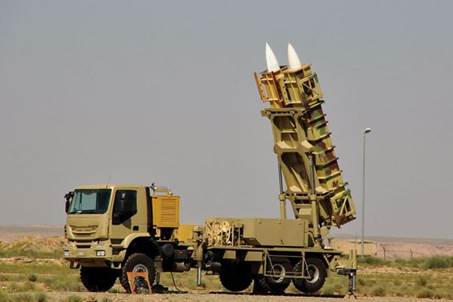
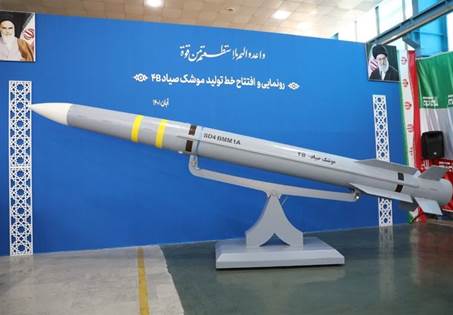
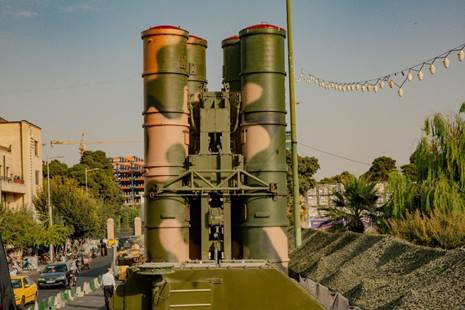
At the strategic level, Iran relies on long-range systems designed to protect nuclear infrastructure, major military bases and urban centres. The central element of this layer is the Bavar-373, officially presented as equivalent or even superior to the Russian S-300 system. The system uses missiles from the Sayyad family, including the Sayyad-4B, for which open sources indicate a declared range of between approximately 250 and 300 km, depending on the version and target profile. In the absence of independent validation, these values should be treated as open-source estimates, but they place the Bavar-373 in the category of air defence systems with extended coverage and limited anti-ballistic capabilities.
Complementarily, Iran operates S-300 PMU2 batteries, delivered by the Russian Federation and integrated into the national air defence network. The S-300PMU2 is designed to intercept fourth-generation aircraft and short- and medium-range ballistic missiles. However, the events of 2024, when a radar associated with an S-300 battery in the Esfahan area was reportedly damaged in a precision strike, highlighted the vulnerability of radar nodes to modern stand-off attacks. In 2024, the Arman system, explicitly geared towards anti-ballistic defence, was also unveiled, signalling Iran’s intention to strengthen its ballistic missile defence (BMD) segment.
Middle layer: mobility and rapid response
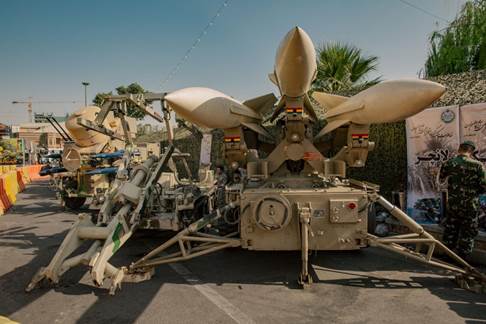
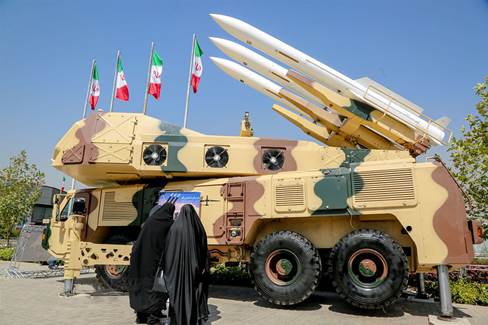
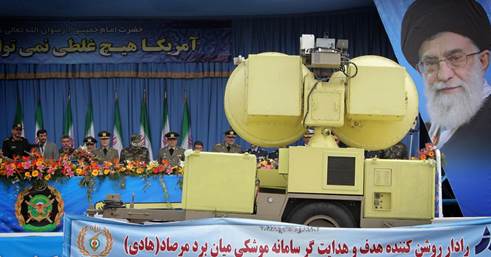
The intermediate level of air defence consists of medium-range mobile systems designed to intercept targets that have penetrated the strategic layer or are flying at intermediate altitudes and distances. Khordad 15 uses Sayyad-3 missiles and is credited by Iranian sources with the ability to detect low-radar-signature targets at approximately 85 km, while other open-source assessments indicate detection parameters of up to approximately 150 km for conventional targets. The engagement range is generally estimated to be between 45 and 75 km, depending on the configuration and threat profile.
Sevom Khordad, known internationally for shooting down a US Global Hawk drone in 2019, is a mobile platform often compared to the Russian Buk system. Its mobility is essential in an environment dominated by SEAD/DEAD (Suppression/Destruction of Enemy Air Defences) missions, where survival depends on rapid relocation and controlled radar emissions.
Mersad-16 is a modernisation of the American MIM-23 Hawk system, integrating Iranian Shalamcheh missiles. Although technologically inferior to modern systems, it contributes to the density of the intermediate layer. The Talash system completes this category, using missiles from the Sayyad family for high-altitude interceptions.
Lower layer and point defence
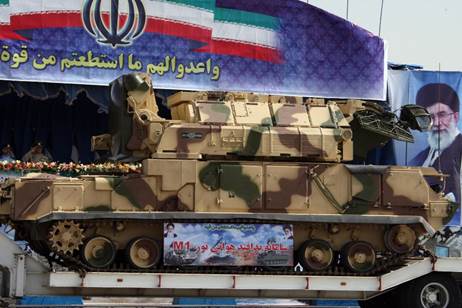
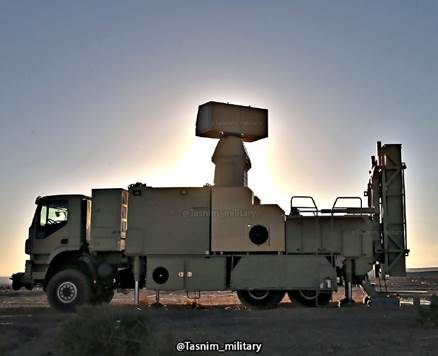
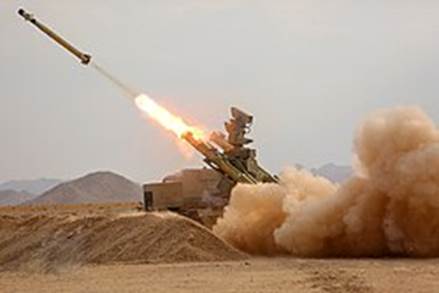
Point defence is essential in the context of the proliferation of drones and cruise missiles with low-altitude flight profiles. Tor-M1 offers effective capabilities against guided munitions and fast-moving targets at low altitude. However, the 2020 incident, when a Tor-M1 accidentally shot down civilian flight PS752, demonstrated the inherent risk of operating under maximum alert conditions and the complex interaction between man and machine.
Iran has unveiled the Zoubin system, designed to intercept low-altitude ballistic missiles and swarms of drones, as well as recent mobile systems such as Majid and Azarakhsh, optimised for combating drones. There have also been reports of the presence of the Pantsir-S1 system, but the extent of its operationalisation remains unclear in public sources.
In addition to these modern systems, Iran maintains a considerable number of older systems in service – S-200, S-75, Crotale/FM-80, Rapier, as well as Misagh-type MANPADS – which, although technologically outdated, contribute to the saturation and density of the defensive network. In a high-intensity conflict, quantity and dispersion can partially compensate for qualitative inferiority.
Hybrid and Loitering Systems
- Racheta 358: A loitering surface-to-air missile (it circles over an area until it finds a target), specially designed to shoot down drones and helicopters at low speeds, with a range of up to 400 km.
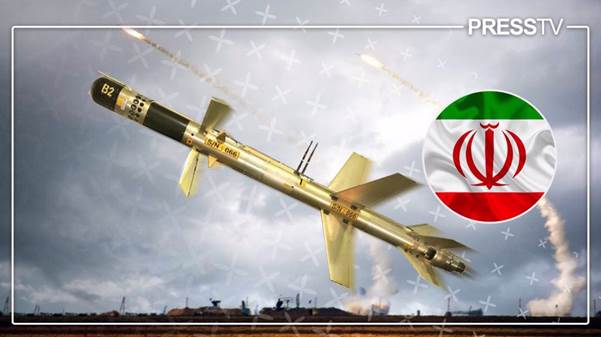
Missile 358
Iran unveils new weapons as it prepares for 2026 – The S-300 appeared in live exercises in January 2025, in tandem with an improved version of the domestic Bavar-373.
C2 architecture and technological “mosaic” integration
The coordination of the entire air defence is carried out by the Khatam al-Anbiya Air Defence Base, the structure responsible for integrating radars, launchers and command centres into a unified system. One of the main challenges for Iran was the interoperability between old American equipment, modern Russian systems and domestic platforms. The solution consisted in developing mobile command centres and proprietary datalink protocols designed to ensure data fusion and rapid distribution of information to fire units.
In terms of sensors, Iran uses low-frequency (VHF) radars such as Ghadir or Rezonans-NE for early warning. These can detect the presence of low-radar-signature aircraft at long ranges, but do not usually provide the accuracy required for final missile guidance. The “radar-to-shooter” chain thus involves the transition from strategic detection to precision tracking using engagement radars and passive electro-optical sensors. The use of optical and thermal imaging sensors reduces the electromagnetic signature of the network, complicating the adversary’s electronic warfare missions.
Recent vulnerabilities and adaptations
Events in 2024–2025 tested the resilience of the Iranian system. Precision strikes attributed to Israel on radar components suggested that fixed infrastructure remains vulnerable to modern guided munitions. These episodes underscore the importance of mobility, dispersion, and the use of decoys to protect critical nodes.
At the same time, Iran announced the integration of artificial intelligence modules into the C2 network to reduce response time and manage swarm attacks. In a scenario dominated by autonomous drones and loitering munitions, the ability to automatically process a large volume of targets becomes crucial.
Overall, Iran’s air defence is a layered system, built on the principle of redundancy and depth defence. Although it has inherent vulnerabilities – especially in terms of radar nodes and interoperability – its complexity, density and adaptability mean that any air operation against Iran would require a systematic campaign to suppress air defences before achieving air superiority.
MARITIME SECURITY FORUM