

The possibility of establishing a special regime for the Strait of Hormuz: legal, maritime and geopolitical arguments
ANALYSIS: MARITIME SECURITY FORUM
Authors: Admiral (ret.) PhD Aurel POPA, Captain (ret.) PhD Sorin LEARSCHI
Introduction
The Strait of Hormuz is one of the most sensitive maritime areas in the contemporary world, both due to its geographical position and its systemic role in the global economy and regional security architecture. Its importance cannot be reduced to that of a mere transit corridor. It is, in fact, a focal point where freedom of navigation, energy security, the balance of power in the Gulf, and the limits of international law in the face of recurring geopolitical tensions converge. In this sense, reflection on the possibility of establishing a special conventional regime for the Strait of Hormuz is not a marginal speculation, but a legitimate legal and strategic question, arising from the clash between the general rules of the law of the sea and the concrete vulnerabilities of an exceptional maritime zone.
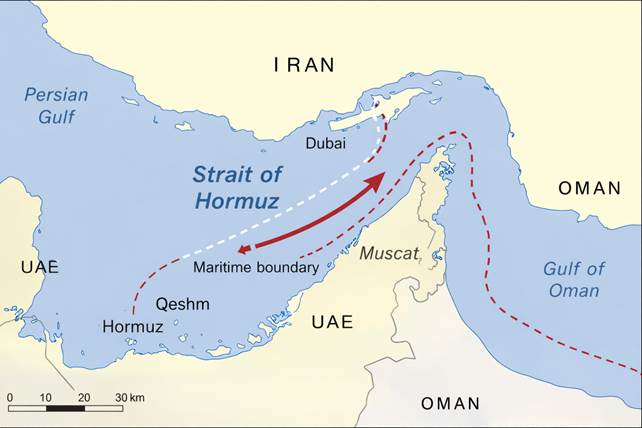
The discussion regarding a possible special regime for the Strait of Hormuz must not be based on the idea of a mechanical transposition of the Montreux Convention. Such an approach would also be legally flawed. The Montreux Convention belongs to a distinct historical context and responds to a particular strategic configuration. Nevertheless, it remains relevant as a historical precedent demonstrating that international law has, in certain circumstances, permitted the establishment of special legal regimes for straits of exceptional importance. Therefore, the correct question is not whether Montreux can be ‘copied’ for the Strait of Hormuz, but whether the experience of special regimes for strategic maritime areas supports, in theoretical and normative terms, the possibility of devising a distinct legal instrument, tailored to the specific characteristics of the Strait of Hormuz.
Building on this clarification, this article aims to demonstrate that there are serious arguments in favour of the theoretical feasibility of a special conventional regime for the Strait of Hormuz, but only to the extent that such a regime is conceived as an instrument complementary to the international law of the sea, and not as a mere historical replica of a previous model. The analysis will, in this regard, examine the strategic value of the strait, the limitations of the general legal regime, the relevance of the historical precedent of special regimes for straits, the economic and maritime dimensions of the issue, the security implications, as well as the political and institutional obstacles that make the feasibility of such a project more difficult than its theoretical justification.
The Strait of Hormuz as a maritime space of exceptional importance
Any discussion regarding the appropriateness of a special legal regime must begin with the particular nature of the area to which such a regime would apply. In the case of the Strait of Hormuz, the exceptional nature of the location stems from the convergence of at least three dimensions: geographical positioning, economic function and strategic density. These dimensions do not coexist by chance, but rather reinforce one another and transform the strait into a point where a local disturbance can produce global systemic effects.
From a geographical perspective, Hormuz links the Persian Gulf to the open ocean, thus becoming the sole maritime outlet for a significant portion of the region’s energy exports. This is not merely a route of heavy traffic, but a lifeline without which the international energy network would suffer major disruptions. The Strait’s status as a strategic chokepoint is, therefore, more than a strategic concept; it denotes a reality upon which trade flows and economic balances of global significance depend.
This situation confers on the Strait of Hormuz an economic value that transcends any limited regional interest. Freedom of navigation through this area is not merely a classic expression of the right of maritime transit, but one of the material conditions for the stability of energy markets. For this reason, any threat, restriction or uncertainty affecting transit causes not only local political tensions, but also immediate international economic reactions. Consequently, interest in the Strait of Hormuz cannot be regarded as the exclusive concern of the littoral states. It inevitably belongs to the international community as well, insofar as the global economic order is directly influenced by the stability of this corridor.
Added to this economic dimension is a particularly complex strategic one. The Strait of Hormuz lies at the intersection of persistent regional rivalries, acute sensitivities regarding sovereignty, and foreign naval presences with divergent objectives. In such a context, commercial navigation and maritime security cannot be analysed separately from the militarisation of the regional environment. Hormuz is not merely a transit route, but also a space for the projection of power, strategic signalling and, at times, political and military pressure. It is precisely this overlap between commercial and strategic functions that renders the strait a legally problematic space.
Naturally, this reality leads to a first important conclusion: not all straits used for international navigation necessarily require the same degree of normative refinement. Some can function reasonably well under the general rules of the law of the sea. Others, however, due to the density of interests concentrated around them, raise issues that exceed the capacity of a general and relatively abstract legal framework to address. The Strait of Hormuz appears to belong to the second category. Precisely for this reason, the debate regarding the appropriateness of a special conventional regime does not appear to be an artificial exercise, but rather a doctrinal and political response to the functional exceptionality of this area.
The general legal regime and its practical limits
Arguing for the appropriateness of a special conventional regime for the Strait of Hormuz does not imply the existence of a legal vacuum. Hormuz is not outside international law, and navigation through this area is not unregulated. The general regime of the law of the sea already provides a relevant legal framework for straits used in international navigation and enshrines fundamental principles regarding freedom of transit and the peaceful use of maritime spaces. Consequently, the issue is not one of a lack of regulation, but of its adequacy in relation to the political, military and economic particularities of the region.
This distinction is essential. Formally speaking, the general rules may appear sufficient to organise maritime traffic through a strait of international importance. In practice, however, the functioning of these rules depends on the strategic context in which they are applied. In the case of Hormuz, it is precisely this context that puts them to the test. The general regime is intended to establish a minimum of legal order, but it was not designed to respond, exhaustively, to all the vulnerabilities of a space marked by militarisation, competition for influence and the constant risk of incident.
A primary limitation of the general regime lies in its relatively abstract nature. General norms define rights and obligations, but do not necessarily set out detailed procedures for managing the specific tensions inherent in a space such as the Strait of Hormuz. In practice, difficulties often arise not at the level of principles, but at the level of concrete interactions: dangerous proximity between vessels, divergent interpretations of military behaviour, the lack of procedural channels for notification and communication, and the absence of institutionalised mechanisms for rapid consultation or de-escalation of incidents. In such situations, general rules provide a legal framework, but not always a sufficient operational tool.
A second limitation stems from the tense relationship between freedom of navigation and security imperatives. In theory, the two are not incompatible. In practice, however, in a region where perceptions of threat are intense, each actor tends to interpret the rules through the prism of its own strategic needs. Thus, measures considered by one actor to be necessary for the protection of national security may be perceived by another as acts of intimidation or as an indirect restriction on freedom of transit. General law does not eliminate these interpretative tensions, nor does it always provide sufficient mechanisms for harmonising conflicting perceptions.
Furthermore, the general framework of the law of the sea is not, by its very nature, geared towards the comprehensive management of strategic infrastructure associated with a space such as the Strait of Hormuz. In today’s reality, the importance of the strait derives not only from the transit of ships, but also from the fact that this navigation is inseparable from the existence of critical energy flows and the functioning of sensitive logistics chains. When regional tensions affect not only ships but also the general perception of the security of routes, terminals and related infrastructure, it becomes clear that the mere recognition of the right of transit is not sufficient to guarantee stability.
In these circumstances, the case for a special conventional regime becomes clear. It does not stem from the idea that the current right does not exist, but from the observation that, in an area of exceptional strategic importance, the general regime does not always provide instruments that are sufficiently precise, sufficiently preventive and sufficiently tailored to reduce recurring risks. Therefore, the pertinent question is not whether the general rules should be replaced, but whether they should be supplemented by a specific instrument, with procedural and institutional mechanisms better suited to the realities of the region.
This approach is legally sounder and analytically more convincing. It allows the Strait of Hormuz to be understood as a space subject to international law, yet situated in a zone of friction where general law and strategic reality do not always coincide satisfactorily. From this arises, quite legitimately, the consideration of a possible special conventional regime.
The lesson of precedent: special regimes for straits and the value of historical analogy
In analysing the possibility of establishing a special conventional regime for the Strait of Hormuz, recourse to the historical precedent of special regimes for straits is inevitable. It must, however, be used with rigour and restraint. Its value does not lie in providing a ready-made model, but in confirming that international law has accepted, in certain circumstances, the differentiated treatment of strategic maritime areas. Consequently, the historical analogy should not be understood as an invitation to normative transplantation, but as a basis for demonstrating a legal possibility in principle.
Essentially, what the experience of special regimes teaches us is that the international legal order has never been entirely uniform with regard to straits. Even though there are general rules applicable to international maritime spaces, certain straits have been subject to specific arrangements when security interests, geographical position, power relations or strategic importance have rendered an abstract regulatory framework insufficient.
In this regard, the precedent of the special regime for straits of major importance has conceptual value. It provides the argument that the specific regulation of a strategic maritime space is not, in itself, incompatible with the international legal order. On the contrary, in certain circumstances, it is precisely this specific treatment that can better serve stability, clarity and the balance between the interests of the littoral states and those of the international community. Applied to the Strait of Hormuz, this reasoning allows for the formulation of an important thesis: if the international legal order has tolerated and even established special regimes for straits of exceptional importance, then the idea of a distinct conventional instrument for the Strait of Hormuz is neither absurd nor legally extravagant.
However, the strength of this analogy ends here. It legitimises the theoretical possibility of a special regime, but does not automatically prove its desirability, nor does it determine the content of such a regime. This is where the need for differentiation arises. The Strait of Hormuz and the historical special regimes for other straits belong to profoundly different contexts. The differences concern geography, the distribution of power, the architecture of alliances, the structure of military and economic interests, as well as the evolution of international law itself. Consequently, any attempt to project a specific historical model onto the Strait of Hormuz, in its original form, would be unfounded.
From this perspective, historical precedent does not provide a solution, but rather a method of thinking. It invites us to identify the elements that make a maritime space exceptional and to ask whether those elements are sufficiently significant to warrant an additional normative framework.
In the case of the Strait of Hormuz, the answer can be cautiously affirmed. The exceptional importance of the strait for global energy security, the recurring nature of regional tensions and the constant exposure of shipping to political and military risks suggest that simply invoking general rules may be insufficient. Therefore, the historical analogy is useful only if it serves to support the idea of a potential lex specialis, not the idea of normative imitation.
This nuance is crucial from a methodological perspective. It transforms the analogy from a tool for simplification into a tool for refinement. Rather than reducing the issue to the slogan of a ‘new Montreux’ for the Strait of Hormuz, the analysis must show that the history of international law has seen situations where the general regime has been supplemented or adjusted by special solutions, and that this experience justifies, at least in theory, the contemporary question regarding the appropriateness of a similar instrument in function, not in structure, for the Strait of Hormuz.
The economic and energy dimension of the need for a special regime
One of the strongest arguments in favour of considering a special conventional regime for the Strait of Hormuz lies in the economic and energy impact of its operation. In few maritime areas of the world do freedom of navigation and global economic stability intersect with such intensity. In the case of Hormuz, the relationship between the two is direct, constant and profound. Navigation through the strait is not merely a matter of maritime traffic, but a prerequisite for the continuity of energy supplies and, consequently, for the stability of certain global markets and economic relations.
This dimension alters the legal perspective on the issue. When volumes essential to the functioning of the global economy transit through a particular maritime space, any disruption to the navigation regime becomes more than a matter of regional dispute or a one-off incident. It takes on systemic significance. In the case of the Strait of Hormuz, any blockades, restrictions or mere threats to transit have the capacity to influence prices, supply chains, transport costs, insurance levels and, ultimately, the global economic climate. Consequently, the legal stability of navigation is not here an abstract concept, but a factor of economic governance.
This observation allows for the formulation of a fundamental argument. The more indispensable a strait is to international economic flows, the stronger the justification for a legal framework capable of reducing uncertainty. Yet uncertainty is one of the most costly effects of maritime instability. Even in the absence of open conflict, the perception of risk influences the behaviour of economic actors. Logistical costs rise, commercial strategies are reoriented, markets react in anticipation, and energy security is affected not only by actual events but also by their probability.
From this perspective, a special conventional regime for the Strait of Hormuz could also be justified by its role in mitigating systemic economic risk. It could help increase predictability not only by reaffirming transit rights, but also by establishing procedural rules and coordination mechanisms to reduce the likelihood of incidents and manage crises more effectively. For economic actors, stability means not only the existence of a legal norm, but also the confidence that it will operate consistently, including in times of tension.
Furthermore, the strategic nature of transit through the Strait of Hormuz highlights the collective dimension of the protected interest. Unlike other trade routes where disruptions can be more easily mitigated through logistical alternatives, the scope for substitution here is limited. Precisely for this reason, any additional guarantee regarding the continuity of transit takes on exceptional value. This is not merely a matter of the interests of exporting or importing states, but of the overall stability of a system of interdependencies on which multiple economies and regions depend.
However, the economic argument must not be oversimplified. A treaty does not, in itself, produce economic security. Its effectiveness depends on the degree of political acceptance, the quality of its mechanisms and the institutional capacity to implement it. Nevertheless, the economic dimension remains an extremely powerful argument in principle for the idea of a more robust and better-adapted regime. It shows that the discussion on the Strait of Hormuz does not pertain solely to the law of the sea and maritime security, but also to global economic governance. In this light, a potential treaty-based instrument would not merely be a legal-strategic construct, but also a mechanism for safeguarding the international economic order against the vulnerability of a critical chokepoint.
Maritime and security considerations: between freedom of navigation and preventing escalation
While the economic dimension explains why the stability of the Strait of Hormuz is of interest to the entire international community, the maritime and security dimension explains why the general legal regime faces particularly intense challenges here. Ideally, freedom of navigation should operate on the basis of clear, predictable rules that are sufficiently widely accepted to minimise the possibility of incidents. In reality, in maritime areas that are heavily militarised and marked by strategic mistrust, freedom of navigation often coexists with deterrence strategies, conflicting perceptions of threat, and the risk of any tactical incident escalating into a diplomatic or military crisis.
In the Strait of Hormuz, this tension is structural. Commercial navigation does not take place in a security vacuum, but in an environment where military presence and strategic sensitivities constantly influence the perception of risk. Under such conditions, the right of transit, however well established in law, does not automatically eliminate the risks generated by interactions between military vessels, between commercial vessels and security forces, or between the economic logic of traffic and the strategic logic of control. Therefore, the issue is not merely the formal protection of freedom of navigation, but also the creation of procedural and institutional conditions that prevent latent tensions from escalating into acute episodes of destabilisation.
This is where one of the most compelling arguments for a special conventional regime emerges. Such an instrument could be conceived not as a limitation of existing rights, but as a strengthening of the operational safeguards that make it possible to exercise them under stable conditions. In other words, freedom of navigation, to be effective, requires not only legal recognition but also a procedural framework that reduces ambiguity and enables the management of incidents. In the absence of clear mechanisms for communication, notification and consultation, each actor remains tempted to interpret the behaviour of others through the prism of suspicion or the logic of power.
Consequently, a potential special convention for the Strait of Hormuz could serve a primary maritime and security function: the institutionalisation of rules of conduct and mechanisms to prevent escalation. It is not necessary, to support this idea, to invoke maximalist concepts such as the total neutralisation of the strait. A more realistic objective, and one more compatible with the realities of the region, would be to limit unilateral actions likely to affect the continuity of transit and to create common instruments for responding to high-risk situations.
This approach is, moreover, more legally sound. In a region such as the Strait of Hormuz, where security interests are highly pronounced, to speak of neutrality in the full political sense would risk turning the analysis into a utopian exercise. Instead, discussing the impartiality of transit rules, the transparency of procedures and mechanisms for preventing incidents is perfectly plausible. International law is not called upon here to eliminate politics or strategy, but to create a framework within which these do not arbitrarily compromise the stability of navigation.
Furthermore, the maritime dimension of the issue also includes technical and operational aspects that cannot be ignored. A busy transit corridor, traversed simultaneously by oil tankers, commercial vessels, military ships and other maritime craft, calls for detailed rules not only regarding rights, but also regarding concrete interactions. In a tense environment, the lack of clearly agreed operational standards or common incident management procedures can exponentially increase the risk of misunderstandings, disproportionate reactions and unintended escalations. It is precisely here that a special conventional regime could be of the greatest practical use: in transforming a general legal freedom into an effectively manageable maritime order.
There is also a collective security dimension, even if it must be formulated with caution. When the stability of a strait affects not only the riparian states but also the functioning of global flows, its protection can no longer be viewed exclusively as an internal matter for the region. However, any excessive internationalisation of control mechanisms risks being perceived as an intrusion or as a tool of influence. Thus, in terms of security, the balance is delicate. A special regime must be robust enough to reduce risks, yet prudent enough not to become itself a source of political contention.
This is perhaps the most compelling reason why the issue requires a sophisticated approach. It is not enough to claim that a clearer legal framework would automatically ensure security. It must be demonstrated that security can be enhanced through procedures, transparency, the clarification of responsibilities and the institutionalisation of de-escalation practices. To the extent that a potential conventional regime for the Strait of Hormuz would be capable of fulfilling these functions, it could represent not merely an elegant legal formula, but a concrete response to one of the most persistent vulnerabilities of contemporary maritime security.
Political and regional implications of a potential conventional regime
Any serious analysis of the possibility of establishing a special conventional regime for the Strait of Hormuz must go beyond the strictly legal level and address the political dimension of the issue. In reality, the viability of such an instrument depends not only on the elegance of its legal framework or the strength of doctrinal arguments, but also on the extent to which the relevant actors perceive it as compatible with their own strategic interests, their own understanding of sovereignty, and their own power dynamics. This is perhaps the most delicate aspect of the entire discussion, because, in the case of Hormuz, politics does not accompany the law from the outside, but conditions it from within.
The Strait of Hormuz is situated in a region where the balance of power is deeply marked by rivalries, shifting alliances, strategic mistrust and external interventions. In such a context, any proposal for a special regulation will inevitably be interpreted as a political gesture. Even if formulated in technical, functional and neutral terms, a convention for the Strait of Hormuz could not avoid being interpreted through the prism of the distribution of influence in the region. Therefore, a treaty which, in the abstract, might appear as a stabilising instrument, could be perceived by some actors as a potential mechanism for consolidating an adversarial position or as a means of institutionalising asymmetric constraints.
This dimension is particularly evident in the issue of control or monitoring. Any special regime entails, in one form or another, the definition of competences, procedures and authorities or mechanisms capable of ensuring the enforcement of the rules. In the case of the Strait of Hormuz, the question ‘who administers?’ is inseparable from the question ‘who gains influence?’. If the leading role were to fall to a coastal state, the others might perceive the solution as unbalanced. If the mechanism were collective or internationalised, some states might regard it as an infringement of sovereignty or even a form of externally imposed pressure disguised as a legal arrangement. Thus, the institutional issue inevitably becomes a political one.
On the other hand, it is precisely this difficulty that shows why such a regime could, if well negotiated, also have positive political value. Ideally, a convention for the Strait of Hormuz could function as a legal platform for coordination between actors who normally interact primarily through displays of power and deterrence strategies. By defining common rules and stable procedures, it could reduce the exclusive reliance on ad hoc reactions and diplomatic improvisation. In this sense, a conventional regime would not only serve to regulate navigation, but also to transform part of the strategic competition into a legally channelled relationship.
The regional implications would therefore be ambivalent. On the one hand, such a regime could promote stability, insofar as it would provide a minimum of procedural consensus and legal certainty. On the other hand, however, the very process of negotiating the convention could become a battle e for symbolic and strategic confrontation, in which each actor would seek to maximise their own legitimacy and minimise constraints. Thus, even if the idea of a special regime is logically and legally defensible, the path towards such a solution remains deeply shaped by power relations.
This leads to an important analytical consequence. A special conventional regime for the Strait of Hormuz cannot be conceived as a mere technical project of the law of the sea. It would, inevitably, also be an act of regional political reconfiguration. Even its most operational provisions would influence perceptions regarding the status of the actors involved, the legitimacy of naval presences and the limits of unilateral action. This means that its success would depend on a difficult reconciliation between the need for common rules and the persistence of competing visions of order, security and influence in the Gulf.
At the same time, this political dimension should not lead to the conclusion that the project is meaningless. On the contrary, it shows that a potential treaty for the Strait of Hormuz would be relevant precisely because it would intervene in a space where the lack of a dense legal framework allows politics to operate almost exclusively through power, pressure and reaction. Consequently, the potential value of such an instrument lies not only in regulating navigation, but also in introducing an additional form of legal predictability into an area dominated by strategic uncertainty.
The legal and institutional obstacles to a convention for the Strait of Hormuz
Although the theoretical arguments in favour of a special treaty regime for the Strait of Hormuz can be coherently formulated, any serious analysis must give equal attention to the practical difficulties of such a project. In reality, the idea’s greatest vulnerability lies not in the lack of a conceptual basis, but in the obstacles that would arise when moving from theory to institutional architecture. Whilst the argument in principle is relatively easy to sustain, the problem of implementation becomes considerably more difficult.
The first obstacle is that of consensus. Any convention, by its very nature, presupposes a sufficiently broad agreement among the actors who must accept, ratify and apply it. In the case of the Strait of Hormuz, it is precisely this premise that is problematic. The area in question is marked by divergent perceptions of security, persistent regional rivalries and an evident lack of strategic trust. Under these circumstances, even identifying the bare minimum elements of a consensus would represent a major difficulty. One state might insist on strengthening transit rights; another on the recognition of its security sensitivities; yet another on the internationalisation of guarantees. These differences are not technical, but structural.
The second obstacle is institutional in nature. Any special conventional regime requires mechanisms for implementation, verification, coordination and, where necessary, dispute resolution. Yet it is precisely here that the case of the Strait of Hormuz becomes extremely delicate. Who would have the authority to interpret and administer the rules? What type of institution would be considered sufficiently legitimate for all the actors involved? Would a purely regional structure be possible, or would an international component be necessary? Any answer to these questions almost inevitably generates new controversies. A structure dominated by regional actors could be perceived as insufficiently neutral. A structure with external participation could be seen as the expression of an undesirable geopolitical influence. Thus, the institutional issue becomes one of competing legitimacy.
There is also a legal obstacle stemming from the very relationship between a potential special regime and the general framework of international law of the sea. A special treaty must be constructed in such a way as to complement and elaborate on the general rules, without entering into a contradiction that would undermine its authority and acceptability. This is not an insurmountable difficulty, but it requires a sophisticated legal technique . A poorly calibrated instrument could be criticised either for adding nothing significant to the existing framework, or for attempting to introduce restrictions or solutions incompatible with the general architecture of the law of the sea. In both cases, the special regime would lose either its usefulness or its legitimacy.
Another significant obstacle relates to effective implementation. Even if a treaty were negotiated and adopted, its effectiveness would depend on the existence of compliance practices and the willingness of actors to restrain their behaviour in tense situations. However, the region’s history suggests that moments of crisis are precisely those in which legal commitments are the hardest to uphold if they are not supported by converging political interests. Thus, the difficulty lies not merely in drafting rules, but in creating a strategic environment in which compliance with them is perceived as rational and advantageous.
Furthermore, there is also the issue of asymmetry between the collective utility of a treaty and its individual costs. In the abstract, a special regime for the Strait of Hormuz could benefit everyone by increasing predictability and reducing risk. In practice, however, each actor will assess whether the shared benefits outweigh the concrete constraints the treaty would impose on them. Some states might feel they are losing too much freedom of action. Others might suspect that the regime indirectly favours the position of their rivals. Under such conditions, the classic difficulty of international public goods arises: everyone would benefit from stability, but not everyone is willing to accept the same costs for its provision.
Finally, the symbolic difficulty must not be overlooked. In strategically charged maritime spaces, the legal regime is often interpreted not only through its practical effects, but also through its political significance. A convention for the Strait of Hormuz could become, in the minds of some actors, either the symbol of impossible cooperation or the symbol of an unacceptable concession. Any legal compromise could be reinterpreted politically and contested in terms of prestige, autonomy or influence. This symbolic dimension further complicates the already difficult institutional equation.
Consequently, the main counterargument to the thesis of the desirability of a special regime is not a lack of legal logic, but the fragility of the political and institutional conditions necessary for its realisation. Precisely for this reason, any responsible conclusion must remain cautious: the theoretical utility of a convention for the Strait of Hormuz is easier to demonstrate than the likelihood of its actual implementation. This distinction does not invalidate the analysis, but correctly sets its scope. It shows that the discussion on the Strait of Hormuz belongs not only to the realm of normative solutions, but also to that of institutional realism.
A possible normative model: not a replica, but an instrument
If it is accepted that the Strait of Hormuz could, in theory, justify a special conventional regime, then the question of the nature of such a regime inevitably arises. The answer must be formulated with the utmost caution. This is not a matter of drafting a fully-fledged treaty in the technical sense, but of identifying the conceptual features that such an instrument should possess in order to be, at the same time, useful, coherent and legally plausible. The most important conclusion in this regard is that a regime for the Strait of Hormuz could not be a replica of a previous historical model, but would have to be a sui generis construct, tailored to the contemporary particularities of the region.
Firstly, such an instrument should complement the general regime of international law of the sea, not replace it. Its legal legitimacy would depend on its ability to operate as a functional lex specialis, not as an arbitrary derogation. This means that it should not negate or undermine freedom of navigation, but rather strengthen it through additional mechanisms of protection, coordination and clarification. In other words, its purpose would not be to radically reconfigure the existing maritime order ( ), but rather to provide further regulatory detail in an area where the general rules sometimes prove insufficiently precise.
Secondly, such a regime should combine the legal dimension with an operational one. For the Strait of Hormuz, the mere reaffirmation of certain principles would not be sufficient. The added value of a special instrument would lie precisely in its ability to provide for procedures. These could include notification mechanisms, forms of emergency communication between relevant actors, rapid consultation procedures in the event of an incident, rules of conduct for sensitive maritime interactions, and rules on managing situations likely to affect the continuity of transit. Without such a procedural component, any convention would risk remaining merely declaratory.
Thirdly, a regime for the Strait of Hormuz should reflect the mixed nature of the interests protected. Unlike an exclusively military or exclusively commercial approach, it should recognise that navigation through this strait is inseparable from energy security, commercial stability and the prevention of political and military tensions. Hence the need for an instrument with a cross-sectoral remit. It could not be a treaty purely on security, nor one purely on maritime traffic, but should normatively articulate the relationship between freedom of transit, the protection of economic interests and the reduction of strategic risk.
Fourthly, the legitimacy of such an instrument would depend on its degree of impartiality. In a region marked by mutual suspicion, any convention perceived as structurally favouring one actor at the expense of another would quickly become unworkable. Therefore, it is not enough for the rules to be clear; they must also be perceived as balanced. This does not mean ignoring the realities of power, but rather recognising that an acceptable regime must offer reasonable guarantees to all key actors. Without such a minimum perception of fairness, even the best-drafted treaty would remain ineffective.
Finally, a normative model for the Strait of Hormuz should be conceived in terms of risk reduction, not the utopian transformation of the region. The realistic objective would not be the elimination of rivalries, nor the complete neutralisation of the area, but the reduction of the possibility that these rivalries might arbitrarily disrupt navigation and affect the international economic and maritime order. In other words, the special regime would not be intended to create political harmony, but to introduce a minimum of legal discipline into a space where politics tends to operate in a confrontational manner.
This perspective is also important from a methodological point of view. It shows that the theoretical viability of a special regime for the Strait of Hormuz depends precisely on abandoning simplistic analogies and accepting the idea that the law must be shaped by the specific nature of the area it regulates. In this sense, the strongest argument in favour of such a project is perhaps precisely that it should not bear too much resemblance to any specific historical precedent. The relevance of the precedent lies in recognising the possibility of special regimes, not in prescribing their mandatory form.
Conclusions
The possibility of establishing a special conventional regime for the Strait of Hormuz is a matter of undeniable legal and geopolitical relevance. Its analysis imposes a twofold requirement: on the one hand, the avoidance of analogical simplifications, and on the other, the recognition that certain maritime areas call for a more detailed normative reflection than that provided by the general rules of the law of the sea. In the case of the Strait of Hormuz, this theoretical necessity stems from the convergence of exceptional factors: the critical importance of the strait for global energy security, the recurring nature of strategic tensions in the region, and the practical limitations of a general legal regime when applied in a heavily militarised and politically sensitive area.
The central argument emerging from a rigorous analysis is not that Hormuz needs a mere ‘Montreux of the Gulf’. Such a formulation is more rhetorical than analytical. What can be convincingly argued is something else: that the historical existence of special regimes for strategically important straits demonstrates that international law has recognised, in certain circumstances, the need for specific legal solutions. From this perspective, the precedent of special regimes does not provide a model for the Strait of Hormuz to copy, but rather a conceptual basis for acknowledging, in principle, the legitimacy of considering an adapted lex specialis.
Such reflection is all the more justified given that the Strait of Hormuz is not merely a transit route, but a point of systemic vulnerability for the international economy and security. Here, freedom of navigation, energy stability and the prevention of escalation are not separate concerns, but elements of the same legal-strategic equation. To the extent that the general legal regime does not always provide sufficient mechanisms for managing risks specific to the region, the idea of a complementary conventional instrument gains traction. Not as a substitute for existing law, but as a development of it in relation to exceptional realities.
At the same time, the analysis cannot ignore the fact that the political and institutional feasibility of such a project remains deeply uncertain. It is precisely here that the thesis’s main weakness lies. Any special regime for the Strait of Hormuz would have to be negotiated in a regional environment marked by strategic mistrust, divergent interests and acute sensitivities regarding sovereignty and influence. Under these circumstances, even if the theoretical utility of a convention is easy to argue for, its actual feasibility remains far more problematic. This gap between normative justification and political feasibility does not negate the value of the discussion; on the contrary, it makes it more realistic.
Ultimately, the most defensible conclusion is that the Strait of Hormuz seriously justifies the examination of a special conventional regime, but only if it is conceived as a sui generis instrument, complementary to the law of the sea and aimed at risk reduction, procedural clarification and the stabilisation of transit. Such an instrument could not be built by imitating a historical model, but only on the basis of a deep understanding of the regional specificity and the general lesson that the history of international law offers: certain maritime areas, due to their strategic value and the intensity of the tensions surrounding them, may require special legal solutions. In this light, the Strait of Hormuz does not appear as a case of arbitrary exceptionalism, but as one of those places where international law is called upon to test its ability to adapt to a strategic reality more complex than its general premises.
MARITIME SECURITY FORUM
Bibliography
- United Nations, United Nations Convention on the Law of the Sea (adopted 10 December 1982, entered into force 16 November 1994) 1833 UNTS 3.
- Convention regarding the Regime of the Straits (signed 20 July 1936, entered into force 9 November 1936) 173 LNTS 213.
- Said Mahmoudi, ‘Passage of Warships through the Strait of Hormuz’ (1991) Marine Policy.
- Alexander Lott, ‘The Legal Regime of the Strait of Hormuz and Attacks on Oil Tankers’ (2022) 53 Ocean Development & International Law 1.
- Mark Nevitt, ‘Legal and Operational Issues in the Strait of Hormuz’ (2026) Just Security.
- Dapo Akande, ‘The Legality of Iran’s Closure of the Strait of Hormuz’ (2026) EJIL: Talk!.
- ‘The International Law of the Sea, the Strait of Hormuz and Regional Security’ RSDI Insight.