


From the Maritime Strategic Ecosystem to Integrated Maritime Analysis-The FSM Research Vision and Its Interoperable Architecture
Concept and perspective article | November 2026
Admiral(rtr) PhD. Aurel POPA–President of the Maritime Security Forum
Abstract
The Maritime Security Forum (FSM) open research programme began with a conceptual question: how can the maritime domain be understood and analysed as a strategic ecosystem shaped by interdependencies among actors, functions, infrastructures, flows and norms? This article explains the evolution of that vision, from the Maritime Strategic Ecosystem (MSE) and its analytical instruments to the creation of three complementary tools: MN – Strategic Dynamics, FSM Maritime Atlas and FSM-SMEA. Their interconnection follows from the ecosystem approach itself: documented knowledge, operational experimentation and strategic interpretation cannot remain isolated. The article outlines an integrated and interoperable systems architecture drawing on established principles of federated architecture without requiring a monolithic application. Digital Twin is presented as a future development direction whose details will evolve through research. This is an articulation of an evolving research vision, not an exhaustive technical validation report.
Keywords: Maritime Strategic Ecosystem (MSE); FSM; maritime strategic analysis; interoperable systems architecture; FSM-SMEA; Maritime Atlas; Digital Twin; maritime research.
1. A research vision before the software
The FSM open research programme did not begin with the intention of building software applications. It began with the limitations of fragmented understandings of the maritime domain. Ships, ports, offshore installations, submarine cables and pipelines, institutional actors and legal frameworks can each be described separately; yet their strategic meaning also depends on how they relate to one another. A local disruption may affect essential functions far beyond the immediate site of an incident.
This observation created a need for a common research language capable of addressing relationships among components rather than merely listing their individual characteristics. Initial FSM studies introduced the Maritime Strategic Ecosystem (MSE) and a family of related analytical instruments. Subsequent methodological work examined what these concepts should actually produce when applied to concrete situations.
The programme therefore proceeds from concepts to applications, rather than treating technology as an end in itself. The tools were developed to bring the conceptual framework into contact with documented evidence, scenarios, uncertainties and operational questions. Theory and applications form a continuing process of mutual scrutiny.
Invitation to scholarly dialogue. This vision is offered as a starting point for reflection and critical assessment. FSM welcomes observations, methodological suggestions, application cases and collaboration proposals from researchers, analysts and other interested specialists. Contributions may be sent to or through the FSM contact form.
2. Why three different tools emerged
Ecosystem research has three requirements that a generic standalone application would struggle to meet equally well. First, continuity of knowledge: analysts need access to data, sources, developments and unresolved contradictions before formulating an interpretation. Second, experimentation: an incident must be representable as a sequence of events and operational consequences. Third, strategic interpretation: researchers must explain which functions matter, why they matter, which alternatives exist, and what legal or institutional constraints arise.
MN – Strategic Dynamics addresses the first requirement. Conceived initially around the Black Sea, it provides an information and documentary core for understanding maritime dynamics. Its value lies not only in collecting material but in context, source provenance, updates and the explicit preservation of uncertainty.
FSM Maritime Atlas addresses the second requirement. It provides an environment for exploring tactical and operational scenarios, sequences of action and simulated outcomes. An Atlas result should not automatically become a strategic conclusion, nor should a fictitious simulation be mistaken for an observed event.
FSM-SMEA — Strategic Maritime Ecosystem Analysis — addresses the third requirement. It is intended to bring information and scenario results into a complex analytical case file through the MSE methodology. FSM-SMEA should neither duplicate the full documentary repository nor reproduce all Atlas simulation functions. Its role is to integrate distinct analytical products into a reasoned strategic interpretation.
The three tools are therefore complementary. Each emerged in response to a distinct research limitation, not as a competing solution to the same problem.
3. A common methodological foundation
The unity of the programme rests on the eight concepts and instruments developed across FSM research. Their English names are retained consistently so that readers can follow the same terminology across studies and tools. The table identifies their intended analytical outputs rather than attempting to reproduce their full doctrinal definitions.
| Concept and English name | Intended analytical output |
| MSE — Maritime Strategic Ecosystem | Map of components, functions and interdependencies |
| MSCoG — Maritime Strategic Centre of Gravity | Reasoned hypothesis identifying a critical function |
| MSC — Maritime Strategic Convergence | Hypotheses on convergence and cascading effects |
| MSR — Maritime Strategic Resilience | Continuity and recovery objectives |
| MSEL — Maritime Strategic Elasticity | Feasible reconfiguration options |
| MCS — Maritime Cognitive Superiority | Assessment of evidence, uncertainty and comparator |
| MSCF — Maritime Strategic Convergence Framework | Structured comparison of options |
| IMSA — Integrated Maritime Security Architecture | Matrix of competencies and responsibilities |
The instruments are not eight sequential approval gates. They may operate in parallel on the same case file: MSE maps exposure; MSCoG identifies a potentially critical function; MSC tests links between disturbances; MSR and MSEL consider continuity and adaptation; MCS disciplines evidence and uncertainty; MSCF compares alternatives; and IMSA clarifies the relationships among competencies, instruments and responsibilities.
Implementation must mean more than displaying acronyms in a menu. Each instrument should yield an intelligible output with identifiable evidence, assumptions and limits. In this respect, the applications are also a means of testing whether the methodology is clear and useful.
4. Why interconnection becomes necessary
If MN – Strategic Dynamics, Maritime Atlas and FSM-SMEA operated entirely independently, the programme would risk recreating the very fragmentation the ecosystem concept seeks to overcome. Information might be duplicated across databases, scenarios could start from incompatible assumptions, and conclusions would be difficult to trace back to their sources.
The proposed solution is an Integrated and Interoperable Systems Architecture. This expression describes the FSM research objective: functionally autonomous, specialised tools participating in a common process of knowledge production and analysis. Established Federated Architecture principles can inform implementation, but federation itself is not claimed as a novel FSM invention.
Interconnection requires compatible identifiers, common rules for describing assets and events, data provenance, separation of observations from hypotheses, and controlled exchange of results. It does not require every data item or function to be centralised in one software application.
Ideally, an analysis initiated in FSM-SMEA can retrieve documentary context from MN – Strategic Dynamics, invoke an Atlas scenario and incorporate its simulated results into the same assessment without losing version history or uncertainty. This describes the intended architecture, not a claim that every connection is already operational.
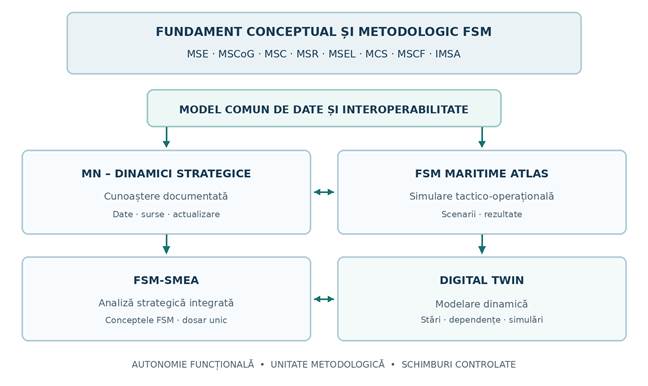
Figure 1. FSM conceptual architecture: shared methodology, complementary tools and interoperability. Digital Twin is a development direction.
5. One shared case file, distinct outputs
The practical unit of integration should be the shared research case file. It retains the initial event or research question, evidence sources, observations, hypotheses, methodological outputs, simulations, interpretations and successive revisions. Different tools may access the same case, but its identity and provenance should remain intact.
Simulation outputs should return to the case file together with the model, parameters, execution time and interpretative limitations. A software-generated output is not equivalent to an independently verified fact; an analytical recommendation is not an operational order; and a legal competence assessment does not itself confer institutional authority.
This discipline allows hypotheses to be revised as new information appears and supports critical review by other researchers. It also maintains the distinction between FSM research tools and hypothetical institutional designs examined within the research programme, including CNCAHM and MICDSS.
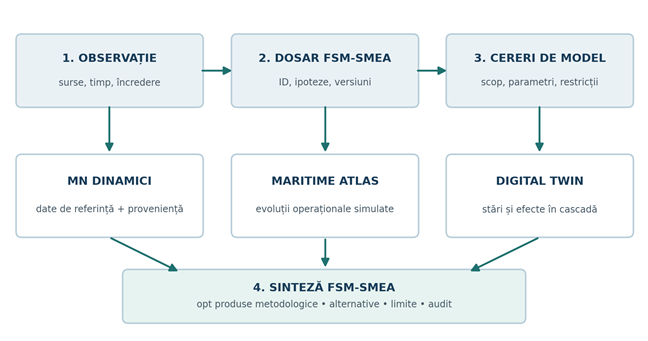
Figure 2. Shared case file and information flows between knowledge, simulation and strategic analysis.
6. Digital Twin: a further direction, not a change of purpose
Digital Twin enters the FSM vision as a distinct prospective tool for dynamically representing components and interdependencies within a defined maritime system. It may allow comparisons between a reference state and simulated developments, including how disruption propagates through interconnected maritime functions.
It is not intended to replace FSM-SMEA or independently duplicate its methodological rules. Digital Twin may provide models and simulation results; strategic interpretation remains grounded in the shared methodology and the tools that apply it. Dynamic modelling can begin with a bounded system — for example, a port and its dependencies — before any broader geographic extension.
At this stage, the research direction matters more than a final inventory of functions. Some technical and methodological relationships may change as development proceeds. A digital model or simulator should not be presented as an operational Digital Twin without demonstrable updating, fidelity and validation against the system represented.
7. An open programme that learns from application
The open character of FSM research does not mean the absence of a conceptual foundation. It means that the usefulness of the concepts remains open to scrutiny. Applying them to maritime cases can reveal missing data, ambiguous methodological steps, weaknesses in a model or new functional requirements.
The Black Sea serves as the initial research environment because of its dense interdependencies and evolving strategic conditions. The architecture is nevertheless intended to allow analysis of other maritime ecosystems, including the Baltic Sea, without replacing its fundamental principles.
A useful first illustrative case is the fictitious USV–01/2026 file developed in the FSM methodological study. It allows researchers to connect the detection of a potential hazard with exposed port functions, simulated consequences and strategic interpretation, without presenting the exercise as a real incident or as conclusive empirical validation.
Over time, comparisons between separate-tool analysis and interoperable-tool analysis may establish whether the architecture improves the work. Such benefits are questions to be tested, not outcomes to be assumed.
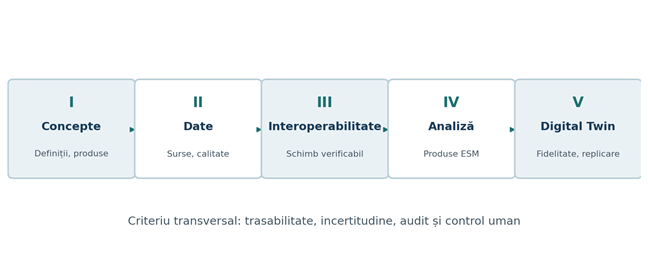
Figure 3. Gradual development of the FSM architecture and its planned verification stages.
8. The FSM vision in essence
The vision can be expressed as a simple sequence: ecosystem research generated a conceptual framework; that framework created a need for specialised tools; specialisation made interconnection necessary; and interconnection may support more developed dynamic and anticipatory analysis.
The information core helps establish what is known and from which sources. Atlas helps explore how an event might unfold. FSM-SMEA asks why the outcome matters for the ecosystem and which strategic conclusions are methodologically supportable. Digital Twin may later deepen the representation and simulation of interdependencies.
This makes the software architecture a consequence of the research vision, not its origin. The programme is defined neither by a particular software release nor by the promise that a single technology can resolve the complexity of maritime security. It is defined by sustained efforts to connect knowledge, experimentation and strategic interpretation.
9. Conclusions
The FSM open research programme seeks to transform the Maritime Strategic Ecosystem concept and its analytical instruments into an applied research practice capable of addressing maritime interdependencies. MN – Strategic Dynamics, FSM Maritime Atlas and FSM-SMEA emerged from complementary needs within that original conceptual approach.
The proposed Integrated and Interoperable Systems Architecture preserves their distinct functions while aiming to combine their outputs in a coherent research process. Digital Twin is an evolving direction, not a prerequisite for understanding the programme or a capability already demonstrated in full.
This article does not seek exhaustive technological proof or to pre-empt claims of performance. It makes explicit the vision that explains why the FSM tools were created, why they need to cooperate and how the research may continue. Its invitation to an international readership is to assess critically not only the applications, but above all the analytical reasoning they are intended to put into practice.
Invitation to critical assessment and collaboration
The open character of the programme entails a willingness to discuss and refine assumptions, definitions, methods and technical solutions as they are tested against concrete situations. We particularly welcome critical comments, comparative perspectives, questions and proposals for applications or collaboration from researchers and analysts working on maritime security, strategic studies, the law of the sea and systems engineering. Participants need not agree with the proposed approach: alternative arguments and identified limitations can make a valuable contribution to the research. Messages may be addressed to contact@forumulsecuritatiimaritime.ro or submitted through the FSM contact form.
Selected references
Selected references: Aurel Popa and Sorin Learschi, Ecosistemul Strategic Maritim (Study I); Analiza strategică maritimă integrată (Study II); De la analiza strategică maritimă la decizie și acțiune (unpublished manuscript, 2026); Christian Bueger (2015), “What Is Maritime Security?”, Marine Policy 53: 159–164; Andrew P. Sage and Christopher D. Cuppan (2001), “On the Systems Engineering and Management of Systems of Systems and Federations of Systems”; Ignasi Lluch and Alessandro Golkar (2019), “Architecting Federations of Systems: A Framework for Capturing Synergy”. Final bibliographic details and numbering of the FSM studies remain subject to editorial harmonisation.