


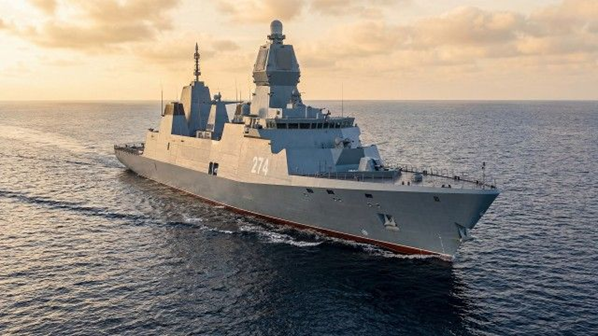
The Admirals’ Club
The Maritime Security Forum in partnership with
the Naval Forces General Staff
CONFERENCE“Shaping the new defence and deterrence posture of Romania, NATO and the EU in the Black Sea: Strengthening the Eastern Maritime Flank in the face of asymmetric and sub-conventional threats”
IN-PERSON AND ONLINE
1–2 October 2026 CONSTANȚA
Protect Together
CONFERENCE PROGRAMME
“Shaping the New Defence and Deterrence Posture of Romania, NATO and the EU in the Black Sea Region: Strengthening the Eastern Maritime Flank in the Face of Asymmetric and Sub-Conventional Threats”
Hybrid format: In-person and ONLINE – Cisco Webex Meetings
Moderators:Admiral (ret.) Dr Aurel POPA, Rear Admiral(ret.) Dr Constantin CIOROBEA, Rear Admiral (ret.) Dr Ion CUSTURA, Cmdr. (ret.), Prof. Dr Ioan CRACIUN, Rear Admiral (ret.) Dr Sorin LEARSCHI, Lecturer
Thursday, 1 October 2026
09.30–10.00 Welcome and online registration of participants
10.00–10.05
Opening address by Admiral (ret.) PhD. Aurel POPA, President of the FSM.
10.05–10.30
Presentation of the new concepts introduced by the FSM in the analysis of Maritime Security
Cdor (rtr) Prof. Craciun Ioan, PhD
10.30–11.45 Round table: “Shaping the new defence and deterrence posture of Romania, NATO and the EU in the Black Sea: Strengthening the Eastern Maritime Flank in the face of asymmetric and sub-conventional threats”
POSSIBLE TOPICS
1. From territorial defence to the defence of a strategic space. The Black Sea must be viewed as an integrated operational system: sea–coastline–airspace–critical infrastructure–the Danube–ports–logistics corridors–cyberspace. The central question: what exactly does the Eastern Maritime Flank mean, and where does it begin and end?
2. The new defence–deterrence equation. Not just ‘what do we defend ourselves with?’, but how do we produce a credible deterrent effect. Here we can discuss the allied presence, air and missile defence, maritime surveillance, naval capabilities, drones and unmanned systems, the protection of critical infrastructure, and rapid reaction capability. We can discuss the difference between deterrence through prevention and deterrence through punishment (strike) and which combination is realistic for Romania.
3. Threats below the threshold of armed conflict. Sabotage, hybrid operations, incidents affecting undersea infrastructure, sea mines, GPS/GNSS jamming, cyber-attacks, drones, disinformation, the exploitation of commercial or civilian actors, and apparently ‘accidental’ incidents. The strategic question becomes: how do you deter an adversary who deliberately operates below the threshold that would trigger a conventional military response?
4. The grey zone and the problem of attribution. Deterrence requires identifying the perpetrator.
In the maritime environment, attribution can be difficult. It would be worth discussing mechanisms such as Maritime Domain Awareness, intelligence sharing, sensors, satellites, drones and the integration of civilian and military intelligence. A powerful statement for discussion would be: “without credible attribution, there is no credible deterrence.”
5. Romania as a front-line actor, not merely a border state. What strategic role should Romania assume? A regional security provider? A NATO logistics hub? A node for Black Sea surveillance? A protector of the Danube estuaries and offshore energy infrastructure?
6. NATO–EU: operational complementarity. NATO plays a central role in collective defence, but many sub-conventional vulnerabilities fall within areas where the EU and civilian authorities are essential: critical infrastructure, energy, transport, resilience, cyber security, sanctions and border protection. A useful question: who responds, with what instrument and at what stage of escalation?
7. The regional dimension. Romania cannot build a maritime posture on its own. The Romania–Bulgaria–Turkey triangle must be analysed, along with the connection to Ukraine and the Republic of Moldova, and the link between the Black Sea and the Eastern Mediterranean, the Balkans and NATO’s Eastern Flank. The Montreux Convention remains an important strategic parameter in this regard.
8. Protection of critical maritime infrastructure. The Port of Constanța, energy terminals, pipelines, submarine cables, offshore platforms and Danube infrastructure must be treated as part of the defence posture. The question arises: who protects private infrastructure of strategic importance, and how is military–civilian–private cooperation organised?
9. Lessons from the war in Ukraine. The Black Sea has demonstrated that naval superiority no longer depends exclusively on conventional fleets. Maritime and aerial drones, coastal missiles, ISR, electronic warfare and distributed systems can alter the balance of power. For Romania, the question becomes what force structure is appropriate for maritime warfare over the next 10–15 years, not that of the past.
10. Societal and economic resilience. A deterrent posture is not exclusively military. The continuity of ports, commercial shipping, energy, communications and administration in times of crisis contributes directly to deterrence. The adversary must know that disrupting the system does not produce the intended strategic effect.
The key question for the round table: How can Romania, together with NATO and the EU, establish a posture in the Black Sea capable not only of responding to aggression, but also of identifying, attributing and deterring hostile actions before they become a fait accompli?
Moderator: Admiral (ret.) PhD. Aurel Popa
Keynote Speakers: Vasile SIMILEANU – Geopolitics, Ștefan POPESCU – University Professor, PhD political analyst, General (ret.) PhD Ștefan DĂNILĂ, Gl. Maior (ret.) PhD Dan Grecu, Radu Tudor military analyst – online, Dorin Popescu President of the “Casa Mării Negre / Black Sea House” Association
11.45 – 12.00 – Break – clips and promotional material from the sponsors will be shown
12.00 – 13.30 – Round table: “The Defence of Critical Maritime Infrastructure and a Possible Hybrid Fleet for Romania”
POSSIBLE TOPICS
1. Critical maritime infrastructure as a component of national defence. Ports, terminals, offshore platforms, pipelines, submarine cables, energy infrastructure, communications systems, navigable waterways, Danube infrastructure and logistics facilities must be viewed as an integrated strategic system, not as separate targets. The vulnerability of one component can have a knock-on effect on national and regional security.
2. What needs to be defended, and against which threats? A dynamic mapping of infrastructure and the interdependencies between them is required. The threat is no longer limited to conventional military attacks: it includes sabotage, aerial and maritime drones, unmanned underwater vehicles, mines, cyber-attacks, jamming, interference with communications and navigation, clandestine actions and operations carried out in the ‘grey zone’.
3. From protecting assets to protecting critical functions. It is not enough to physically protect a port, a pipeline or a cable. We must ensure the continuity of strategic functions: energy, transport, communications, supply chains and military mobility. This introduces the concepts of redundancy, rapid recovery and resilience.
4. Who defends critical maritime infrastructure? The Navy? The Coastguard? The Border Police? The intelligence services? Private operators? NATO? The EU? This topic allows for discussion of an important institutional issue: the fragmentation of responsibilities. A permanent mechanism for civil–military–private coordination and rapid information exchange is required.
5. The concept of a ‘Hybrid Fleet’. This should not be understood merely as a combination of conventional vessels and drones, but as a distributed architecture of manned and unmanned capabilities: military vessels + autonomous surface and underwater platforms + UAVs + fixed or mobile sensors + satellites + AI + electronic warfare + civilian infrastructure adaptable to security missions.
6. The hybrid fleet as a force multiplier. For Romania, the relevant question is whether such an architecture can deliver an operational effect that is disproportionate to its cost. Autonomous systems can be used for continuous surveillance, mine detection, infrastructure protection, ISR, patrols, early warning and support for manned vessels.
7. Lessons from Ukraine and their application to Romania. The war in the Black Sea has demonstrated the value of unmanned maritime systems and the combination of sensors, intelligence, drones and distributed effects.
But we must avoid the simplistic conclusion that ‘Romania needs more drones’. The correct question is: what operational ecosystem needs to be built so that unmanned systems can be integrated into a credible naval structure?
8. The national industrial base. A hybrid fleet also requires industrial capacity: shipyards, manufacturers of drones and sensors, software, AI, secure communications, maintenance and the capacity for rapid platform replacement. Thus, the Romanian defence and naval industries become components of strategic resilience.
9. NATO interoperability and the European dimension. A Romanian hybrid fleet must not be designed in isolation. The systems must be able to communicate and operate alongside NATO structures and regional partners. The EU can play a major role in the protection of critical infrastructure, dual-use technologies, research, funding and resilience.
10. Legal and autonomy issues. The introduction of AI and autonomous systems raises issues regarding human control, the attribution of responsibility, rules of engagement, the protection of civilian shipping, and the use of autonomous systems in times of peace, crisis and conflict. For the FSM, this could be a highly valuable and distinctive aspect.
The key question for the round table:Can Romania transform the protection of critical maritime infrastructure from a predominantly reactive system into a proactive, distributed and resilient architecture, in which a Hybrid Fleet integrates conventional naval capabilities, autonomous systems, sensors, artificial intelligence and civilian resources?
Moderator: Rear Admiral (rtr) PhD. Sorin Learschi
Keynote Speakers: Ștefan POPESCU – University Professor, PhD political analyst, Rear Admiral (rz) PhD. Liviu Auraș COMAN,Rear Admiral (rz) PhD Alexandru Iuri COVALIOV, Rear Admiral (rz) PhD Constantin CIOROBEA, Commander, University Professor, PhD. Lucian-Valeriu SCIPANOV – online
13.30 – End of the first day of the conference
13.30–15.00 Participants take part in informal discussions over a buffet lunch
NOTE:
13.30–14.15 Keynote speakers are invited to participate in discussions, comments and exchanges of views relevant to the conference theme, to which the Chatham House Rule applies.
Friday 2 October 2026
09.00 – 11.30 Presentation of scientific research and information papers
Moderators:Rear Admiral (ret.) Dr Sorin Learschi, Rear Admiral (ret.) Dr Ion CUSTURA, Rear Admiral Dr Corneliu BOCAI
11.30 – 11.45 – Break – videos and promotional materials from sponsors will be shown
11.45 – 13.30 Presentation of informative and scientific research papers
13.30 – 14.00 – Closing address by the Chief of the Naval Staff –Vice Admiral. PhD.Mihai PANAIT
14.00 – 14.15 – Closing of the conference. Conclusions.
Organising Committee

Aurel POPA
Amiral (rtr.) dr.

Sorin LEARSCHI
Cam.fl. (rtr.) lect. univ. dr.
Ion CUSTURĂ
Cam.fl. (rtr.) dr.
Scientific Committee
Marius Hanganu
Cam.fl. (rtr.) prof. univ. dr.

Aurel POPA
Amiral (rtr) dr.
Ion Plăviciosu
Vam. (rtr.) dr.
Registration conditions
By 15 SEPTEMBER 2026
Submission of the completed registration form. Complete the registration form here.
The registration form must be completed either with the title and abstract of the paper to be presented at the conference, or by selecting the option to attend the debates without submitting a scientific paper. Participants have the opportunity to submit a second scientific paper.
In the case of co-authored papers, the co-author’s registration for the conference is subject to the same conditions. Each co-author must complete a separate registration form.
By 20 SEPTEMBER 2026
Submit the full text of the scientific paper, in accordance with the formatting requirements, to the following email address: contact@forumulsecuritatiimaritime.ro
Download the formatting requirements here.
Following the evaluation of the submitted papers via the “double-blind” (peer review) system, the Scientific Committee and external reviewers may recommend: the presentation of the papers at the Conference, the making of amendments to the papers, or the rejection of submissions, giving reasons.
By 24 SEPTEMBER 2026
Confirmation of the papers to be presented at the Conference.
EVALUATION OF PAPERS
MANUSCRIPT EVALUATION
Type of evaluation – peer review (Peer Review)
The selection procedure for scientific manuscripts utilises the ‘double-blind’ evaluation system (peer review).
Manuscripts submitted for publication will be reviewed using the ‘double-blind’ peer review system (peer review), in accordance with international scientific standards. Thus, every scientific paper submitted will be reviewed by at least two reviewers. The review will be conducted anonymously (the author’s name is not disclosed to the reviewers, and the reviewers’ names are not disclosed to the author). If necessary, authors will receive recommendations and comments to improve the quality of their paper’s content. Upon a reasoned proposal from the reviewers, the presentation of a scientific paper at the conference may be rejected. The evaluation of articles is carried out solely by members of the Scientific Committee. The rights and responsibilities of reviewers are set out in the Declaration on Ethics and Malpractice
Chair of the Organising Committee
Admiral (ret.) Dr Aurel POPA
contact@forumulsecuritatiimaritime.ro
Writing requirements
Article title
The title should be written in capital letters, Times New Roman, 14-point font, bold, centred.
Author(s) of the article
The first name(s) and surname(s) of the author(s) are written on the right-hand side, one line below the title, preceded by their academic rank and academic title (if applicable), in Times New Roman, 12-point font. Surnames should be written in capital letters and bold. The name shall be followed by footnotes indicating the main institutional affiliation (for each author separately, where applicable) and the email address, written in Times New Roman, 9-point font, bold and italics.
AUDITORIUM
THE MARITIME SECURITY FORUM
in partnership with the Romanian Naval Forces, is organising the following event on 1–2 October 2026
CONFERENCE: “Shaping the new defence and deterrence posture of Romania, NATO and the EU in the Black Sea: Strengthening the Eastern Maritime Flank in the face of asymmetric and sub-conventional threats”
The completed form must be submitted by 28 October 2026
The invitation to attend will be sent to participants on 29 October 2026
Partners


 | Centrul pentru tehnologia informației și apărare cibernetică |