



2026 FIFA WORLD CUP: WHAT FOOTBALL TEACHES US ABOUT STRATEGY, PRESSURE AND DECISION-MAKING
ANALYSIS: MARITIME SECURITY FORUM
Analysis prepared by the Maritime Security Forum, based on the monitoring of information from public sources and an analysis methodology supported by artificial intelligence.
CONTENTS
THE 2026 FIFA WORLD CUP: WHAT FOOTBALL TEACHES US ABOUT STRATEGY, PRESSURE AND DECISION-MAKING.. 2
WHY THE FAVOURITES NO LONGER WIN SO EASILY.. 4
HOW DO YOU WIN A WORLD CUP TODAY? SEVEN LESSONS FROM THE 2026 EDITION.. 4
WHAT THE WORLD CUP TEACHES US ABOUT THE WORLD WE LIVE IN.. 6
BEYOND THE PITCH: THE WORLD CUP AS A GLOBAL PHENOMENON.. 7
HOW ARTIFICIAL INTELLIGENCE IS CHANGING FOOTBALL.. 9
FIVE MOMENTS THAT HAVE ALREADY CHANGED THE 2026 FIFA WORLD CUP. 11
THE ROAD TO THE TROPHY – WHAT WILL MAKE THE DIFFERENCE ON THE WAY TO THE FINAL.. 12
TEN KEY INSIGHTS FROM THE 2026 FIFA WORLD CUP. 13
FOREWORD
The 2026 FIFA World Cup is one of the most important global events of the year, far exceeding the scope of a mere sporting competition. Through the scale of its organisation, its economic impact, the international travel it generates, the use of advanced technologies and its ability to bring together millions of people from across the globe, the tournament offers numerous perspectives for analysis that extend beyond the realm of football.
This study, carried out as part of the Maritime Security Forum, aims to offer readers a different perspective on the 2026 FIFA World Cup. Without competing with the sports press and without focusing exclusively on presenting the competition’s results or statistics, this paper analyses the tournament from the perspective of organisation, decision-making, technology, strategic adaptation and the transformations that define contemporary football.
The analysis is based on publicly available information sourced from the international specialist press, press releases and official sources, as well as from monitoring the competition’s progress as it unfolded. This information has been evaluated, summarised and integrated into a proprietary analytical approach, using research and interpretation methods supported by artificial intelligence tools, exclusively to organise the information, identify trends and structure the material. The conclusions, interpretations and assessments set out in this paper are entirely those of the author and the Maritime Security Forum.
This paper does not seek to make definitive predictions regarding the competition’s results, nor does it aim to replace the technical analyses carried out by football specialists. Its objective is to highlight how a sporting competition of this magnitude reflects broader transformations in contemporary society: the digitalisation of decision-making, the role of technology in performance, the development of international cooperation, the modernisation of infrastructure and the consolidation of complex organisational models.
Through this approach, the Maritime Security Forum reaffirms its interest in analysing global phenomena that influence contemporary society, whether they relate to security, the economy, technology or sport. The 2026 FIFA World Cup demonstrates that major sporting competitions can serve as veritable laboratories for organisation, innovation and international cooperation, offering valuable lessons on leadership, resilience, adaptability and performance management.
We hope that this paper will offer readers not only an overview of the competition, but also an invitation to reflect on how top-level sport can become a source of insight into the profound transformations shaping today’s world.
THE 2026 FIFA WORLD CUP – MORE THAN JUST FOOTBALL: A LESSON IN STRATEGY, DECISION-MAKING AND ADAPTATION
The 2026 FIFA World Cup undoubtedly offers the spectacle that millions of fans around the world look forward to every four years. Spectacular goals, clashes between the big stars and the thrill of the knockout stages are the visible side of the competition. Beyond these, however, lies a far more complex process, in which success is built through planning, analysis, adaptation and the ability to make the right decisions in a very short space of time.
The current edition demonstrates more clearly than any of the previous ones that modern football is no longer won exclusively by the team with the most talented players. Numerous results from the group stage and the early stages of the knockout rounds have confirmed that the gap between favourites and underdogs has narrowed considerably. The elimination of teams considered among the main contenders for the trophy and the qualification of sides which, prior to the tournament, were viewed with scepticism, show that individual talent is no longer enough to guarantee success.
In reality, the World Cup is also a competition of strategies. Every manager tries to anticipate how their opponent will play, every team constantly adapts its tactics, and every substitution made during the match is a decision that can alter the final result. In many situations, the difference between victory and defeat is not down to a moment of individual brilliance, but to how a team manages to cope with the pressure, react to changes on the pitch and capitalise on the opportunities that arise.
Another defining feature of the 2026 edition is the balance of competition. Whilst in the past there were a few almost undisputed favourites, the current tournament demonstrates that world football is undergoing a period of redistribution of performance. Teams from Africa, Asia and North America are competing on equal terms with the major European and South American powers. Morocco, Canada, Japan, Paraguay and Mexico can no longer be regarded as mere one-off surprises, but as examples of sustained development, based on investment, organisation and continuity.
This shift makes every match harder to predict and turns the knockout stages into a constant exercise in adaptation. The teams that remain in the competition are those that best understand that a world tournament is not won solely through technical quality, but also through discipline, resilience and the ability to make inspired decisions at critical moments.
Seen from this perspective, the 2026 FIFA World Cup goes beyond the boundaries of a sporting competition. It becomes a demonstration of how strategy, organisation and continuous adaptation can transform potential into performance. In a world characterised by rapid change and uncertainty, the lessons offered by this tournament apply not only to football, but also to management, leadership, administration and any field where success depends on the quality of decisions.
WHY THE FAVOURITES NO LONGER WIN SO EASILY
One of the most interesting conclusions from the 2026 FIFA World Cup is that being the favourite offers almost no guarantee of success. Whilst two or three decades ago the differences between the major footballing powers and the rest of the participants were obvious, today these have narrowed considerably. World football has become more competitive, and success depends less and less on reputation and more and more on actual performance on the day of the match.
This year’s tournament has already provided plenty of examples. Germany, considered one of the main favourites to win the trophy before the tournament began, were knocked out after a dramatic clash with Paraguay. The Netherlands were eliminated by Morocco, whilst Brazil needed a last-minute goal to overcome a Japan side that displayed impressive tactical organisation. England and Belgium were forced to come back from behind, whilst France, although they qualified without too much trouble, faced opponents capable of causing them problems at numerous stages of the game.
These results are not mere surprises. They reflect a profound transformation in international football. Access to technology, the development of modern training centres, the professionalisation of youth academies and the constant exchange of expertise between leagues around the world have narrowed the gaps that once existed between continents. Today, almost all participating teams benefit from video analysts, specialist fitness coaches, sports psychologists and advanced performance monitoring technologies.
At the same time, modern football is much better analysed. Coaches know their opponents’ playing styles in detail, identify tactical patterns and prepare scenarios for almost any possible situation. Many of the so-called surprises are, in reality, the result of extremely rigorous preparation and impeccable tactical discipline.
Perhaps the most significant change, however, is psychological in nature. Teams once considered underdogs now take to the pitch without any inferiority complex. Morocco, Japan, Canada and Paraguay are not playing to limit the margin of defeat, but to win. These teams have shown that they can control the pace of the game, put pressure on their opponents and capitalise on any moment of weakness from the favourites.
The knockout stage amplifies this reality even further. In a single match, any mistake can prove decisive. A red card, a penalty, an inspired save by the goalkeeper or a goal scored in the dying minutes can completely alter the course of the competition. Under these circumstances, differences in individual quality fade into the background, and the best-organised teams often end up gaining the decisive advantage.
The 2026 FIFA World Cup thus sends an important message: success no longer belongs exclusively to the major footballing powers. It belongs to the teams that manage to combine individual talent with collective organisation, careful preparation and the ability to adapt quickly to the way each match unfolds. This shift makes the competition more spectacular for fans and, at the same time, much harder to predict, even for the most experienced analysts.
HOW DOES ONE WIN A WORLD CUP TODAY? SEVEN LESSONS LEARNED FROM THE 2026 EDITION
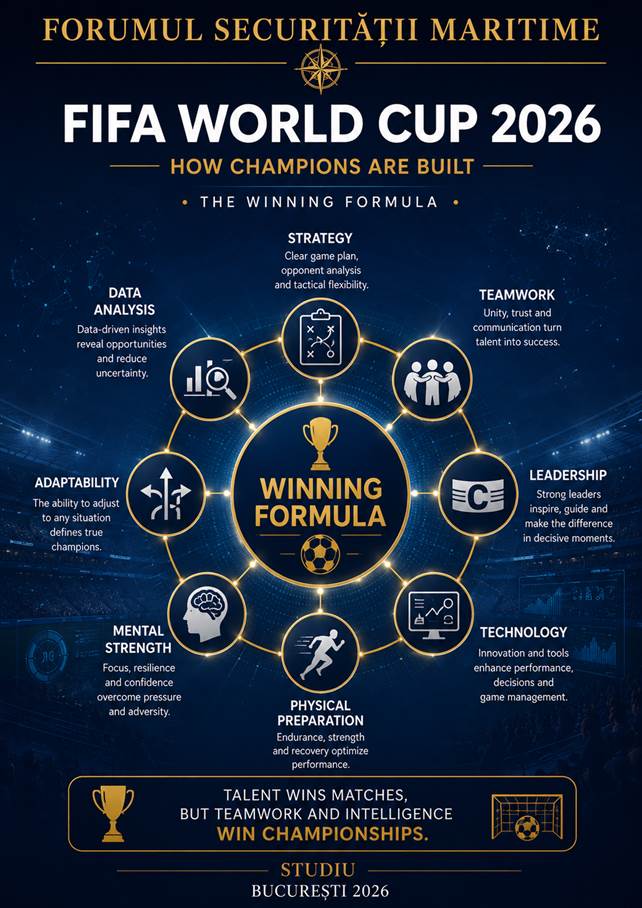
If there is one conclusion that has emerged so far from the 2026 FIFA World Cup, it is that modern football rewards teams capable of learning and adapting more quickly than their opponents. The competition is no longer won exclusively by those who attack more spectacularly or who have the biggest stars in their squad, but by those who manage each stage of the tournament intelligently.
The first lesson is that organisation often trumps individual talent. Throughout the competition, numerous teams considered to be of lesser quality have managed to limit their opponents’ initiative through tactical discipline and strict adherence to the game plan. In today’s football, the difference between a highly talented team and a very well-organised one is much smaller than in the past.
The second lesson is the importance of adaptability. No match follows exactly the scenario envisaged before the kick-off. Injuries, tactical changes, the score, or even weather conditions force teams to constantly adjust their approach. The sides that manage to adapt quickly are the ones that retain control of the game.
The third lesson concerns the role of the substitutes’ bench. In many of the matches played so far, players brought on during the game have had a decisive influence on the final result. This shows that success no longer depends solely on the starting eleven, but on the quality of the entire squad and the manager’s insight in choosing the right moment to make substitutions.
A fourth lesson relates to resilience. Numerous teams have come back after falling behind, demonstrating that emotional stability and confidence can turn a match around. In the knockout stages, the difference between victory and defeat often comes down to how a team reacts in difficult moments, not just what it achieves when it is dominating the game.
The fifth lesson is that set-pieces and the finer details make all the difference. In such a closely contested competition, many matches are decided by a precisely taken free-kick, a well-prepared corner or an inspired save by the goalkeeper. Details that once seemed secondary become decisive when the differences between teams are minimal.
The sixth lesson concerns mental preparation. The pressure of a world tournament is immense, and players must cope not only with their opponents on the pitch, but also with the expectations of their own supporters, media scrutiny and the stakes of every match. Teams that keep their cool at decisive moments have a clear advantage.
Finally, perhaps the most important lesson is that world football has truly become global. Whilst in the past the trophy seemed reserved for a select few nations, the 2026 edition demonstrates that long-term investment, the professionalisation of sporting structures and the development of youth academies are enabling more and more teams to compete on equal terms with the major powers. Morocco, Canada, Japan and Paraguay are not mere exceptions, but the expression of a profound shift in the balance of international football.
Taken together, these lessons show that success at the World Cup can no longer be explained by a single factor. It is the result of a combination of factors – strategy, organisation, discipline, adaptability, physical and mental preparation, as well as the ability to capitalise on every opportunity. It is precisely this combination that makes the 2026 edition one of the most evenly matched and spectacular in the competition’s history.
WHAT THE WORLD CUP TEACHES US ABOUT THE WORLD WE LIVE IN
Beyond the sporting spectacle, the 2026 FIFA World Cup offers an interesting insight into how the world has changed. For many decades, international football was dominated by a relatively small number of nations. Today, the competition is much more open, and the gaps between teams have narrowed significantly. This does not mean that the major powers have lost their edge, but rather that the others have learnt, invested and made up ground.
This development reflects a broader trend. In many fields, traditional advantages are no longer sufficient to guarantee success. Technology is more accessible, information circulates rapidly, training methods are shared globally, and experience gained in one part of the world can be put to use almost immediately in another. Under these circumstances, the difference is no longer determined solely by resources, but by how they are utilised.
The World Cup also demonstrates just how important adaptability is. No team can control all the variables of a tournament. Injuries occur, the pace of the game changes, referees make decisions, difficult weather conditions arise, or opponents perform above expectations. Faced with these situations, the most successful teams are not necessarily those that avoid problems, but those that react best when they arise.
Another aspect worth noting is the importance of collaboration. Although public attention focuses on the players and coaches, performance is the result of the work of a much larger team. Behind every match are fitness coaches, doctors, video analysts, psychologists, nutritionists and numerous other professionals. Modern football demonstrates that individual performance is underpinned by a well-coordinated collective effort.
The competition also offers a lesson in leadership. In difficult moments, leaders are not those who react impulsively, but those who manage to instil confidence, maintain team cohesion and make balanced decisions. In many of the matches in this tournament, the composure shown on the touchline proved just as important as a striker’s inspiration or a goalkeeper’s decisive save.
Perhaps the most valuable lesson, however, is that success is never guaranteed, and failure is not always a sign of a lack of merit. Some of the tournament’s strongest teams were knocked out earlier than anticipated, whilst sides considered underdogs exceeded all expectations. This demonstrates that performance must be reaffirmed every day and that a reputation built in the past cannot replace the preparation required in the present.
As the World Cup approaches its decisive stages, it remains to be seen who will lift the trophy. Whatever the final result, the 2026 edition is already leaving an important legacy: world football is more balanced, more competitive and more open than ever before. For fans, this means a high-quality spectacle. For those interested in strategy, management or leadership, it is further confirmation that success belongs to those who manage to learn continuously, adapt quickly and turn every challenge into an opportunity for progress.
BEYOND THE PITCH: THE WORLD CUP AS A GLOBAL PHENOMENON
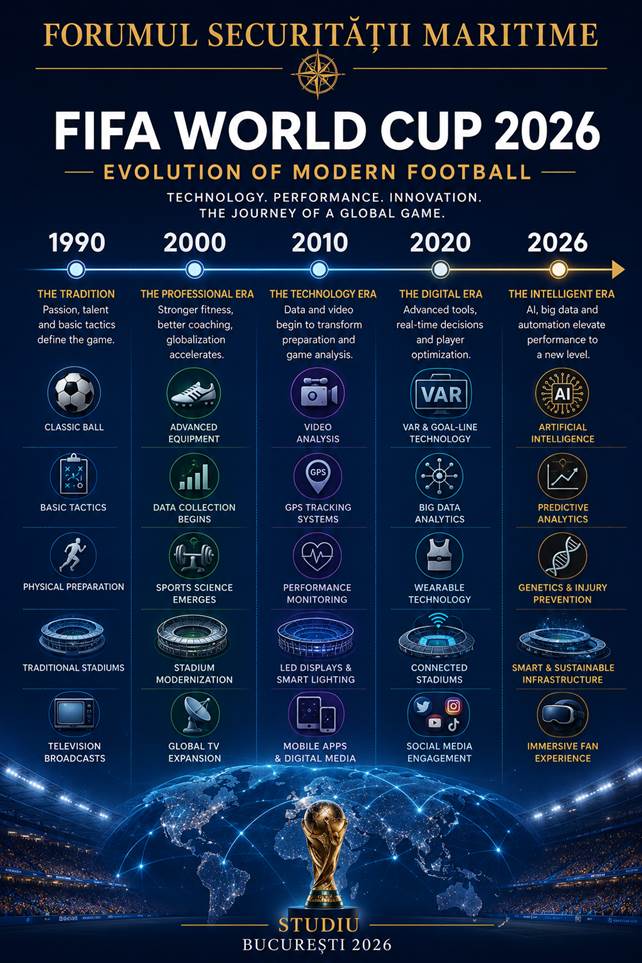
For most of us, the World Cup begins with the kick-off whistle and ends after the final goal. In reality, what we see in the stadium or on television is merely the most visible part of a vast machinery that operates non-stop long before the first match is played and continues long after the trophy has been awarded.
Organising a World Cup involves the simultaneous coordination of an impressive number of activities. Thousands of people are involved on a daily basis in stadium management, spectator safety, the transport of teams and officials, airport operations, hotel management, communications, medical services and digital infrastructure. Added to this are millions of supporters travelling between the host cities, turning the competition into a true exercise in international cooperation.
The 2026 edition presents an additional challenge due to its unprecedented scale. The joint organisation by Canada, Mexico and the United States involves coordinating different administrative systems, harmonising procedures and ensuring ongoing collaboration between institutions across three distinct countries. The travel arrangements for teams and supporters involve very long distances, and the success of the competition depends on the seamless operation of transport, communications and public service networks.
From this perspective, the World Cup serves as a prime example of global project management. It is not enough for a stadium to be modern or for a team to be well prepared. The entire system must function in a coordinated manner. A disruption to air travel, a major communications problem, severe weather conditions or logistical difficulties can influence the running of the competition just as much as the results on the pitch.
In recent years, technology has become one of the cornerstones of this organisation. Digital platforms enable the management of accreditations, the monitoring of spectator flows, the coordination of volunteers and real-time communication between organisers. IT systems support refereeing, the transmission of images to billions of television viewers and the management of the huge volumes of data generated every day of the competition.
The economic impact is, in turn, remarkable. Host cities benefit from investment in infrastructure, the development of tourism and a level of international visibility that is hard to match through other events. Hotels, restaurants, transport operators and numerous other economic sectors feel the positive effects of an unprecedented influx of visitors. At the same time, organising a competition of this scale also entails a responsibility to use resources efficiently and to undertake long-term planning, so that the investments made continue to yield benefits even after the tournament has ended.
Nor should the diplomatic dimension of the World Cup be overlooked. For several weeks, the competition brings together dozens of countries, hundreds of organisations and millions of people from different cultures. Football becomes a common language, capable of fostering dialogue and bringing together communities which, in other contexts, have very few opportunities to interact. In this sense, the World Cup is more than just a sporting event; it is also a platform for international cooperation and for promoting the image of the participating nations.
Perhaps it is precisely this complexity that explains the fascination the competition holds for audiences around the world. Behind every match lies not only the sporting performance of two teams, but also the smooth functioning of a global system in which logistics, technology, organisation and international collaboration play a role just as important as the players’ talent. For this reason, the World Cup can be seen not only as the most important football competition on the planet, but also as one of the most complex civilian operations carried out on an international scale.
HOW ARTIFICIAL INTELLIGENCE IS CHANGING FOOTBALL
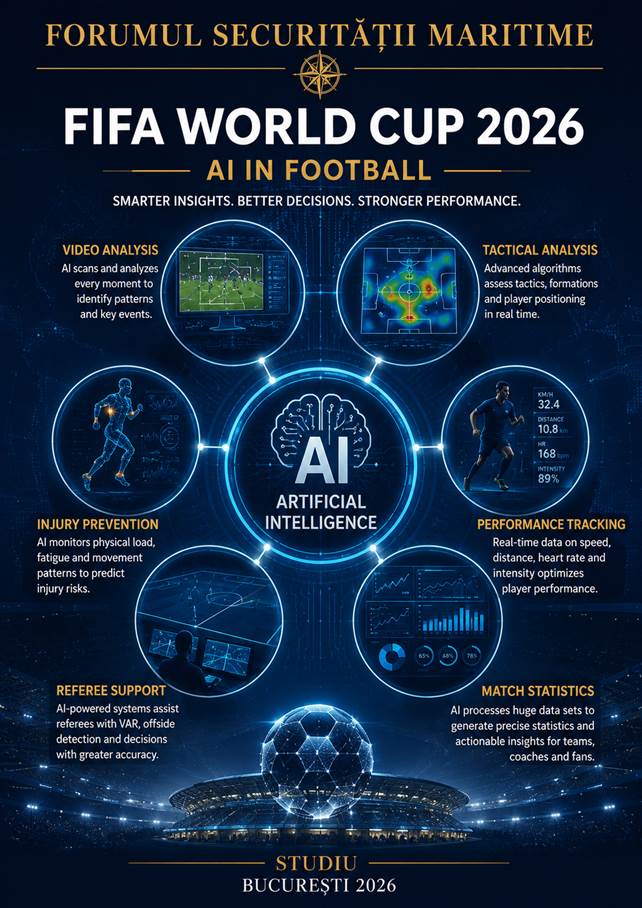
Just a few years ago, artificial intelligence seemed a concept confined to research laboratories and major technology companies. Today, it is also part of the world of football, even if spectators do not always notice it. During a World Cup match, many of the decisions made before, during and after the game are supported by computer systems capable of analysing huge volumes of information in a very short time.
A team’s preparation begins long before they take to the pitch. Every opponent is analysed in detail. Playing patterns, player positioning, the areas where the most chances are created, how set-pieces are taken, and the team’s reactions at different stages of the match are all studied. Whereas in the past all these observations were made exclusively by coaches and video analysts, today artificial intelligence-based programmes can automatically identify patterns and trends that might go unnoticed even by the most experienced specialists.
The same technology also helps to monitor the team’s own players. Data collected during training sessions and matches enables the assessment of effort levels, speed, distance covered and running intensity. Based on this information, the coaching staff can decide when a player needs to rest, when the risk of injury begins to rise, or when the time is right for a substitution.
Artificial intelligence also supports in-game decision-making. Coaching staff receive constant updates on how the match is progressing, the effectiveness of the tactics employed and any changes observed in the opposition’s behaviour. Of course, the final decision always rests with the manager, but it is made on the basis of a volume of information that is incomparably greater than it was two decades ago.
Refereeing has not been left out of this transformation either. Video analysis systems, goal-line technology and semi-automated mechanisms for identifying offside positions have radically changed the way in which key moments in the game are validated. Although refereeing decisions continue to be debated, technology has considerably reduced the number of obvious errors and increased confidence in the fairness of the competition.
However, artificial intelligence cannot replace what remains essential in football: creativity, inspiration and the human factor. No algorithm can accurately predict a player’s reaction at a moment of peak pressure, nor the emotion of a packed stadium, nor the inspiration of a striker who finds an unexpected solution in a fraction of a second. Technology provides valuable information, but victory continues to depend on people.
Perhaps this is precisely where the most important lesson of the 2026 FIFA World Cup lies. Artificial intelligence does not change the essence of football, but rather the way it is prepared and managed. It does not score goals or take penalties, but it helps those in charge of teams to make better-informed decisions. Ultimately, success comes when human experience and technology work together, each complementing what the other cannot provide.
FIVE MOMENTS THAT HAVE ALREADY CHANGED THE 2026 FIFA WORLD CUP
Every World Cup has its memorable matches, but only a few of them truly change the course of the competition. The 2026 edition is no exception. Even before the round of 16 had concluded, the tournament had already produced several moments that altered both perceptions of the favourites and the path to the trophy.
The first such moment was Germany’s elimination. Regarded as one of the best-organised and most consistent teams in the tournament, the German side seemed poised for a long run. However, in a knockout stage where every detail counts, Paraguay managed to withstand the pressure and win on penalties. Beyond the result, this match sent a powerful message: at the 2026 World Cup, there are no longer any opponents who can be considered easy to beat.
The second highlight was Morocco’s qualification at the expense of the Netherlands. Following their remarkable performance in 2022, many were wondering whether Morocco could build on that run. The answer was a resounding yes. The team once again demonstrated organisation, discipline and an impressiv e ability to handle moments of pressure. We are no longer talking about a surprise, but about a side that has earned its place amongst the top teams in world football.
The third highlight was Canada’s victory in their first knockout-stage match. For one of the host nations, qualifying for the round of 16 holds significance that goes beyond sporting achievement. It confirms the rapid development of North American football and demonstrates that the investments made in recent years in infrastructure, academies and domestic competitions are beginning to yield results at the very highest level.
A fourth key moment was the way in which Brazil managed to overcome Japan. Although the Brazilians qualified, the match showed that the gap between the continents has narrowed considerably. Japan displayed a level of tactical awareness and organisation which, just two decades ago, would have been hard to imagine in a clash with one of the most successful national teams in history. Even the defeat confirmed the remarkable progress of Asian football.
Finally, perhaps the most significant change is one that is less obvious. The current World Cup confirms that the balance of competition has shifted profoundly. Many of the knockout matches were decided by the narrowest of margins, in extra time or on penalties. This shows that the gaps in quality between teams are narrowing and that preparation, organisation and the handling of decisive moments have become just as important as individual talent.
Taken together, these moments define the identity of the 2026 edition. It is not a tournament dominated by a single favourite, nor is it a competition where tradition guarantees success. It is a World Cup in which every qualified team can influence the course of the competition, and every match has the potential to rewrite the rankings established before the first whistle.
Perhaps it is precisely this unpredictability that explains why the 2026 edition is being followed with such keen interest. For supporters, every day brings a new story. For coaches and players, every match is a new test. And for observers of the sport, the competition offers a clear demonstration that performance is no longer the exclusive result of tradition, but of the ability to evolve continuously and respond swiftly to the challenges of a game that is constantly changing.
THE ROAD TO THE TROPHY – WHAT WILL MAKE THE DIFFERENCE ON THE WAY TO THE FINAL
As the knockout stages progress, the question on the minds of millions of fans is a natural one: who will win the 2026 FIFA World Cup? The answer is more difficult to predict than in previous editions. None of the teams still in the competition can be considered the clear favourite, and the results so far have shown that any single match can radically alter the shape of the knockout stage.
Whilst the early stages of the tournament were dominated by the desire to accumulate points and secure qualification, the knockout stages require a completely different approach. Every mistake could mean elimination, and every decision must be carefully weighed up. At this stage of the competition, the differences in technical ability between teams are often very small, which means that other factors become decisive.
A key factor is the squad’s physical condition. After several weeks of competition, accumulated fatigue begins to affect the pace of the game, and injuries or suspensions can disrupt the plans of even the best-organised teams. Teams with a balanced squad and players capable of making successful substitutions during matches will have a significant advantage.
Equally important is tactical flexibility. In the knockout stages, no two matches are the same, and managers must constantly adapt their system of play to suit the opposition. Sometimes aggressive pressing is required, at other times a compact defensive block or a cautious approach whilst waiting for the right moment to counter-attack. The ability to quickly alter the initial plan can be decisive in determining qualification.
Experience also plays a key role. Teams that have frequently reached the World Cup finals are more familiar with the pressure of such moments and handle high-pressure situations with greater composure. However, the 2026 tournament demonstrates that experience is not enough unless it is accompanied by freshness, discipline and careful preparation for each opponent.
Another factor that will carry increasing weight is the psychological aspect. In the final minutes of a closely fought match or during a penalty shoot-out, tactical differences become secondary. Courage, concentration and self-belief can transform a player into a hero or decide the elimination of a team considered to be the favourites.
Nor should the role of the supporters be overlooked. The atmosphere created in the stands can influence the pace of a match, and for home teams or those enjoying strong support, this emotional advantage can become an additional source of motivation. At the same time, the pressure of expectations can have the opposite effect, forcing the favourites to contend not only with their opponents on the pitch, but also with the responsibility for the result.
Looking at the competition line-up, it is clear that the big favourites remain in contention, but they are joined by teams that have earned their place through consistent performances and remarkable organisation. This combination of tradition and the emergence of new footballing powers means that the path to the final is more wide open than in many previous editions.
Regardless of which team lifts the trophy at the end of the tournament, the 2026 FIFA World Cup has already demonstrated that performance can no longer be explained by a single factor. Individual talent remains essential, but it must be complemented by organisation, adaptability, emotional balance and the ability to make inspired decisions in the most difficult moments. These qualities will determine not only the winner of the competition, but also the direction in which world football will evolve in the years to come.
TEN KEY INSIGHTS FROM THE 2026 FIFA WORLD CUP
As the tournament progresses, it is becoming increasingly clear that the 2026 edition represents a landmark moment in the evolution of world football. Beyond the results of each match, the competition offers several insights that go beyond the immediate interests of supporters and outline the direction in which the sport is heading.
The first conclusion is that the balance of competition has increased considerably. The big favourites continue to start with a significant advantage, but this is no longer enough to guarantee qualification. The gaps between teams are narrower than in the past, and every match demonstrates that discipline and organisation can compensate for differences in individual quality.
The second point is that football has truly become a global sport. The performances of national teams from Africa, Asia and North America confirm that the development of sports infrastructure and investment in player development are yielding visible results. The global performance landscape is now far more diverse than it was two or three decades ago.
A third conclusion concerns the role of tactical preparation. Matches are increasingly won through organisation, the ability to adapt and by capitalising on decisive moments. In a game where physical and technical differences are narrowing, tactical intelligence is becoming a major competitive advantage.
It is equally clear that the squad matters just as much as the starting eleven. Numerous matches have been decided by players brought on after half-time or in the final minutes, demonstrating that success belongs to teams that have options available throughout the competition.
The competition also confirms the importance of technology. Video analysis, performance monitoring, video assistant refereeing and the use of digital tools all help to improve the quality of the game and reduce errors. However, technology does not replace inspiration and experience; rather, it complements them.
Another lesson is that psychological resilience is crucial. Numerous teams have come back from behind, and many qualifiers have been decided in extra time or on penalties. The ability to remain focused in the most difficult moments can make the difference between success and elimination.
The World Cup also demonstrates that performance is the result of a collective effort. Behind every result lies the work of coaches, fitness coaches, doctors, analysts and everyone else who contributes to a team’s preparation. Modern football is, perhaps more than ever, a sport of collaboration.
Another conclusion concerns the organisation of the competition. The 2026 edition shows that staging an event of this scale requires not only modern stadiums, but also efficient infrastructure, well-coordinated transport systems, high-performance communications and ongoing cooperation between numerous institutions. From this perspective, the World Cup is one of the most complex international projects undertaken in peacetime.
Furthermore, the current tournament confirms that long-term investment yields results. None of the competition’s surprise success stories have reached this position by chance. Behind every performance lie years of development, consistency and planning, demonstrating that lasting success cannot be built overnight.
Finally, perhaps the most important conclusion is that football remains one of the few fields capable of uniting the whole world around the same emotions. For a few weeks, cultural, linguistic and geographical differences are pushed into the background, and millions of people watch the same competition, sharing the same joy, the same tension and the same passion for the game.
These ten ideas not only explain the 2026 edition, but also describe the direction in which world football is evolving. They show that the future of this sport will be built on a balance between tradition and innovation, between talent and organisation, and between individual performance and a team’s ability to function as a whole. For this reason, the 2026 FIFA World Cup can be seen not only as an exceptional competition, but also as a reflection of the transformations defining the sport at the highest level in the 21st century.
CONCLUSIONS

The 2026 FIFA World Cup is, without a doubt, one of the most spectacular editions in the competition’s history. The increased number of participating teams, the new competition format and the joint hosting by Canada, Mexico and the United States have transformed the tournament into an event of unprecedented scale. However, what will truly remain in the memory of football fans is not just the scale of the competition, but the way in which it has demonstrated that world football has entered a new phase of development.
The results so far show that the gap between the major footballing powers and the rest of the participants continues to narrow. Teams considered favourites have been knocked out earlier than experts anticipated, whilst sides that were previously regarded as outsiders have shown they can compete on equal terms with the world’s top teams. This shift is no coincidence. It reflects the investments made in player development, the growth of academies, the professionalisation of coaching staff, and ever-wider access to technology and modern training methods.
The competition has also highlighted another important reality: performance is the result of a balance between talent, organisation and the ability to adapt. Modern football rewards teams that learn quickly, that constantly analyse their opponents and that manage to respond effectively to the challenges that arise during each match. In this sense, the World Cup serves as a demonstration that success is built on consistency, discipline and collaboration.
Equally important is the fact that the tournament extends far beyond the boundaries of the pitch. It mobilises impressive logistical resources, sets complex infrastructure in motion, boosts local economies, fosters international cooperation and brings together millions of people from different cultures. For a few weeks, football becomes a universal language, capable of creating excitement, dialogue and a genuine sense of belonging to the same global community.
Technology is another defining feature of the 2026 edition. From performance analysis and player monitoring to assisted refereeing and competition management, digital tools help to enhance the quality of the game and streamline decision-making. However, this development does not diminish the role of the human factor. On the contrary, it highlights the fact that technology is only truly valuable when it supports the intelligence, experience and responsibility of decision-makers.
Perhaps the most important lesson to be learnt from this World Cup is that success is never guaranteed. Reputation, history and a track record are significant advantages, but they must be proven in every match. At the same time, teams that invest consistently in development, build long-term plans and make the most of every opportunity can quickly close the gap on opponents traditionally considered stronger.
From this perspective, the 2026 FIFA World Cup is more than just a sporting competition. It is a true reflection of a constantly changing world, in which success belongs to those who manage to combine tradition with innovation, experience with adaptability, and individual performance with team strength. It is precisely this combination that makes the current edition one of the most balanced, competitive and exciting in the history of football.
Regardless of who lifts the trophy at the end of the tournament, the 2026 FIFA World Cup is already leaving an important legacy. It demonstrates that the future of football will be defined not only by exceptional players, but also by organisations capable of constantly learning, innovating and adapting. After all, this is the lesson that every great competition teaches: true victories are not the result of chance, but the expression of intelligent preparation, sustained hard work and the belief that progress is possible no matter where you start from.
MARITIME SECURITY FORUM