



| The Maritime Security Forum is pleased to provide you with a product, in the form of a daily newsletter, through which we present the most relevant events and information on naval issues, especially those related to maritime security and other related areas. It aims to present a clear and concise assessment of the most recent and relevant news in this area, with references to sources of information. We hope that this newsletter will prove to be a useful resource for you, providing a comprehensive insight into the complicated context of the field for both specialists and anyone interested in the dynamics of events in the field of maritime security. |
How the Biggest Nuclear Torpedo Actually Works | Poseidon
MS Daily brief- 16 October 2026
▶ Watch MSF’s conferences and other videos on YouTubeContents
DAILY UPDATE: UKRAINE – BLACK SEA – MIDDLE EAST. 1
Friday, 16 October – Maritime Security Forum.. 1
Seven sailors are missing after drones struck two oil tankers near the Romanian Black Sea coast 19
The war on shipping in the Black Sea reaches Bulgaria – Maritime Security Forum.. 27
The strike at Borisoglebsk: Neptune missiles damaged six Su-34 bombers – Maritime Security Forum 37
BREAKING NEWS: Massive US military build-up in the Middle East; ‘MOAB’ hits target; Space Force ACTIVATED | TBN Israel
News from Ukraine | Important! Ukraine resumes attacks on Russian refineries | Trump and Musk have failed
DAILY BRIEFING: UKRAINE – BLACK SEA – MIDDLE EAST
Friday, 16 October – Maritime Security Forum
1. SUMMARY
1.1. Romania: two commercial vessels struck by drones near Sulina
Major development confirmed on 15 October.
The President of Romania, Nicușor Dan, confirmed that the commercial vessels YARA J and WINE TRADER were struck by aerial drones.
The incident involving the YARA J took place on the evening of 14 October in Romanian territorial waters. However, the presidential confirmation came on 15 October, representing new information compared to the previous report.
The WINE TRADER, flying the flag of San Marino, reported a fire on the morning of 15 October, approximately 13 nautical miles south-east of Sulina.
The Romanian Naval Authority confirmed the following toll: five sailors rescued and seven missing.
A NATO military source told Reuters that the drones were of Russian origin. This attribution should not be confused with a definitive official conclusion of the Romanian investigation. Seven sailors missing after drones hit two ships near Romania | Reuters
Assessment: the situation has moved beyond mere suspicions regarding the existence of the attacks. The main uncertainty now concerns the attribution of responsibility, intent and any potential legal consequences.
1.2. Romania–Bulgaria–NATO: a joint political and military response
On 15 October, in Brussels, the President of Romania and the Prime Minister of Bulgaria, Rumen Radev, met with the Secretary-General of NATO, Mark Rutte.
Discussions focused on attacks on commercial vessels and strengthening security in the Black Sea.
The NATO Secretary-General confirmed the strengthening of capabilities to counter drones and the possibility of further adapting the deterrence and defence posture. NATO chief discusses Black Sea security with Bulgarian and Romanian leaders following drone attacks on ships
1.3. Ukraine: massive attack involving 580 Russian drones
On 15 October, the Ukrainian authorities reported that 580 Russian drones had been launched towards Ukrainian territory, of which 536 were reportedly intercepted.
The Kirovohrad region was particularly hard hit: three people were killed, six injured and 26 sites struck, according to local authorities. Central Ukrainian region hit by vast drone attack, killing three | Reuters
1.4. Ukraine–US: new information on Starshield restrictions
A Reuters investigation published on 15 October at 23:07 UTC suggests that the order to restrict the Starshield military service used by Ukraine may have come from within the White House.
A US official denied that President Donald Trump had personally requested the measure.
Assessment: this information raises significant concerns regarding operational dependence on external technological infrastructure. EXCLUSIVE: Order to limit Starshield for Ukraine came from inside White House, sources say | Reuters
1.5. Middle East: escalation in Yemen
On 15 October, the Houthis attacked the Al-Maashiq presidential compound in Aden.
The Yemeni government reported five dead and 16 injured.
On the same day, the Saudi-led coalition released a report detailing Houthi attacks on Saudi infrastructure Yemen’s Houthis hit palace in Aden, coalition details attacks on Saudi infrastructure | Reuters
1.6. Iran: the scale of attacks on infrastructure in the Gulf
A Reuters investigation published on 15 October identified at least 135 Iranian missile and drone attacks on 84 infrastructure targets in the Gulf states since the start of the conflict in February 2026.
These figures are cumulative and do not represent attacks that have taken place exclusively in the last 24 hours.
1.7. Gaza: suspension of commercial supplies from Israel
On 15 October, Reuters and the Associated Press confirmed that commercial shipments from Israel to Gaza had been suspended.
Israel attributes the situation to a dispute between Palestinian traders and Hamas over the taxation of goods. Representatives of the traders dispute the Israeli explanation.
Humanitarian shipments and some commercial deliveries from Egypt have continued. Israel says commercial goods no longer entering Gaza after merchants suspend coordination | Reuters
Executive summary
We identify three dominant developments: the deterioration of maritime security in the western Black Sea, the intensification of the Russian-Ukrainian energy and technology standoff, and the widening impact of the Middle East conflict on civilian infrastructure and international trade.
2. UKRAINE
2.1. The massive attack on the Kirovohrad region
On 15 October, the Kirovohrad region in central Ukraine was hit by one of the most intense drone attacks reported by local authorities since the start of the war.
Governor Andrii Raikovych stated that over 360 drones targeted the region, affecting 26 locations.
Three people were reported killed and six injured.
The targets included critical infrastructure, logistics facilities, transport companies and residential buildings.
The Ukrainian Air Force reported that 580 drones were launched nationwide and that 536 of them were intercepted.
Information status: the attack and the damage are confirmed by reports and images; the figures regarding the number of drones and interceptions come from the Ukrainian authorities.
Assessment: we note the geographical expansion of Russian attacks on logistical and economic infrastructure, including in regions that were previously less exposed.
2.2. The Ukrainian attack on the Ryazan refinery
On 15 October, Ukraine resumed its attacks on Russian oil infrastructure.
A refinery in the Ryazan region, belonging to the Rosneft group, was struck by drones.
Russian Governor Pavel Malkov confirmed that a fire had broken out.
The facility accounts for approximately 5 per cent of Russia’s refining capacity, according to Reuters.
Russian President Vladimir Putin played down the consequences of the Ukrainian attacks on the refineries.
Disagreement over the cessation of attacks on energy infrastructure
US President Donald Trump had previously announced an agreement to halt attacks on energy infrastructure.
Ukrainian President Volodymyr Zelenskyy stated on 15 October that Ukraine no longer considers the suspension of strikes on Russian refineries to be justified, given the continuing attacks on Ukrainian energy infrastructure.
The Kremlin maintained that the exact scope of the agreement had not been definitively established.
Assessment: we do not identify the existence of a bilateral mechanism to cease energy attacks that is effectively functioning.
2.3. Strike on Borisoglebsk airfield
On 15 October, the Ukrainian General Staff announced that six Russian Su-34M military aircraft had been damaged at the Borisoglebsk airfield in the Voronezh region.
Ukraine claims to have used the Neptune missile system.
Reuters has verified satellite imagery showing damage to the airfield, but this does not, on its own, constitute independent confirmation of the extent of damage to all six aircraft.
Assessment: the use of Neptune systems against ground-based air targets highlights the adaptation of Ukraine’s long-range strike capabilities.
2.4. Restrictions on Starshield military communications
On 15 October, Reuters published information obtained from US and Western officials stating that the decision to restrict the Starshield service used by the Ukrainian military had been taken at the level of the US administration.
The officials consulted did not identify the person who issued the order.
A US official denied that President Trump had personally requested the restriction of the service.
Ukrainian sources stated that the restrictions had affected drone operations and that the terminals were only functioning whilst in motion at speeds of up to approximately 160 km/h.
Strategic assessment: dependence on external communications systems can become a major military vulnerability when access is influenced by political decisions.
2.5. The Zaporizhzhia Nuclear Power Station
On 15 October, the Russian company Rosatom announced a temporary ceasefire agreement to repair a facility supplying electricity to the Zaporizhzhia Nuclear Power Station.
According to Rosatom, the agreement was brokered by the International Atomic Energy Agency.
The plant is not generating electricity, but requires an external power supply for essential cooling and nuclear safety functions.
Note: the existence of the agreement is reported on the basis of Rosatom’s statement; we have not identified any detailed independent confirmation of the repairs being carried out within the period analysed. Reuters
3. ROMANIA – NATO AND THE EASTERN FLANK
3.1. New air raid alert in Tulcea County
On the morning of 15 October, the Ministry of National Defence’s radar systems detected an aerial target near Serpent Island.
Two F-16 aircraft from the Romanian Air Force took off from Borcea Air Base 86.
At 08:36, residents in the east of Tulcea County received a RO-Alert message.
The alert ended at 10:27.
The Ministry of National Defence stated that no incursions into national airspace were reported during this alert.
The intrusion of a drone at 01:34 on the same day falls within the period preceding the one under analysis. It is relevant to the context but is not presented as a new incident.
3.2. The Romania–Bulgaria–NATO meeting
On 15 October, in Brussels, the President of Romania and the Prime Minister of Bulgaria discussed Black Sea security and attacks on commercial shipping with the NATO Secretary-General.
Mark Rutte reaffirmed the strengthening of NATO’s posture on the Eastern Flank, including through the development of capabilities to counter drones.
The Alliance indicated that it would continue to cooperate with the littoral states and adapt its deterrence and defence measures in line with evolving threats.
3.3. Romania’s position
President Nicușor Dan stated that the incidents require a response from the Romanian state.
Following the meeting in Brussels, he emphasised the need for equipment suited to the new threats.
He also spoke of Russia’s attempts to destabilise Ukraine and undermine support for it.
Important distinction: the political assessment of Russia’s behaviour does not automatically equate to the final legal attribution of each attack on the ships.
3.4. Implications for NATO Articles 4 and 5
The incidents in Romanian territorial waters may justify consultations amongst allies under Article 4 of the North Atlantic Treaty.
However, we have not identified any official confirmation that Romania invoked Article 4 during the period under review.
Article 5 requires a separate assessment of the existence of an armed attack and its circumstances.
The striking of a merchant vessel in an area under Romanian sovereignty does not automatically trigger collective defence.
Assessment: the immediate priority is to strengthen maritime and air defences, whilst establishing the facts and determining responsibility.
4. THE BLACK SEA, THE DANUBE AND CRITICAL INFRASTRUCTURE
4.1. WINE TRADER – seven sailors missing
Date: 15 October 2026.
Time of alert: approximately 07:00.
Location: approximately 13 nautical miles south-east of Sulina.
Flag: San Marino.
Type: commercial chemical tanker.
The Romanian Naval Authority confirmed that a fire had broken out in the ship’s superstructure.
There were 12 people on board. The vessel was not carrying any cargo.
During the rescue operations, five seafarers were rescued, whilst seven remain missing.
Of those rescued, one had burns to the scalp and another showed mild symptoms of smoke inhalation, according to information from the emergency services.
Latest confirmed situation: seven sailors missing. At the time of writing, we have not identified any official update that would alter this figure.
Legal location
Reuters places the WINE TRADER approximately one nautical mile outside the limit of Romanian territorial waters.
This clarification is essential: the fact that the operation is being coordinated by Romania does not automatically mean that the incident took place within its territorial waters
4.2. The intervention by the Romanian authorities
The Ministry of Internal Affairs announced the mobilisation of the Border Police, the General Inspectorate of Aviation and the General Inspectorate for Emergency Situations.
Two Black Hawk helicopters, ships and specialised vessels were dispatched.
Weather conditions and high waves hampered the operation.
Assessment: the incident highlights the importance of search and rescue capabilities in conflict situations and adverse weather conditions.
4.3. YARA J – confirmation of collision with a drone
The incident involving the YARA J took place on the evening of 14 October.
On 15 October, the President of Romania publicly confirmed that the vessel had been struck by an aerial drone.
The vessel, flying the Comoros flag, was in Romanian territorial waters, approximately 8–10 nautical miles south-east of Sulina.
The crew extinguished the fire, with no casualties reported.
Key update compared to the previous report: the drone strike has been confirmed at presidential level. However, the identity of the operator and legal liability remain to be clarified.
4.4. Attribution of the attacks
A NATO military source, quoted by Reuters, stated that the drones that struck the two ships were of Russian origin.
The President of Romania confirmed the attacks, but did not explicitly attribute responsibility to Russia in his initial statement.
We believe that three levels of certainty should be distinguished:
Confirmed: the ships were struck by aerial drones, according to the President of Romania.
Reported attribution: a NATO military source indicates that the drones were of Russian origin.
Not yet definitively established: whether the attacks were deliberate against these ships, who ordered them, and what conclusions will result from the technical and legal investigations.
4.5. Two further ships targeted in the Black Sea
On 15 October, NATO reported, according to Reuters, that two further commercial vessels had been targeted during the night:
SEA DESTINY, flying the Marshall Islands flag, in Romanian territorial waters.
DANIA J, flying the Tanzanian flag, in the Ukrainian port of Ismail.
No confirmed casualty figures have been reported for these two incidents.
4.6. Bulgaria and the security of commercial shipping
On 15 October, institutional responses continued to the previous attacks on commercial vessels near Bulgaria.
The Bulgarian Prime Minister proposed discussing a moratorium on attacks against civilian vessels in the Black Sea.
The proposal is to be examined at European level.
Assessment: this represents a potential initiative to protect commercial shipping, but its effectiveness would depend on the acceptance of and compliance with verifiable commitments.
4.7. The Maritime Danube and critical infrastructure
Attacks near Sulina are affecting the security of a route used for Ukrainian exports and regional commercial transport.
We identify risks to traffic to the ports of Ismail, Reni, Sulina and Constanța, as well as to pilotage, towage, salvage and marine insurance activities.
We have not identified, during the period analysed, any confirmation of a general suspension of navigation on the maritime Danube.
Legal assessment
In the case of the YARA J, the fact that the attack took place in Romanian territorial waters raises issues concerning the sovereignty of the riparian state, the protection of civilian shipping and international liability.
In the case of the WINE TRADER, the reported location outside territorial waters requires an analysis of the legal regime governing that maritime area.
Regardless of the location, a deliberate attack on a civilian vessel may constitute a serious breach of the applicable rules of international humanitarian law, depending on the vessel’s status, its use and the circumstances of the operation.
5. USV–USV AND UNMANNED NAVAL WARFARE
5.1. Confirmed developments
In the last 24 hours, we have not identified any confirmed USV–USV confrontation between two unmanned surface vessels.
The attacks on the YARA J and the WINE TRADER have been publicly attributed to aerial drones.
There is insufficient information to reclassify these incidents as attacks carried out by unmanned surface vessels.
5.2. Multi-domain threats
Events in the western Black Sea highlight the need for simultaneous protection against air and maritime threats.
Separately, on 15 October, the Saudi-led coalition stated that the Houthis also possess fast boats loaded with explosives.
This information indicates the existence of offensive maritime capabilities, but does not confirm a UAV–UAV confrontation during the period under review.
5.3. Operational assessment
We consider the integration of radar, electro-optical and acoustic sensors, the identification of small targets and the improvement of information sharing between naval and air units to be priorities.
6. THE MIDDLE EAST – USA–IRAN
6.1. General situation
The confrontation between the United States and Iran continues to affect regional security and energy transport.
On 15 October, a Reuters investigation documented the scale of Iranian attacks on the infrastructure of Gulf states.
The analysis shows that the strikes affected oil facilities, natural gas terminals, airports and energy transport infrastructure.
The investigation is a retrospective assessment of the campaign that began in February, not a tally of new attacks since 15 October.
6.2. US attacks on Iran
During the period analysed, we have found no confirmation of a new US air or missile strike on Iranian territory.
This finding does not rule out the existence of unpublicised operations, but reflects solely the verifiable information available.
The US blockade on Iranian exports remains a key element of the confrontation.
6.3. Iranian attacks on the US and US bases
In the last 24 hours, we have not identified any new confirmed direct Iranian attack on a US military base.
However, a Reuters investigation dated 15 October states that Iranian attacks carried out since the start of the war have affected numerous structures and aircraft at US bases in the region.
Note: these losses are cumulative; they do not represent new incidents occurring during the current period.
6.4. Attacks and reprisals against regional states
Reuters has identified at least 135 missile and drone attacks on 84 infrastructure sites in Saudi Arabia, the United Arab Emirates, Qatar, Kuwait, Bahrain, Oman and Iraq.
Among the facilities affected are the port of Fujairah in the United Arab Emirates and the Ras Laffan liquefied natural gas complex in Qatar.
The investigation indicates that equipment essential to the operation of the facilities was hit, causing significant operational disruptions.
Assessment: the ability to target critical infrastructure components provides Iran with a means of exerting economic and strategic pressure that is disproportionate to the scale of the means employed.
7. THE STRAIT OF HORMUZ
7.1. The situation regarding shipping
As at 15 October, we have not identified any new confirmed casualty figures from a maritime attack that took place exclusively on that day in the Strait of Hormuz.
However, Reuters reported that severe disruptions to shipping were continuing, against the backdrop of the confrontation between Iran and the United States.
Iran continues to use its control over maritime traffic as a tool of strategic pressure.
7.2. Impact on food security
On 15 October, the President of the International Fund for Agricultural Development, Álvaro Lario, warned that the disruption to shipments through the Strait of Hormuz is beginning to have a tangible impact on agricultural harvests.
Delays in the delivery of fertilisers, rising fuel prices and increased transport costs are leading to a reduction in the use of agricultural inputs.
According to the UN official, agricultural commodity prices rose by around 13 per cent in the third quarter.
Assessment: the food security risk is no longer purely prospective. Effects are beginning to be felt on sowing decisions and agricultural productivity.
7.3. The UN mechanism for the transport of fertilisers
Discussions are continuing regarding an international mechanism to facilitate the transport of fertilisers through the Strait of Hormuz.
We have found no confirmation that the mechanism has actually been activated in the last 24 hours.
8. GAZA
8.1. Suspension of commercial shipments
On 15 October, the Israeli authorities confirmed that commercial shipments of goods from Israel to the Gaza Strip had been suspended.
The Israeli body COGAT attributed the situation to the decision by Palestinian traders to suspend the coordination of imports, following financial demands made by Hamas.
According to Israel, Hamas had demanded approximately 10,000 shekels per lorry and that a portion of the sales be paid in cash.
Hamas described the payment as a voluntary contribution.
Representatives of Palestinian transport operators have disputed the Israeli authorities’ explanation.
Confirmed fact: commercial transport from Israel has been suspended.
Disagreement: responsibility for this disruption is disputed.
8.2. Humanitarian shipments
On 15 October, some humanitarian shipments and commercial deliveries from Egypt continued.
COGAT estimated that the total number of lorries entering Gaza daily could fall to around 300.
The US-brokered agreement provides for a baseline of 600 lorries carrying humanitarian aid per day.
Assessment: the reduction in commercial shipments may increase the population’s dependence on humanitarian aid and lead to further rises in food prices.
8.3. The military situation
We have not identified, for the period analysed, any independently verified report of a new large-scale military operation in Gaza.
9. WEST BANK
9.1. New diplomatic positions
In a statement published on 16 October, the Chinese Ministry of Foreign Affairs reported that Minister Wang Yi had called on Israeli President Isaac Herzog to halt and reverse the expansion of Israeli settlements in the West Bank.
The discussion took place in Azerbaijan.
China reiterated its support for the two-state solution and for the resumption of negotiations
9.2. Security situation
We have not identified any new, independently confirmed casualty figures from clashes in the West Bank during the period under review.
Risks associated with settlement expansion, local violence and security operations persist.
Assessment: we note that international diplomatic pressure on Israeli policies in the occupied territories remains.
10. ISRAEL–HEZBOLLAH / LEBANON
10.1. Hezbollah admits to possessing confiscated explosives
On 15 October, Hezbollah MP Hassan Fadlallah admitted that a consignment of explosives previously seized by the Lebanese authorities belonged to the organisation.
The materials were discovered in a vehicle stopped in the Bekaa region.
The Hezbollah representative stated that the explosives were intended for operations against Israeli forces in southern Lebanon.
Sources quoted by Reuters indicated that the materials were to be used for drones loaded with explosives.
The Israeli press reported the same admission.
10.2. The position of the Lebanese authorities
On 15 October, the President of Lebanon, Joseph Aoun, held talks with US Secretary of State Marco Rubio.
Aoun reaffirmed the Lebanese authorities’ commitment to controlling the movement of weapons and combating illegal trafficking.
The United States has called for those involved in the transport of explosives to be held to account.
10.3. Hezbollah’s position
Hezbollah refuses to disarm as long as Israeli forces continue to occupy Lebanese territory.
Israel states that its operations in southern Lebanon are aimed at preventing threats posed by Hezbollah.
Assessment: the conflict over arms control in Lebanon represents a major internal vulnerability and a risk factor for the resumption of hostilities.
10.4. UNIFIL
We have not identified any new official decision in the last 24 hours regarding the extension of UNIFIL’s mandate.
The mission continues to carry out its duties under difficult security conditions.
11. SYRIA
During the period under review, we have not identified any confirmation of a new major military offensive in Syria.
Risks persist regarding border control, the movement of weapons and the activities of armed groups.
The relevant regional link is represented by Hezbollah’s attempts to maintain its military capabilities, against the backdrop of changes to traditional supply routes through Syria.
Assessment: Syria remains a source of regional vulnerability, with no major strategic change observed in the last 24 hours.
12. YEMEN
12.1. Attack on the presidential palace in Aden
On 15 October, the Houthis attacked the Al-Maashiq presidential complex in Aden.
The Yemeni government reported five people killed and 16 injured.
Government officials inside the complex were not injured, according to the authorities.
Houthi military spokesman Yahya Saree claimed that the target was a Saudi military operations centre.
Reuters was unable to independently verify this claim.
12.2. Attacks on Saudi Arabia
On 15 October, the Saudi-led coalition released a report on Houthi attacks in recent weeks.
According to the coalition, King Khalid International Airport in Riyadh was targeted by 20 attacks during October.
The Saudi authorities reported 17 deaths and 333 injuries in these incidents.
Three people were reported killed and 28 injured at Abha Airport.
Note: the figures represent cumulative totals reported as at 15 October, not casualties occurring exclusively on that day.
12.3. Saudi-led coalition operations
The coalition stated that it had destroyed 127 Houthi weapons depots and launch pads.
We have not identified a comprehensive independent verification of all the targets and consequences of these operations.
12.4. Alerts in southern Saudi Arabia
On 15 October, the Saudi authorities issued warnings regarding possible threats in the Najran and Jazan regions.
Subsequently, the authorities announced that the immediate danger had passed.
The coalition announced that it had intercepted drones, including near the town of Khamis Mushait.
12.5. The humanitarian situation
The intensification of clashes continues to affect the functioning of hospitals, access to food and humanitarian transport.
Assessment: we identify the risk of a simultaneous military and humanitarian escalation, particularly in Aden, Taiz and the regions near Bab el-Mandeb.
13. GULF STATES
13.1. Saudi Arabia
Houthi attacks on airports and energy infrastructure constitute the main immediate threat.
On 15 October, the Gulf Cooperation Council cited persistent threats and air transport difficulties as grounds for postponing the summit with the European Union.
13.2. Postponement of the EU–Gulf Cooperation Council summit
On 15 October, the European Council officially confirmed the postponement of the summit scheduled for 24 October in Riyadh.
A new date is yet to be announced.
The European statement does not explicitly state the reason for the postponement. Reuters reported that the Gulf states cited the risks posed by Houthi attacks and disruption to operations at Riyadh airport.
Assessment: the conflict is already having direct diplomatic consequences, affecting the holding of international meetings.
13.3. Qatar and the United Arab Emirates
A Reuters investigation on 15 October documented the extent of the damage previously caused by Iranian attacks on energy infrastructure.
Vulnerabilities were highlighted at the Ras Laffan terminal in Qatar and at port and energy facilities in Fujairah, United Arab Emirates.
These findings are new in terms of documentation, but do not represent attacks that have taken place in the last 24 hours.
13.4. Oman, Bahrain and Kuwait
We have not identified any new confirmed direct attacks on the infrastructure of these states during the period analysed.
The risks arising from the regional conflict and the disruption to shipping through the Strait of Hormuz remain relevant.
14. BAB EL-MANDEB AND THE RED SEA
The attack on Aden on 15 October demonstrates the continuation of hostilities in southern Yemen.
This development is significant for the security of trade routes near the Bab el-Mandeb Strait.
However, we have not identified any confirmation of a new direct attack on a commercial vessel in the strait that occurred exclusively during the period analysed.
Assessment: the main risk is the spread of land and air combat to port infrastructure and maritime transport.
Simultaneous disruption to navigation in the Black Sea, the Strait of Hormuz and the Bab el-Mandeb Strait could heighten the vulnerability of international trade.
15. ENERGY
15.1. Oil price trends
On 16 October, in the early hours of Asian trading, Reuters reported the following prices:
| Indicator | Price | Change |
| Brent | 105.51 USD/barrel | −0.39% |
| WTI | 97.43 USD/barrel | −0.55% |
The figures were reported at approximately 03:12 Romanian time and represent intraday prices.
At the close of the previous session, Brent stood at 105.92 USD/barrel and WTI at 97.97 USD/barrel.
15.2. International Energy Agency speeds up the release of reserves
On 15 October, the International Energy Agency announced that it was accelerating the release of strategic reserves of crude oil and petroleum products.
The decision includes releasing over 20 million barrels of diesel onto the market as quickly as possible.
According to the agency, approximately 330 million barrels have already been released as part of the collective action launched in March.
The remaining volumes are estimated at around 100 million barrels.
Note: the acceleration of deliveries does not mean that all quantities represent additional commitments beyond those previously announced.
15.3. Rising oil transport costs
On 15 October, Reuters reported a sharp rise in the cost of shipping oil.
One example is the shipment of approximately two million barrels of oil from the United States to Japan, for which the estimated cost of the voyage reached 81 million dollars, compared with approximately 9.1 million dollars a year earlier.
Rising transport and insurance costs are contributing to inflationary pressures.
15.4. Implications for Romania
We identify four channels through which economic risks are transmitted: fuel prices, marine insurance costs, disruption to commercial transport, and rising costs of imported agricultural products.
Attacks on ships near Sulina may put further pressure on transport costs in the western Black Sea.
We have not identified any new official estimate of the direct economic impact on Romania.
18. FINAL ASSESSMENT
Romania: the shift from potential risk to confirmed attacks on commercial shipping
We consider the main strategic development of the last 24 hours to be the confirmation of drone attacks on commercial vessels near Sulina.
The YARA J incident took place in Romanian territorial waters, whilst the WINE TRADER was struck in the immediate vicinity of these waters.
Confirmation of the attacks at presidential level, the existence of casualties and missing persons, as well as NATO’s involvement in assessing the situation, significantly alter the gravity of the regional context.
However, it remains necessary to distinguish between the confirmation of the attack, the identification of the means used, the attribution of responsibility, and the determination of whether the action against the vessel in question was deliberate.
The Black Sea: a collective security issue
Attacks on commercial vessels do not affect Romania and Bulgaria alone.
They can disrupt Ukrainian exports, regional supply chains, transport costs and the safety of international crews.
We are seeing a convergence between military and economic risks.
The Romania–Bulgaria–NATO meeting on 15 October represents an important institutional response.
We believe that the protection of commercial shipping must be treated as a distinct component of Eastern Flank security.
Ukraine: the intensification of the energy and technology standoff
The attack on the Ryazan refinery, Russian bombardments of Ukrainian infrastructure and restrictions on military communications services point to three interdependent dimensions of the conflict.
The first is the destruction of energy infrastructure.
The second is the expansion of long-range strike capabilities.
The third is the use of access to technology and information as a tool for strategic influence.
We believe that external technological dependence is becoming an essential component of military and institutional resilience.
The Middle East: civilian infrastructure as a tool for strategic pressure
The Reuters investigation into Iranian attacks on infrastructure in the Gulf highlights the disproportionate effects that strikes on essential technical components can have on economic systems.
The attacks on Saudi airports and the presidential compound in Aden confirm the far-reaching consequences of the conflict.
At the same time, the disruption to shipping through the Strait of Hormuz is affecting energy and fertiliser supplies.
We assess that the systemic risk stems from the interdependence between energy infrastructure, transport, agricultural production and political stability.
Implications for anticipatory international law
The events of the last 24 hours highlight the need for a legal analysis that goes beyond a mere assessment of the damage caused.
From the perspective of anticipatory international law, we identify four issues.
The first concerns the predictability of risk. When attacks on commercial vessels recur in a specific region, the predictability of further incidents becomes relevant to the assessment of protective measures.
The second concerns duties of care. States must take reasonable measures in light of the applicable legal obligations, the information available and their actual capacity to intervene.
The third concerns the attribution of responsibility. The technological capacity to identify a means of attack does not automatically equate to establishing a state’s international responsibility.
The fourth concerns the protection of civilian infrastructure. Attacks on transport, energy and communications can have cumulative consequences that extend beyond the geographical scope of the conflict.
We consider that these developments justify the development of integrated mechanisms for anticipating, preventing and documenting incidents, in accordance with international law and the principle of proportionality.
CONCLUSION – 16 OCTOBER 2026
Overall risk level: VERY HIGH
We identify five main conclusions.
First: the attacks on YARA J and WINE TRADER represent the most significant development for Romania’s security. Seven seafarers from the WINE TRADER are still reported missing.
Second: NATO has stepped up consultations with Romania and Bulgaria regarding the protection of commercial shipping and capabilities to counter drones. We see no confirmation that Article 4 or 5 has been invoked.
Thirdly: the war in Ukraine continues to intensify through massive air strikes, attacks on energy infrastructure and new tensions regarding access to military technology.
Fourthly: Houthi attacks on Yemen and Saudi Arabia, together with the effects of the Iranian campaign on Gulf infrastructure, maintain a critical risk of regional escalation.
Fifth: disruptions in the Black Sea and the Strait of Hormuz are heightening the vulnerability of maritime transport, energy markets and international food security.
We believe that the immediate priority for Romania is to strengthen the integrated protection of air and maritime space in the Danube estuary area, whilst finalising investigations into the attacks on commercial vessels and stepping up coordination with NATO.
At the international level, we note that civilian and commercial infrastructure is becoming increasingly exposed to the effects of military confrontations, and the consequences are spreading rapidly across regions.
The key strategic indicator for the next 72 hours is the development of the situation in the western Black Sea: the rescue of the missing seafarers, the attribution of the attacks and any additional protective measures adopted by Romania and NATO.
Maritime Security Forum
Russia and Ukraine are launching attacks against each other, against the backdrop of the failure of the ‘energy ceasefire’ proposed by Trump
Moscow is sending swarms of drones to attack infrastructure in central Ukraine, whilst Zelenskyy states that Kyiv will resume attacks on Russian oil refineries
Andrew Roth in Kyiv
Friday, 16 October 2026, 01:57 CEST
The White House’s unilateral effort to negotiate an ‘energy truce’ between Russia and Ukraine has collapsed, as Moscow sent a record number of drones overnight to attack infrastructure in central Ukraine, and Kyiv appears to have resumed attacks on Russian oil refineries, despite Donald Trump’s warnings.
Moscow has accused Ukraine of launching an attack on a Russian oil refinery in the Ryazan region, the first of its kind since Trump abruptly declared an ‘energy truce’ which neither Russia nor Ukraine has claimed to have accepted.
Trump called on Volodymyr Zelenskyy to cease attacks on Russian oil refineries, claiming that they were the cause of the global rise in diesel prices.
An attack on two neutral vessels in Romanian territorial waters at the mouth of the Danube suggested that attacks on vulnerable commercial targets are set to escalate.
The President of Romania, Nicușor Dan, stated that two Russian drones had violated Romanian airspace and struck two chemical tankers, causing them to catch fire. Rescue teams were searching for at least seven missing seafarers.
“The situation in the Black Sea is serious,” he said. “Commercial vessels are being attacked and sunk. Sailors have been killed, injured and are missing, very close to the coasts of Romania and Bulgaria. This is unacceptable and must stop.”
A ship flying the San Marino flag caught fire in Romanian territorial waters. Photo: Romanian Ministry of the Interior/Reuters
Zelenskyy said on Wednesday that he would resume attacks on Russian oil refineries, having temporarily suspended them to demonstrate that Ukraine was ready for peace talks. “The hold [on attacking the refineries] has been lifted. We’re done,” he told the Financial Times. He also described a gap in the exchange of intelligence from US intelligence services as “dangerous”.
Footage from Ryazan showed flames at the refinery, which regional officials claimed had been targeted by 69 drones and four ‘Flamingo’ cruise missiles. Moscow claimed that the wreckage of a drone hit by anti-aircraft fire struck the refinery and caused the blaze.
Ukraine also struck back against the Russian military, hitting four Sukhoi Su-34 fighter-bombers and damaging two more, according to Zelenskyy. The Ukrainian military stated that it had used a Neptune cruise missile to strike an airfield in the Voronezh region of southern Russia.
“These very fighter aircraft were ready to launch new attacks on Ukraine and were loaded with aerial bombs,” said Zelenskyy, publishing a satellite image of the damaged airfield.
In Ukraine, more than 360 Russian drones targeted Kirovohrad, a central region that has been less affected than other areas closer to Russia, in attacks that killed three people and injured six.
“The enemy deliberately struck critical infrastructure, transport enterprises, logistics facilities and homes,” said the regional governor, Andriy Raikovych, in a statement.
Zelenskyy claimed that Russia had attacked Ukraine with over 850 Shahed drones at a time when the capacity of Ukraine’s defences was “artificially restricted”, a reference to the sudden restrictions imposed on Ukraine’s use of Starlink and Starshield mobile internet terminals.
“It is clear that Russia has deliberately chosen to intensify its attacks after benefiting from a relaxation of sanctions and observing attempts to put pressure on Ukraine,” Zelenskyy said in a social media post on X, referring to an increasingly heated dispute with the Trump administration.
“Ukraine needs constant support, especially in defending our airspace. We need HONESTY from our partners regarding this war: it is important that everyone in America does not side with the aggressor, but supports our efforts to protect lives, end this war and guarantee security,” he said.
Subsequently, the British Defence Secretary, Wes Streeting, told the BBC that he had been “directly assured” by his American counterpart, Pete Hegseth, that access to the vital Starlink communications system had been restored. The defence minister said it was not yet clear to the UK why this disruption had occurred, but added: “This is not the first time we have seen a misunderstanding between Washington and Kyiv.”
The wreckage of a Russian jet-powered drone lies in a crater that appeared in a residential area following an attack on Kyiv. Photo: Valentyn Ogirenko/Reuters
Trump abruptly declared an ‘energy ceasefire’ last week, writing on TruthSocial: ‘With immediate effect, there is an ENERGY CEASEFIRE in the war between Russia and Ukraine. Both sides have agreed. Do not violate it!’
Despite Trump’s claims, however, Russia has continued to launch intense attacks on Ukraine’s civilian infrastructure, using hypersonic and ballistic missiles to target key Ukrainian power stations, leaving cities such as Kyiv without electricity and water for hours on end. Ukraine has stated that it will not attack Russian oil refineries during this period, to demonstrate that it is prepared for negotiations.
However, the White House has put pressure on Zelensky to force him to capitulate to Russia, threatening to suspend arms delivery programmes to Ukraine and to stop sharing US battlefield intelligence with Ukraine.
The US appears to have carried out some of these threats. Ukraine has stated that it received no prior warning from Washington regarding the Russian missile strikes over several days this week. And on Wednesday, Ukrainian soldiers complained that their access to US military-controlled Starshield programmes had been restricted, which had hampered drone missions on the front line.
On Thursday, a group of US senators from both major parties sent a letter to the Pentagon, calling for an investigation into whether satellite and intelligence services had been deliberately restricted and whether the Trump administration was responsible for this.
“We are particularly concerned about incidents in which US diplomatic, military and security personnel were unable to reach designated shelters during Russian air raids, amid reported disruptions to intelligence sharing and early warning capabilities,” they wrote, according to the New York Times.
The conflict between Zelenskyy and Trump has spiralled out of control over the past week. Trump, who believes that his support for Ukraine should come with a certain degree of control over the country’s leadership, has stated that Ukraine should “choose a new president”.
When asked by Piers Morgan on Thursday whether he felt betrayed, Zelenskyy replied in the affirmative. “It’s a shame that we’re losing, losing a strong partner,” he said.
Musk, the head of SpaceX, which manufactures the Starlink terminals used by the Ukrainian military, has emerged as one of Zelenskyy’s main critics in the US.
On Thursday, Musk denied that he had limited the capacity of the Starlink systems and stated that they are controlled by the US government. However, in a social media post commenting on a statement by Zelenskyy that Ukraine would continue to fight until Russia was defeated, he wrote: “And so, the slaughter continues… It’s time for Zelensky to go.”
Update on the war in Ukraine: Access to Starlink has been restored, says UK’s Streeting after meeting with Hegseth
The British Defence Secretary says Pete Hegseth assured him that the satellite communications system is working again in Ukraine. What we know on day 1,696
The Guardian team and news agencies
Friday 16 October 2026, 02:43 CEST
- Ukraine’s access to Elon Musk’s Starlink system has been restored, according to the British Defence Secretary, Wes Streeting. Ukraine had stated that Starlink services were restricted on Wednesday, hampering the country’s drone-based air attack and air defence missions and triggering a fresh rift between Washington and Kyiv. On Thursday, Streeting said that his US counterpart, Pete Hegseth, had assured him during a face-to-face meeting that the vital satellite communications system had been restored. He said it was unclear what had caused the disruption, but added: “This is not the first time we have witnessed a rift between Washington and Kyiv.”
- The order to restrict access to Starlink came from within the White House, according to a report by Reuters, which cites two US officials and a Western official briefed on the matter. The officials stated that leaders within the Department of Defence had received a message instructing them to scale back the service provided to the Ukrainian military. The officials, who spoke on condition of anonymity, did not specify who within the White House had made the decision or who was responsible for implementing the order. The Pentagon is the largest customer of Starshield, which is the military-grade version of the Starlink service.
- Amid growing doubts about the US’s long-term commitment to Ukraine, Ukrainian President Volodymyr Zelenskyy met with NATO Secretary-General Mark Rutte in Brussels and held a series of bilateral meetings with European leaders before attending the EU summit on Friday. French President Emmanuel Macron said on Thursday that it was “crucial” for Ukraine to receive “all the means necessary to defend itself” following his meeting with Zelenskyy. “I can assure you, dear Ukrainian friends and President Zelenskyy: YOU ARE NOT ALONE,” Polish Prime Minister Donald Tusk posted online.
- Vladimir Putin claimed that recent Ukrainian attacks on Russian oil refineries had not caused significant damage and promised that Moscow would retaliate. “They’ve struck here and there. Nothing particularly significant. Nevertheless, they are continuing,” the Russian president said, according to the Interfax news agency. His comments came after a large-scale Ukrainian drone attack caused a fire at an oil refinery in Russia’s Ryazan region on Thursday morning, according to the regional governor. It was the first confirmed Ukrainian attack on a Russian energy facility since US President Donald Trump abruptly declared an ‘energy ceasefire’ which neither Russia nor Ukraine has said it has accepted.
- The US Treasury Department has extended a sanctions waiver for the Russian oil company Lukoil regarding petrol stations outside Russia until April 2027. Thursday’s announcement allows Lukoil-branded petrol stations in countries such as the US to continue serving customers until 24 April next year. The extension comes a week after Trump stated that he had secured an agreement with Russia to supply diesel to US and global markets, with the US Treasury issuing a temporary licence to allow these deliveries. The latest licence, like a previous one, does not permit “the transfer of funds to any person or account located in the Russian Federation”.
- Three people were killed and six others injured after the Kirovohrad region in central Ukraine was targeted by a Russian drone attack that lasted more than 10 hours, Ukrainian emergency services said on Thursday.
- Between midnight and Thursday morning, Russia launched over 850 drones at Ukraine, Zelenskyy said on X. He added that this barrage took place “precisely at a time when the capacity of our defences is being artificially restricted”, an apparent reference to the restrictions imposed by Starlink on drones. The Russian air strikes hit 15 Ukrainian regions, he said.
Wes Streeting urges the US to support Ukraine during his visit to Washington, following the dispute over Starlink
The UK Defence Secretary says he has received “direct assurances” from his counterpart, Pete Hegseth, that the Starlink system has been restored, in a bid to ease tensions
Dan Sabbagh Defence and security editor
Friday 16 October 2026, 01:49 CEST

Wes Streeting urged the US to support Ukraine during his visit to the US capital and sought to ease tensions between the two countries following the dispute over Starlink, which threatens to hamper Kyiv’s war effort.
The British Defence Secretary, in a speech delivered ahead of a meeting with his US counterpart, Pete Hegseth, argued that supporting Ukraine is in Washington’s long-term interests and represents a business opportunity.
Responding to questions after his speech, Streeting acknowledged the “challenges of recent days”, a reference to the dispute over the US government’s sudden decision on Monday to restrict the Ukrainian military’s use of the Starlink system.
He said that this “reminds us of two things – the first is that US support for Ukraine has been significant and has, I believe, had a real impact on Ukraine’s war effort. And both we and the Ukrainians would miss it.”
The second point was that there was “an enormous opportunity for the US in terms of support for Ukraine”, a reference to the future “military-industrial relationship” between the two countries.
Streeting spoke at the Centre for Strategic and International Studies, an American think tank, before meeting Hegseth against a backdrop of tensions over Ukraine, Iran and the Middle East.
In a statement to the BBC following the meeting, Streeting said he had been “directly assured” by his American counterpart that access to the vital Starlink communications system had been restored. The Defence Secretary stated that it was not yet clear to the UK why this disruption had occurred, but added: “This is not the first time we have seen a misunderstanding between Washington and Kyiv.”
The two were also expected to discuss the security of US military bases in the UK, following an Iranian threat that prompted the US to withdraw its B-1 bombers from RAF Fairford in Gloucestershire, as well as the possibility of the two countries working together to assist Saudi Arabia, which has been the target of attacks by the Houthi group in Yemen.
Streeting and Hegseth during a meeting at the Pentagon. Photo: Nathan Howard/Reuters
However, Ukraine is the most pressing issue. A day earlier, Ukrainian President Volodymyr Zelenskyy said he felt personally betrayed by Donald Trump after the US government appeared to have restricted a version of the Starlink satellite internet service used by the Ukrainian military.
Ukrainian officials have reported that the US has also threatened to cut off the sharing of intelligence used by Ukraine to detect incoming missiles if it does not cease attacks on refineries, which are intended to damage the Russian economy.
British Prime Minister Andy Burnham, who met with Zelenskyy in London on Wednesday, stated that the UK would stand with Ukraine.
Elaborating on this, Streeting made a direct appeal to the American public, saying: “Rarely has there been a more important moment for Britain and America to stand together.
“The Ukrainian people are fighting for a principle that is rooted in the noblest traditions of American political thought,” he said, namely “that a free people have the right to determine their own destiny”.
Trump has wavered over his support for Ukraine against Russia since returning to the White House, whilst support from American Republicans for Kyiv has been mixed. Streeting argued, however, that helping Ukraine is also a matter of national interest for both the US and the UK.
“Ukraine may be thousands of miles from American shores, but if aggression is rewarded, if borders can be redrawn by force, if the sovereignty of nations becomes negotiable, the consequences will not be limited to Ukraine or my continent,” he said.
The change to the Starlink system took place without warning, at around 1 am, when Ukrainian soldiers reported that the terminals on the drones were no longer functioning at speeds exceeding 100 mph, rendering communications inoperable.
This led to an abrupt halt to drone strikes that were in full swing against targets in Russian-occupied territories along the front line, and to concerns about Ukraine’s ability to intercept the new Russian jet-powered attack drones that are bombing its cities.
Trump has tried to put pressure on Ukraine to stop bombing Russian oil refineries, in a desperate attempt to drive down global oil prices ahead of the US mid-term elections. He agreed to buy diesel from Russia earlier this month.
,,, https://www.theguardian.com/politics/2026/oct/15/wes-streeting-us-support-ukraine–washington-visit
Seven sailors are missing after drones struck two oil tankers off the Romanian Black Sea coast
A NATO source claims the drones originated from Russia, whilst the Romanian president states that attacks on commercial vessels “are unacceptable and must stop”
Jennifer Rankin in Brussels
Thursday, 15 October 2026, 19:31 CEST
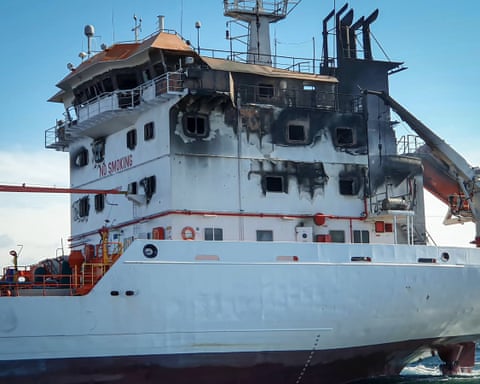
Seven sailors are missing after drones struck two oil tankers off the Romanian Black Sea coast, causing fires and raising fresh security concerns on a vital shipping route used by Ukraine.
A NATO military source told Reuters that the drones which struck the vessels ‘Wine Trader’ and ‘Yara J’ originated from Russia. “The drones that caused the fires on board the two oil tankers in Romanian territorial waters were of Russian origin,” the source said.
The President of Romania, Nicușor Dan, has described the situation in the Black Sea as serious. “Commercial vessels are being attacked and sunk,” he wrote on X. “Sailors have been killed, injured and are missing very close to the coasts of Romania and Bulgaria. This is unacceptable and must stop.”
His statement followed a meeting with the Prime Minister of Bulgaria, Rumen Radev, and the Secretary-General of NATO, Mark Rutte, on Thursday, during which they agreed “to strengthen our defence in the Black Sea”, said Dan.
Rutte said: “NATO will continue to work closely with our Black Sea allies, adapting its deterrence and defence posture as necessary.”
A NATO official said the issue would be discussed at a meeting of the North Atlantic Council next week.
The missing crew members were from the ‘Wine Trader’, a San Marino-flagged oil tanker travelling from Tunisia to Romania. All crew members on the ‘Yara J’, which was struck on Wednesday evening, right inside Romanian territorial waters, are safe.
Similar incidents in recent weeks have raised fears that the area is becoming another front in Russia’s war against Ukraine.
Dan stated that the two ships had been struck by drones, but declined to specify whether Russia was responsible.
Romania shares a 614 km (381 mile) border with Ukraine, much of which follows the course of the Danube. The country has faced frequent drone incursions since Russia launched its full-scale invasion of Ukraine in 2022, including a daytime incursion last November that prompted NATO to deploy fighter jets.
EU leaders were already concerned about drone attacks on commercial vessels off the coast of Bulgaria. On Tuesday, drone attacks on two ships off the Bulgarian coast led to emergency rescue operations, with 11 crew members of the HS Dignity, a cargo ship flying the flag of Guinea-Bissau, still missing.
On another vessel, the ‘Chelsea 3’, operated by Ukraine and sailing under the Maltese flag, rescue teams evacuated all 15 crew members, five of whom received medical treatment for minor injuries. The crew reported that the deck and hull of the vessel had been struck by three aerial drones.
“The outcome of this attack favours Russia. However, we have no concrete evidence that the drones are Russian,” Radev said upon his arrival in Brussels for Thursday’s EU summit.
At least 23 sailors have been reported missing or have died following attacks on commercial vessels off the coasts of Bulgaria and Romania over the past 10 days, according to Reuters.
Russia has stepped up its bombing campaign against Ukrainian infrastructure on the Black Sea, forcing Kyiv to use ports on the Danube and Black Sea routes off the coasts of Romania and Bulgaria to export its grain, sunflower oil and other products.
According to a draft summit statement, EU leaders will state that attacks on civilian vessels, including “vessels flying the flags of Member States, such as the recent attacks in the exclusive economic zones of Bulgaria and Romania in the Black Sea, are unacceptable and constitute a serious breach of international and maritime law”.
The YARA J and WINE TRADER incidents – a new threat to navigation in the Black Sea – Maritime Security Forum
The successive fires on board the chemical tankers YARA J and WINE TRADER, in Romanian territorial waters near Sulina, have triggered investigations with much higher stakes than simply the damage to individual vessels. In the case of the WINE TRADER, the disappearance of seven seafarers has turned the security alert into a large-scale search and rescue operation. These events form part of a series of attacks and incidents affecting commercial traffic near Romania and Bulgaria, forcing NATO coastal states to rethink their defences against aerial and naval drones.
On the evening of 14 October 2026, at around 8.20 pm, the chemical and oil tanker YARA J, flying the Comoros flag, reported a fire whilst situated approximately 8–10 nautical miles south-east of the Sulina breakwater. The reported position was within Romanian territorial waters, in a holding area used by vessels transiting the Sulina Canal or heading for the Danube ports.
The crew reported that the vessel had been struck by a drone. However, the 17 seafarers managed to extinguish the fire using the equipment on board, and the Romanian authorities announced that there were no injuries. The Romanian Agency for the Safety of Human Life at Sea dispatched the SAR APOLLO, but the situation had been stabilised before the rescuers arrived. The YARA J subsequently weighed anchor and headed for the Port of Constanța for technical checks and an expert assessment.
The theory of a drone attack had not been officially confirmed at the time of writing. The acting Minister of Defence, Radu Miruță, stated that neither military radars nor those of the Coastguard had detected a drone approaching the vessel. About half an hour before the incident, several aerial targets had been detected off the Black Sea coast, but their link to the fire had not been established. This distinction is crucial: the crew’s account justifies the investigation, but attributing responsibility requires an analysis of the damage, the recovery of any debris and the cross-referencing of radar, maritime and communications data.
What is known about the vessel and its route
The YARA J, IMO number 9221803, is a chemical and oil tanker approximately 120 metres long. The vessel had come from Yalova, Turkey, and was in ballast, i.e. without a commercial cargo. Sources indicated that its destination was a Ukrainian port on the Danube, possibly Ismail, but this information had not been uniformly confirmed.
Reports on the composition of the crew also varied. Sources agree on the number of 17 seafarers and on the fact that there were no casualties, but mention different combinations of Indian, Syrian, Iranian or Iraqi nationals. These discrepancies highlight why consolidated official communication is important in an incident that may trigger diplomatic and military reactions.
Timeline of the operation
- Approximately 30 minutes before the fire, Romanian systems detected several aerial targets offshore, near Sulina.
- At around 20:20, the captain of the YARA J requested assistance and reported a possible drone strike to the Sulina Harbour Master’s Office.
- At approximately 20:25, the Maritime Coordination Centre requested the intervention of rescue crews.
- At around 8.31 pm, SAR APOLLO set off for the vessel.
- Before the rescuers arrived, the crew had extinguished the fire and confirmed that the crew were safe.
- During the night, the vessel set sail for Constanța, where an investigation was to determine the cause and nature of the damage.
Separately, in the early hours of 15 October, a drone was briefly reported in Romanian airspace south-east of Sulina. However, there was no public evidence of a link between that incursion and the YARA J incident.
WINE TRADER: fire, missing seafarers and a rescue operation under difficult conditions
On the morning of 15 October 2026, at around 07:00, the WINE TRADER, a chemical tanker flying the San Marino flag, sent out an emergency alert after a fire broke out in the superstructure. The vessel, with IMO number 8808707, was located approximately 13 nautical miles south-east of Sulina, in Romanian territorial waters, and was not carrying any cargo.
There were 12 people on board. Initial reports indicated that four seafarers were safe and eight were missing; a subsequent update from the Romanian Naval Authority stated that five seafarers had been rescued, whilst seven were still missing. The search and rescue operation was ongoing at the time of writing, so the toll remained provisional.
The Maritime Coordination Centre requested assistance at 06:58, and the SAR APOLLO set off for the area at around 07:10. Two Black Hawk helicopters equipped with winch-based rescue systems, vessels from the Border Police and the General Inspectorate for Emergency Situations (IGSU), as well as medical teams, were mobilised. Very high waves hampered the recovery of the sailors and temporarily restricted safe rescue operations.
The authorities had confirmed the fire and the rescue operation, but had not yet established the cause. Some reports cited explosions or the possibility of a drone strike; this information should not be presented as conclusive until the vessel has been examined, the damage analysed, and radar and communications data cross-checked.
Preliminary timeline of the WINE TRADER incident
- At 06:58, the Maritime Coordination Centre requested the assistance of the rescue services.
- At around 07:00, the vessel reported a fire in the superstructure.
- At approximately 07:10, the SAR APOLLO set off for the indicated position.
- Naval vessels, two Black Hawk helicopters and medical teams were mobilised.
- The toll was updated from four rescued and eight missing to five recovered and seven missing.
- The search continued in rough seas, and the cause of the fire remained unconfirmed.
A regional pattern, not an isolated incident
The seriousness of the YARA J and WINE TRADER incidents stems both from their temporal and geographical proximity and from the regional context. The two vessels reported fires within a span of approximately 11 hours, in Romanian territorial waters near Sulina. In the case of the WINE TRADER, the provisional death toll and the rescue operation hampered by rough seas show that the threat concerns not only the integrity of the vessels but also the capacity for mass rescue. Since the beginning of October, several commercial vessels have been attacked or damaged in the exclusive economic zones of Romania and Bulgaria.
On 6 October, the vessels ALFA WATAN and ABLE were struck in Bulgaria’s exclusive economic zone, east of Byala. The ALFA WATAN sank, and several seafarers were reported missing. A fire broke out on the ABLE, and the 18 crew members were evacuated. A subsequent inspection by Bulgarian forces found serious damage and flooding in the engine room. The Bulgarian Defence Minister suggested that the strike to the above-water section might indicate the use of a naval drone, but no debris was found to confirm this.
A week later, two further vessels, the CHELSEA-3 and the HS DIGNITY, were struck off the Bulgarian coast. The crew of the CHELSEA-3 were rescued, whilst the HS DIGNITY sank and 11 sailors were reported missing. The Bulgarian Navy’s Hydrographic Service issued warnings to mariners, noting abandoned or sunken vessels and urging them to maintain a safe distance.
These incidents are not identical, and responsibility has not been established in all cases. However, their concentration within a short timeframe and near the routes linking Romanian, Bulgarian and Ukrainian ports indicates a clear deterioration in the maritime security environment.
Why the Sulina area is strategic
The Sulina Canal is one of the Danube’s main maritime gateways and an important corridor for Ukrainian exports. Following repeated attacks on Ukrainian ports on the Black Sea, a larger proportion of traffic has been redirected to Danube ports and to routes close to the coasts of Romania and Bulgaria. Ships awaiting access to the canal may remain at anchor for several days, making them vulnerable and easy to locate.
The risk is not exclusively military. A damaged vessel may temporarily block a route, drift off course or cause pollution. In the case of a fully-loaded oil tanker, a vessel carrying chemicals or a cargo ship with thousands of tonnes of freight, the consequences could extend far beyond the area of the attack and affect ports, coastal ecosystems and international supply chains.
Romania’s response
For Bucharest, the distinction between the exclusive economic zone and territorial waters is fundamental. The exclusive economic zone grants the state economic rights, whereas territorial waters form part of its sovereign territory. If the investigation confirms that the YARA J was deliberately attacked by a drone, the incident would represent a qualitative escalation and could prompt Romania to request urgent consultations with its allies.
The authorities have refrained from making any accusations pending the conclusion of the investigation. Meanwhile, the Defence Minister has called for a more substantial allied presence in the Black Sea and has supported the idea of a joint command comprising NATO member states bordering the Black Sea. The possibility of sending a joint Romanian-Bulgarian letter to NATO, emphasising defence against drones and the protection of commercial shipping, has also been discussed.
The incident highlights the limitations of conventional defence. Small, low-flying drones and unmanned naval vessels have a low radar signature and can evade conventional surveillance. Romania needs a common operational picture that integrates military and civilian radars, Coast Guard data, information from commercial vessels, port sensors and real-time information-sharing with allies.
Bulgaria’s position
Bulgaria has been directly confronted with two series of attacks on commercial vessels. Sofia summoned Russia’s diplomatic representative and requested the support of NATO and the European Union to strengthen maritime and aerial surveillance. Bulgarian officials have refrained from categorically attributing all the attacks, but have stated that their outcome favours the Russian Federation, whilst the Russian side has cited the possibility of a provocation by a third party.
The Bulgarian Ministry of Defence emphasised the need for material evidence and warned that anti-drone systems are not a universal solution. At the same time, Bulgaria announced that it intends to join a NATO initiative to combat drones by 30 October and has considered requesting allied consultations under Article 4.
Sofia is also pursuing a trilateral framework with Romania and Turkey for the security of commercial vessels. The recurrence of attacks is transforming the issue from a national crisis into a shared challenge for NATO’s south-eastern flank.
Turkey’s role
Turkey is involved due to its geography, maritime traffic, shipowners and crews. The YARA J was coming from the port of Yalova, and several vessels affected in previous incidents had links to Turkish operators. Ankara must protect freedom of navigation, but is at the same time seeking to maintain its role as a mediator between Russia and Ukraine.
Turkey generally favours regional mechanisms and negotiated solutions. The Montreux Convention grants it a central role in the straits regime and limits the naval presence of non-littoral states in the Black Sea. For this reason, Ankara might support the monitoring and protection of commercial traffic without automatically endorsing a massive and permanent expansion of NATO’s naval presence.
Existing regional cooperation
Romania, Bulgaria and Turkey already have a track record of operational cooperation: the Black Sea Mine Countermeasures Task Force (MCM Black Sea). In October 2026, it began a new deployment under Bulgarian command, with specialised vessels from the three countries. The group is focused on identifying and neutralising drifting mines, but its cooperation infrastructure could form the basis of a broader mechanism.
Expanding the format could include the exchange of data on air and naval targets, coordinated patrols, early warning for merchant ships, joint response exercises and protocols for preserving evidence following an attack. It would not be necessary to transform the group into an offensive fleet; the objective would be to protect shipping, save lives and reduce response times.
Military and security implications
Detection. Unmanned systems require states to combine different sensors. A radar designed for conventional aircraft may fail to detect a small, slow-moving target, whilst a naval drone may be mistaken for waves or a civilian vessel. Effective surveillance requires coastal radars, electro-optical sensors, patrol drones, satellite intelligence and data from ships.
Proportional defence. Neutralising a drone in the vicinity of a commercial vessel is difficult. The use of heavy weaponry may pose an additional risk to crews and infrastructure. Tailored measures are required: jamming, short-range interceptors, automatic identification systems and teams capable of responding without turning a harbour into a combat zone.
Passive protection. Commercial vessels must be provided with clear warnings, recommended routes and instructions to reduce their vulnerability. Lighting, visual surveillance, fire-fighting, compartmentalisation and rapid reporting can limit losses even when interception is not possible.
Attribution. Identifying the perpetrator is one of the most difficult challenges. Debris, the type of explosive, the trajectory, the electronic signature and control data must all be analysed together. Without these elements, an accusation may remain political, and the adversary may exploit the uncertainty.
Economic implications
A persistent rise in risk can drive up the cost of war risk insurance, freight rates and port operations. Shipowners may demand additional premiums, avoid certain ports or require security guarantees. These costs will be passed on to exporters, importers and, ultimately, consumers.
Constanța, Sulina, Galați and Brăila are hubs in a logistics system serving Romania, the Republic of Moldova and Ukraine. Delays at a single point ripple through rail, road and river transport. Furthermore, disruption to grain exports may affect markets in the Middle East and Africa, where some countries rely on supplies from the Black Sea region.
There is also a reputational risk. Even if the ports are operating normally, images of ships on fire or sinking may lead companies to reassess the region. For this reason, security measures must be accompanied by accurate public communication that avoids both downplaying the danger and causing unjustified panic.
Legal and diplomatic implications
A deliberate attack on a civilian vessel may breach the rules on the protection of civilian targets and freedom of navigation. The exact legal status depends on the vessel’s and its cargo’s connection to the war effort, the nature of the operation and the location of the incident. In the case of the YARA J, its presence in Romanian territorial waters raises the issue of Romania’s sovereignty.
Article 4 of the North Atlantic Treaty provides for consultations when an ally considers that its territorial integrity, political independence or security is threatened. Invoking it does not automatically entail military action and should not be confused with Article 5. It may, however, lead to the exchange of information, surveillance measures and an adjustment of the allied posture.
For Bucharest and Sofia, a joint position would carry more weight than separate reactions. For Ankara, participation offers the opportunity to maintain regional control and to prevent trade security from being addressed solely through a logic of military escalation.
The intelligence dimension
Ambiguous incidents are fertile ground for disinformation. The absence of radar imagery or debris can be presented either as proof that the attack did not take place, or as evidence of invisible technology. Both conclusions go beyond the available data. The authorities must communicate confirmed facts, witness statements, technical hypotheses and final conclusions separately.
A joint official timeline, updated as evidence emerges, would reduce contradictions. At the same time, sensitive information about radar capabilities should not be disclosed in detail. Striking a balance between transparency and operational security becomes part of the crisis response.
Possible scenarios
Confirmation of an external attack. If the expert analysis identifies traces of a drone and enables its origin to be established, Romania would have grounds for firm diplomatic action and for consultations with allies. Likely measures would include temporarily stepping up surveillance, deploying anti-drone capabilities and protecting anchorage areas.
Confirmation of a drone, without attribution. This is a likely scenario in conflicts involving unmanned systems. Even without identification of the perpetrator, neighbouring states should treat the incident as a real vulnerability and strengthen the protection of shipping.
A technical or accidental cause. If expert analysis rules out an attack, the case does not negate the regional threat demonstrated by the incidents in Bulgaria. It would, however, highlight the risk that preliminary information might be turned into political certainties too quickly.
Immediate priorities
- The uninterrupted continuation of the search for the seven missing seafarers from the WINE TRADER and the coordination of naval, air and medical resources.
- Stabilising and inspecting the WINE TRADER as soon as the situation permits, whilst safeguarding any evidence relating to the cause of the fire.
- Completion of an independent expert assessment of the YARA J and publication of the key findings.
- Preserving evidence and exchanging data between maritime, military and judicial authorities.
- Establishment of a permanent Romania–Bulgaria–Turkey task force for incidents involving commercial shipping.
- Issue common warning procedures for vessels at anchor or in transit.
- Expanding search and rescue, fire-fighting and pollution response exercises.
- Assessing the anti-drone capabilities required for the ports of Constanța, Sulina, Varna and Burgas.
- Consultation with shipowners and insurers to limit the withdrawal of vessels and the uncontrolled rise in costs.
What to watch out for
The decisive factors will be the progress of the search for the crew of the WINE TRADER, the technical condition of the vessel and the cause of the fire, the outcome of the YARA J expert assessment in Constanța, any fragments or traces of explosives, the consistency between the crews’ statements and the technical data, Turkey’s official response, the Romanian-Bulgarian consultations and NATO’s decision on additional support. Any attribution of blame must be assessed separately from the urgent rescue and protection measures, which cannot wait for all investigations to be completed.
Conclusions
The YARA J and WINE TRADER incidents mark a political, operational and psychological turning point even before their nature has been definitively established. Two merchant ships caught fire, within a few hours of each other, in Romanian territorial waters and in a strategic area. In the case of the WINE TRADER, the missing seafarers and the scale of the rescue operation lend the crisis an immediate human dimension. For seafarers and shipowners, the distinction between war and the proximity of war is becoming increasingly difficult to maintain.
The appropriate response must avoid two extremes: hasty attributions, which may escalate tensions without sufficient evidence, and downplaying the situation, which would ignore a dangerous regional pattern. Romania, Bulgaria and Turkey need credible investigations, integrated surveillance, appropriate counter-drone measures and common procedures to protect civilian vessels.
The stakes go beyond coastal security. Grain, energy and raw materials essential to numerous states are transported via the Black Sea and the Danube. Any attack, blockade or massive increase in insurance risk can have economic repercussions thousands of kilometres away. For this reason, the protection of commercial shipping must be treated simultaneously as a defence mission, an economic responsibility and a humanitarian obligation.
The strategic conclusion is that the Black Sea has become an area where a tactical incident can simultaneously trigger a security crisis, a rescue emergency and logistical disruptions. The sustainable solution is not a single anti-drone battery or a single patrol, but a joint architecture for early warning, defence, search and rescue, and communication. The YARA J and WINE TRADER cases could mark the turning point that transforms cooperation between Romania, Bulgaria and Turkey from a response to drifting mines into an integrated system for the protection of shipping.
Sources consulted
- The Romanian Naval Authority, ARSVOM and the Ministry of Internal Affairs – the WINE TRADER alert, the provisional assessment, the resources mobilised and the conditions of the search and rescue operation.
- AGERPRES and Digi24 – statements by the Romanian authorities, the maritime intervention and the status of the investigation.
- Bulgarian Ministry of Defence, Bulgarian Navy Hydrographic Service and Maritime.bg – vessel inspections, rescue operations and nautical warnings.
- Reuters, AFP and international reports – the regional context, reactions from NATO and the EU, and risks to commercial shipping.
- The Romanian Naval Forces – the situation regarding drone and mine incidents and regional naval cooperation.
Maritime Security Forum
The war on maritime transport in the Black Sea reaches Bulgaria – Maritime Security Forum
Two waves of attacks on commercial vessels, on 6 and 13 October 2026, shifted the focus of the maritime crisis to Bulgaria’s exclusive economic zone. The ALFA WATAN and HS DIGNITY sank, whilst the ABLE and CHELSEA-3 were severely damaged. Data published by Bulgarian authorities confirm the attacks and the scale of the rescue operations, but do not yet allow for a definitive legal attribution of responsibility. What can be stated unequivocally is that freedom of navigation, the lives of seafarers and logistics chains in the western Black Sea are under direct threat.
The first wave: ALFA WATAN and ABLE
On 6 October, at around 03:00, the ALFA WATAN, flying the Togolese flag, and the ABLE, flying the Palauan flag, collided approximately 70 nautical miles east of Byala, within Bulgaria’s exclusive economic zone. According to the Bulgarian authorities’ account, ALFA WATAN’s emergency beacon was activated at 02:54, and the crew of the Bulgarian ferry DIOSCURIA observed unmanned aerial vehicles at 03:05, followed by an explosion and the sinking of the vessel. A Su-25 aircraft, two Cougar helicopters, and military and Border Police vessels were mobilised for the search and rescue operation.
A major fire broke out on the ABLE, and the 18 crew members abandoned ship and were rescued by the DIOSCURIA. Two sailors were taken to Varna with injuries and burns. A joint inspection by the Bulgarian air and naval forces, carried out on 9 October, found severe damage caused by the fire and flooding of the engine room. The impact on the above-water section was considered consistent with the use of an unmanned naval vehicle, but the inspectors found no fragments that would allow the origin to be identified.
The second wave: CHELSEA-3 and HS DIGNITY
On 13 October, at around 01:15, the CHELSEA-3, flying the Maltese flag, requested assistance after, according to the crew, it had been struck by three drones east of Byala. The vessel, which was empty, was travelling from Giresun and heading towards Giurgiulești. All 15 seamen were rescued by the Bulgarian border patrol vessel 514, despite rough seas; three were admitted to the Naval Hospital in Varna with second-degree burns, one of whom also suffered a minor head injury.
Almost simultaneously, the HS DIGNITY, flying the flag of Guinea-Bissau, was struck and sank east of Cape Shabla. The vessel was empty and was sailing from Mostaganem, Algeria, to Brăila. Five crew members were rescued by nearby commercial vessels, the AZOV CONCORD and the SCANDI ASSERTER, whilst the search continued for the remaining 11 seafarers. The fact that the initial rescues were carried out by civilian vessels highlights the importance of the duty to render assistance at sea, but also the limitations of response times when incidents occur far from rescue bases and in difficult weather conditions.
The picture provided by Bulgarian nautical warnings
The Bulgarian Navy Hydrographic Service converted the incidents into operational warnings for mariners. NAVIM 712 reported the ABLE adrift and unmanned following an attack and fire; NAVIM 717 indicated that the CHELSEA-3 was anchored and abandoned; and NAVIM 720 confirmed the sinking of the HS DIGNITY and requested vessels in the area to step up surveillance for seafarers in distress. At the same time, a floating object resembling an unmanned aerial vehicle was also reported, considered a hazard to navigation.
These warnings show that the effects of the attacks do not end with the evacuation of the crews. A damaged and unmanned vessel may drift towards commercial shipping lanes, offshore installations or the coastline; a wreck may become a permanent obstacle and a source of pollution; and debris or unexploded ordnance may create additional risks. On 15 October, Maritime.bg reported that the CHELSEA-3 had been driven south by adverse weather, to the east of Primorsko, and preparations were underway to tow it to Burgas for a detailed inspection.
Bulgaria’s political and institutional response
The Bulgarian government convened the Security Council, informed NATO and the European Union, and requested support for monitoring and investigation. Sofia summoned the Russian ambassador, and the authorities announced their intention to refer the matter to the UN Security Council and, together with Romania and Turkey, to promote a moratorium on drone attacks against commercial vessels and civilian infrastructure in the Black Sea. The Bulgarian Presidency described the strikes as serious violations of humanitarian and maritime law and warned that freedom of navigation and supply chains are under serious threat.
The official position remained cautious regarding the perpetrator. The Prime Minister maintained that Bulgaria does not yet have conclusive evidence regarding the origin of the drones, although the effect of the attacks strategically benefits Russia and there is no obvious logic for Ukraine to strike its own ships or the trade flows on which it depends. The Russian ambassador stated that he had no information from the Russian Ministry of Defence and raised the possibility of a provocation by a third party. From an evidential standpoint, a distinction must be maintained between political assessment and legal attribution.
Why attribution remains difficult
The ABLE inspection provides a relevant example: the nature of the damage may suggest the type of system used, but the absence of fragments prevents the identification of the operator. A robust attribution requires combining explosive and structural traces with radar tracks, satellite imagery, AIS data, communications, crew testimonies and allied intelligence. The Bulgarian Defence Minister warned that assumptions cannot replace evidence and that anti-drone systems are not a universal solution.
From mine countermeasures to the protection of trade routes
Bulgaria, Romania and Turkey already have the MCM BLACK SEA, the only allied task force of ships that directly contributes to the safety of commercial traffic in the region. The twelfth deployment began in Varna on 7 October, under Bulgarian command, with ships from the three countries. Its ‘ ’ mandate focuses on the mine threat, but the structure provides a basis for data sharing, coordinated patrols, early warning and joint intervention. The Bulgarian exercise ‘Black Sea 2026’ had already included countering aerial and naval drones, with the protection of commercial shipping as a priority.
This practical expansion does not entail transforming the group into an offensive fleet. What is needed is a shared maritime picture, integrated coastal and airborne sensors, rapid search-and-rescue procedures, towing and pollution control capabilities, evidence-preservation teams and clear rules for proportionate defence in the vicinity of civilian vessels. The protection of shipping lanes must be separated from the dispute over attribution: seafarers, wrecks and adrift vessels require immediate action even if the investigation takes time.
Conclusion
Bulgarian sources describe not an isolated incident, but an operational sequence: attack, fire or sinking, evacuation, search, nautical warning, drifting and inspection. In less than ten days, four commercial vessels were struck off the Bulgarian coast, two sank, and dozens of seafarers were rescued or remain missing. Bulgaria has moved from managing drifting mines to dealing with attacks on commercial shipping. A credible response must combine rigorous evidence, Romanian-Bulgarian-Turkish cooperation, NATO and EU support, and civilian and military capabilities focused on protecting lives and keeping the western Black Sea corridor open.
Additional Bulgarian sources consulted
• Bulgarian Press Agency (BTA) – chronologies of operations, government positions and data from the Ministry of Transport.
• Bulgarian Ministry of Defence and Bulgarian Naval Forces – the ABLE inspection, the activation of MCM BLACK SEA and anti-drone preparations.
• Bulgarian Navy Hydrographic Service – NAVIM warnings regarding ABLE, CHELSEA-3 and HS DIGNITY.
• Maritime.bg – technical data on vessels, rescue operations, the drifting of and towing of CHELSEA-3.
Maritime Security Forum
HMS DAUNTLESS and five Ukrainian minehunters: training for maritime route security – Maritime Security Forum
Five Ukrainian Navy minehunters have completed seven days of intensive training in southern England alongside the British destroyer HMS DAUNTLESS. The exercise combined artillery firing, mine detection and neutralisation, formation manoeuvres and the protection of maritime infrastructure. Beyond the spectacular sight of the six ships in the Solent, the exercise demonstrates how London is preparing Ukraine for one of the most challenging post-conflict missions: the safe reopening of Black Sea shipping lanes.
Five ships for mine warfare
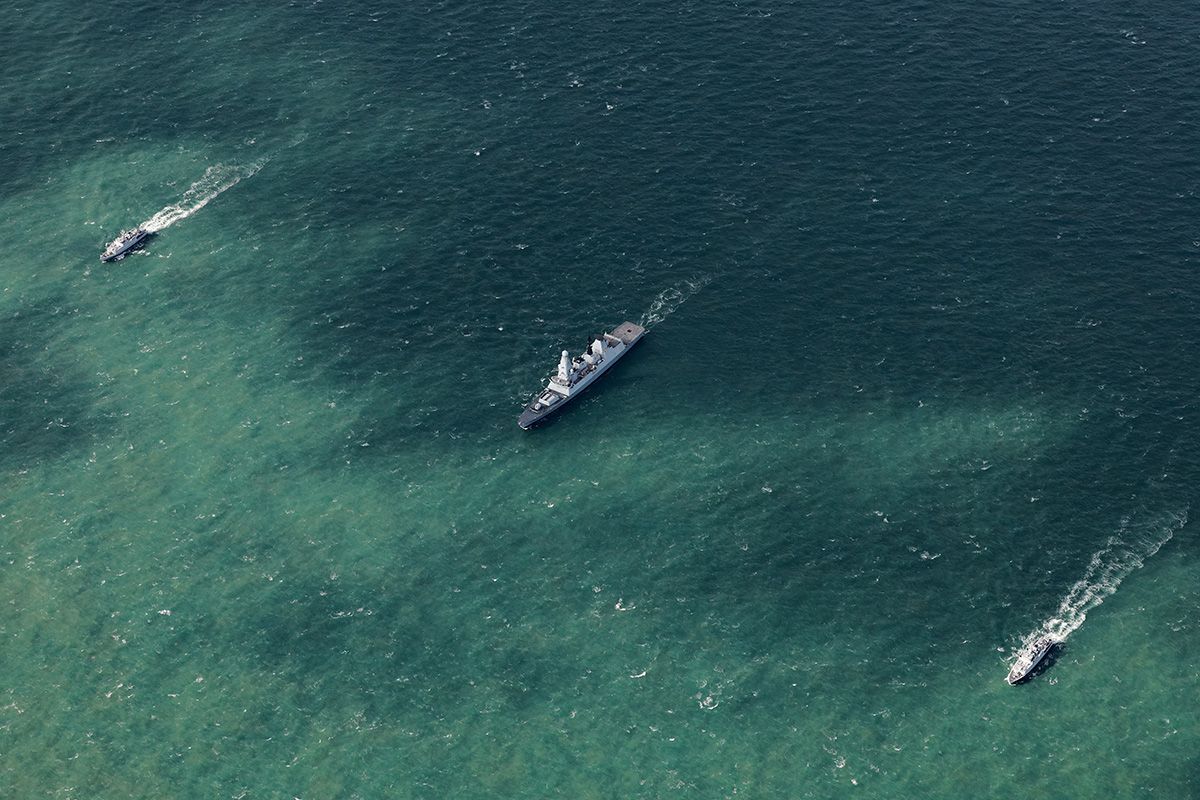
The Ukrainian group comprised the HENICHESK, MARIUPOL, MELITOPOL, CHERNIHIV and CHERKASY, all temporarily stationed at Portsmouth as part of British support for Ukraine. The five vessels operated off the coasts of Dorset, Hampshire and the Isle of Wight, under the supervision of British military personnel. The programme focused not only on individual skills, but also on the ability to operate as a cohesive small naval group.
From self-defence to mine hunting
The first stage involved artillery firing exercises in the Portland area, designed to test the ships’ ability to defend themselves. The training then moved on to their primary mission: locating, classifying and neutralising underwater explosive devices. This sequence is relevant to the contemporary environment, in which a vessel specialising in mine countermeasures must also be able to survive aerial, naval or surface threats.
The SeaFox system
The crews used the SeaFox remotely operated underwater vehicle, which has been in service with the Royal Navy for around two decades. The system uses sonar and a camera to investigate a suspicious object, whilst the neutralisation variant carries an explosive payload and is controlled via fibre optics. The CHERNIHIV and CHERKASY carried out live launches, culminating in controlled explosions that destroyed the exercise targets.
The naval phase of the LION PROTECTOR exercise
The training exercise marked the fifth and final phase of the LION PROTECTOR exercise, conducted from August to October 2026 by the Joint Expeditionary Force, the rapid reaction coalition led by the United Kingdom and comprising ten northern European states. The final phase focused on protecting critical maritime infrastructure and keeping shipping lanes open. Previous phases included activities in the Faroe Islands and in the strategic Greenland–Iceland–United Kingdom area.
The Royal Navy described LION PROTECTOR as one of the most extensive and complex exercises relevant to Ukrainian training, second only to SEA BREEZE. This comparison indicates a shift from ad hoc training to the integration of Ukrainian ships into multinational scenarios involving underwater infrastructure, escort duties and the security of trade routes.
The role of HMS DAUNTLESS
In the final phase, the five Ukrainian vessels manoeuvred in close formation around HMS DAUNTLESS, a Type 45 destroyer specialising in air defence. The exercise tested communications, position-holding, navigational safety and coordination between small countermeasures vessels and a much larger combat unit. DAUNTLESS is preparing to escort the aircraft carrier HMS PRINCE OF WALES when the FIRECREST 2026 deployment resumes in northern Europe.
The link to the Black Sea
Mine countermeasures represent one of the most tangible forms of British naval support for Ukraine. The Black Sea remains contaminated with mines and other explosive ordnance, and the full reopening of ports and trade routes will require lengthy operations to survey, classify and neutralise them. Minehunters are not merely technical platforms; they will need to work alongside escort vessels, aircraft, coordination centres and civilian authorities.
The Montreux Convention restriction
CHERNIHIV and CHERKASY are the former British ships HMS SHOREHAM and HMS GRIMSBY, transferred to Ukraine and stationed at Portsmouth from 2024. Turkey applied the Montreux Convention and did not permit their passage through the straits during the war. For this reason, preparations for missions in the Black Sea are taking place in British waters, and the ships’ entry into their main theatre of operations remains dependent on the legal and political developments of the conflict.
What capability is Ukraine building?
The exercise develops four complementary skills: self-defence, mine hunting and neutralisation, group manoeuvring, and integration with a larger vessel. This combination is essential for protecting future convoys, inspecting routes to ports, responding to attacks and securing underwater infrastructure. It reduces reliance on operations carried out exclusively by allies and paves the way for a direct Ukrainian contribution to the safety of navigation.
Limitations and risks
Five well-trained vessels cannot rapidly clear a vast maritime area, nor can they eliminate aerial, naval and underwater threats on their own. Their effectiveness will depend on up-to-date hydrographic information, aerial surveillance, air defence, logistics, access to SeaFox spare parts and munitions, as well as regional coordination mechanisms. The experience of Romania, Bulgaria and Turkey through the MCM BLACK SEA initiative will be relevant in avoiding overlaps and establishing areas of responsibility.
Conclusion
The image of HMS DAUNTLESS sailing alongside five Ukrainian minehunters is more than a demonstration of solidarity. It illustrates the naval architecture required for a return to safe navigation: specialised vessels, escorts, shared intelligence, multinational exercises and procedures for protecting critical routes and infrastructure. The training in southern England is preparing crews for the time when mine clearance and the reopening of maritime corridors will become a prerequisite for Ukraine’s economic reconstruction and the security of the entire Black Sea region.
Sources consulted
- Royal Navy – official press release regarding HMS DAUNTLESS and the five Ukrainian minehunters.
- UK Defence Journal – initial report on the training in the Solent.
- Naval Today and Forces News – details on SeaFox, the transferred vessels and preparations for mine-clearing operations.
- UNITED24 Media and Navy Leaders – background on LION PROTECTOR and the Joint Expeditionary Force.
Maritime Security Forum
Washington is considering the use of sanctioned oil tankers: markets react, but the actual impact remains uncertain – Maritime Security Forum
A proposal under discussion in Washington — granting limited authorisation to certain sanctioned oil tankers to carry non-sanctioned oil — has triggered a sharp correction in the share prices of Asian energy transport companies. The US administration aims to boost available capacity and reduce record-high freight rates, but analysts warn that ageing vessels, European and British regulations, insurance and technical inspections could severely limit the practical impact.
Sharp correction on Asian stock markets
COSCO Shipping Energy fell by over 13 per cent in Hong Kong, whilst China Merchants Energy Shipping, COSCO Shipping in Shanghai and China Merchants Nanjing Tanker all hit the daily 10 per cent lower limit on the mainland market. The reaction reflects investors’ fears that any increase in tonnage would reduce the bargaining power of operators who have benefited from the severe capacity crisis.
What the US administration is discussing
According to information attributed to a US official, Washington is considering the possibility that ships on sanctions lists due to links with Russia, Iran or Venezuela might be permitted to carry only ‘legal oil’ — crude oil or petroleum products that are not themselves subject to US sanctions. The use of each vessel would require approval from the US Treasury; this would not constitute a general and automatic lifting of sanctions.
The immediate aim is to increase the flow of crude oil and refined products from the Persian Gulf and to reduce freight rates, which have undermined the competitiveness of US oil in Asia. The US Department of Energy has maintained that the measure would not allow Russia to transport oil or Russian products subject to sanctions. However, the White House had not announced an official decision, eligibility criteria or a timetable for implementation.
Why freight rates have reached record levels
The wars in Iran and Ukraine, the risk in the vicinity of the Strait of Hormuz, waiting times for ship-to-ship transfers, detour routes and war risk premiums have absorbed a significant portion of capacity. On 9 October, Clarksons Research reported global spot earnings of over $800,000 per day for VLCC tankers and freight rates approaching $40 per barrel on certain routes.
The size of the sanctioned fleet
Clarksons estimates that 1,010 oil tankers, totalling 121 million tonnes of deadweight, are individually sanctioned. These account for approximately 17 per cent of the global oil tanker fleet’s capacity and 20 per cent of the capacity dedicated to crude oil transport. The share rises to 35 per cent in the Aframax segment for crude oil, which explains why the mere prospect of the reintroduction of some of this tonnage immediately influenced stock market valuations.
Why ‘on-paper’ capacity does not equal usable supply
A significant proportion of sanctioned oil tankers have continued to operate in parallel markets. Removing them from a US list or granting a licence would not automatically create new vessels; at most, it would shift some of the tonnage towards more transparent transactions. Energy Aspects estimates that the effect on global freight rates would be modest and that only a small number of vessels might become available for short shuttle runs in the Strait of Hormuz.
Insurance and European sanctions remain barriers
Even if the US Treasury were to grant licences, insurers, protection and indemnity clubs, banks and service providers in the European Union and the United Kingdom would continue to adhere to their own sanctions regimes. A vessel that is legally accepted in a US transaction may remain uninsurable or unaccepted by terminals, traders and charterers operating in other jurisdictions.
Technical condition of vessels
Most of the oil tankers in the shadow fleet are old, and some have maintenance, ownership and classification histories that are difficult to verify. A return to conventional trade would require inspections, certifications, verification of safety management, acceptance by terminals and access to insurance. These processes cannot be carried out overnight and may exclude precisely those vessels that appear available in the raw statistics.
From this perspective, the likely benefit would be local and limited: a few additional vessels might facilitate transhipments and short voyages in the Gulf, without bringing about a widespread and lasting fall in global freight rates. The market reacted to the political signal, not to the existence of already proven commercial capacity.
The contradiction between energy policy and sanctions policy
The proposal comes shortly after the temporary authorisation of trade in Russian-origin diesel until 7 April 2027. The decision has been criticised by Ukraine, European governments and members of the US Congress, who believe that the relaxation could boost Moscow’s energy revenues. Washington, however, maintains that any licensing of vessels would apply only to non-sanctioned goods and be aimed at reducing logistical costs.
The risk of eroding pressure on sanctioned states
Licensing vessels previously targeted for transporting Russian, Iranian or Venezuelan oil would formally separate the vessel from the sanctioned cargo. In practice, the measure could restore commercial value to assets that have supported sanctions-evasion networks and make it more difficult to track flows, beneficial owners and financial relationships. Critics fear that individual exemptions would set precedents and create opportunities for arbitrage.
Safety and environmental risks
The shadow fleet is frequently associated with opaque ownership, repeated changes of flag, manipulation of AIS signals, inadequate insurance and ageing vessels. Introducing these oil tankers into more visible commercial routes may transfer the risk to coastal states, terminals and public funds, which would bear the costs of an accident or major pollution incident.
What to watch out for
The key factors are the publication of a licence or regulations by the US Treasury, the criteria applied to vessels and cargoes, coordination with the EU and the UK, the availability of insurers and terminals, the actual number of vessels accepted, and the trend in freight rates following any approvals. Until these details emerge, the proposal remains a signal of energy policy, not a confirmed operational change.
Conclusion
Washington is attempting to resolve a real problem — the capacity shortage and exceptionally high freight rates — by tapping into a controversial reserve of tonnage. The stock market reaction shows just how sensitive the market is to any potential increase in supply. However, the commercial impact is likely to be much smaller than the gross number of sanctioned vessels suggests. Without legal coordination, insurance, inspections and acceptance by charterers, the shadow fleet cannot quickly become a conventional fleet. The dilemma is a strategic one: reducing costs in the short term without undermining sanctions, maritime safety and the pressure on states that use opaque transport to finance conflicts.
Sources consulted
- Reuters – discussions within the US administration and the positions of the Department of Energy.
- Clarksons Research – the size of the sanctioned fleet and oil market levels.
- US Treasury Department and OFAC – the sanctions framework and measures concerning shadow fleets.
- Energy Aspects and maritime reports – estimated impact on capacity, freight rates and insurance.
Maritime Security Forum
Cyber extortion in the global maritime supply chain: 38 organisations threatened, direct risks for Romania – Maritime Security Forum
The n0n extortion group claims to have obtained data from 38 shipping companies, port operators, terminals and logistics providers across 18 countries and is threatening to publish it on 19 October 2026. These claims have not been independently verified, but the types of data described — EDI messages, manifests, vessel schedules, gate movements and terminal configurations — indicate a systemic risk to digitised maritime supply chains. For Romania, the warning directly concerns the Port of Constanța, the Danube ports and their reliance on international suppliers, platforms and data exchanges.
A wave focused on the maritime sector
SOCRadar reported that on 12 October, it published the names of 38 organisations in a single batch. The list includes 12 port and container terminal operators, 10 shipping lines or vessel operators, port technology suppliers, logistics companies and other related firms. South Korea accounts for 12 of the entries, whilst the remaining claimed victims are spread across Asia, Europe, the Middle East, Africa and South America.
Who is on the group’s list
Among the organisations named are Ocean Network Express, CULines, T.S. Lines and Samudera, as well as the terminals Santos Brasil, Portonave, BNCT, Pusan Newport Company, TTI Algeciras, Eurogate Tanger, Nam Dinh Vu Port and NEOM Ports. Port systems and EDI providers are also included, which increases the risk that the exposure could extend beyond the publicly named entities.
Claims as yet unverified
None of the listed maritime organisations had publicly confirmed that their systems had been compromised or that the materials were genuine. Therefore, the case should be treated as an extortion claim, not as a proven breach affecting all 38 entities. The date of publication may provide the first verifiable clues regarding the existence, age and origin of the data.
Data theft, not classic ransomware
n0n is described as a financially motivated group that steals information and threatens to publish it, rather than relying primarily on encrypting systems. The group is said to have emerged in September 2026 and is believed to have previously used credentials collected by infostealer malware and administrative tools. However, the access gained may also allow data to be altered or recovery to be blocked, so the operational risk should not be reduced to a mere reputational one.
Ransoms running into the millions
A leak is threatened for 19 October at 13:27 UTC. The demands analysed by SOCRadar range from 2.4 to 14 million dollars, payable in Bitcoin. In some cases, the group demands an initial payment of 10 per cent of the sum simply for access to a private negotiation room, a tactic designed to ramp up the pressure on company management.
What data it claims to hold
The claimed materials include EDI archives, container manifests, vessel schedules, bookings, records of gate entries and exits, commercial documents, system configurations, employee accounts and financial data. Even if it does not allow direct control of cranes or ships, such information can be used for document fraud, cargo theft, payment redirection, highly credible phishing and mapping of internal systems.
38 intrusions or a single point of access?
The relatively small size of the claimed archives and the repetition of the same file categories across different countries suggest a shared application, an EDI hub, a file transfer service or a distributed vulnerability, rather than 38 completely separate compromises. Nam Dinh Vu Port is said to have over 23,000 EDI messages, whilst other claims describe archives limited to terminal documentation and exchanges with shipping lines.
The CyberLogitec Hypothesis
Cydome has indicated a possible link to an environment associated with the maritime software provider CyberLogitec, based on known relationships between the latter and several named organisations. The security firm emphasised, however, that the origin and scale of the breach have not been established. This hypothesis should be treated as a line of inquiry, not as a definitive technical attribution.
Why EDI creates systemic risk
Electronic data interchange connects shipping lines, terminals, agents, warehouses, road hauliers, authorities and customers. A single compromised provider can expose documents belonging to multiple partners and allow attackers to replicate legitimate formats, falsify instructions or identify moments when goods are vulnerable. The issue thus becomes one of digital supply chain security, not merely the protection of a single company.
Analysis for Romania
There is no confirmation in the publicly available data consulted that a Romanian port or operator is among the 38 entities. However, Romania is indirectly exposed through the commercial and technological connections of the Port of Constanța, private terminals, the ports of Galați and Brăila, rail and road operators, shipping agents, freight forwarders and international shipping lines. A compromised external partner may hold manifests, bookings, delivery instructions or container data relating to Romanian trade flows, even if the local system has not been breached.
Why the Port of Constanța is an attractive target
Constanța is a hub for container traffic, grain, energy products, bulk cargo and trade flows linked to Ukraine and the Republic of Moldova. The digitisation of vessel scheduling, gate operations, customs documents and multimodal links increases efficiency but creates dependencies between corporate IT and operational systems. Attackers do not need to shut down a crane to cause disruption: it is enough to compromise data relating to container release, schedules, invoices or the identity of partners.
Impact scenarios for Romania
- the publication of manifests and the commercial relationships of Romanian importers or exporters;
- tampering with payment instructions and cargo release documents;
- the theft or diversion of containers using information about ports and schedules;
- phishing attacks targeting agents, operators and authorities;
- disruptions caused by the preventative suspension of integrations with a compromised supplier;
- the use of technical configurations to prepare for a subsequent intrusion into port systems.
NIS2 and management responsibility
Maritime transport and port infrastructure are among the critical sectors covered by NIS2. The framework requires risk management, supply chain security, business continuity, access control, incident reporting and accountability at management level. In Romania, Government Emergency Ordinance No. 155/2024 and the DNSC regulations of 2026 translate these obligations into a process of risk assessment, maturity assessment and documented remediation.
Immediate measures recommended for Romanian operators
- Conduct an inventory of all EDI connections, port community systems, file transfer services and supplier access.
- Request written confirmation from suppliers regarding exposure to the incident and check logs for bulk downloads or unusual access.
- Rotate integration credentials, API keys and support accounts; enable multi-factor authentication for administrative and remote access.
- Separate IT systems from operational systems, limit privileges and remove unnecessarily exposed remote access services.
- Verify the authenticity of manifests, release instructions and bank account changes via an independent channel.
- Preparing business continuity arrangements for the temporary manual processing of gate passes, documents and bookings.
- Establish a joint alert mechanism between port authorities, operators, the DNSC, customs authorities and maritime partners.
What needs to be monitored until 19 October
Romanian operators must monitor for any data leaks involving references to the Port of Constanța, Danube ports, Romanian companies, terminal codes, container numbers, email addresses and credentials. The absence of a Romanian company from the public list does not rule out exposure via partners’ documents. Any material identified must be preserved as evidence, assessed from a legal perspective and reported in accordance with applicable obligations, without unnecessarily downloading or redistributing the stolen data.
Conclusion
This case highlights a fundamental vulnerability in modern maritime transport: efficiency depends on data exchanges between hundreds of organisations, and the security of the entire chain can be reduced to that of the weakest supplier. For Romania, the correct response is not to assume that such an incident is unlikely, but to carry out preventive checks on the Constanța–Danube ecosystem, to practise business continuity, and to treat supplier security as an integral part of port security and national economic security.
Sources consulted
- SOCRadar – analysis of the group of 38 organisations and the hypothesis of a common point of access.
- Splash247, The Loadstar and Industrial Cyber – details on claims, data and defensive measures.
- Cydome – preliminary assessment of the CyberLogitec-related environment.
- ENISA and the European Commission – port cyber risk management and NIS2 obligations.
- The Romanian NIS2 framework and the 2026 DNSC regulations – risk assessment and maturity of measures.
Maritime Security Forum
Panama revokes the flag of three sanctioned oil tankers: pressure on the Iranian shadow fleet – Maritime Security Forum
The Panama Maritime Authority has restricted the oil tankers BITU, STARWAY and MACKEREL in the registry system and has initiated ex officio deregistration procedures following their inclusion on the US Treasury’s sanctions list. The case goes beyond the situation of these three vessels: it illustrates how flag states are attempting to prevent shadow fleets from using commercial registers and how quickly sanctioned vessels can change their legal identity.
Panama’s decision
Following the sanctions announced by the Office of Foreign Assets Control on 8 October 2026, the Panama Maritime Authority imposed administrative restrictions on the three vessels and initiated the procedure to cancel their registration. The deregistration had not yet been finalised at the time of reporting, so the precise wording is ‘procedure in progress’, not a definitive exclusion that has already been completed.
The vessels concerned
BITU, IMO 9531765, is an asphalt and bitumen tanker, built in 2010 and owned by Ornella Shipping Inc., registered in the Marshall Islands. STARWAY, IMO 9273246, is controlled by the Chinese group Hechuang International. MACKEREL, IMO 9234628, is a chemical and petroleum products tanker built in 2003, owned by Betta Shipping Inc., also based in the Marshall Islands.
According to the US Treasury, the BITU is said to have transported over 170,000 barrels of Iranian bitumen and asphalt in 2026. The STARWAY is alleged to have transported over three million barrels of Iranian naphtha since 2025, whilst the MACKEREL is alleged to have transported over 500,000 barrels of high-sulphur Iranian fuel oil since December 2025. The intended destinations were markets in South and East Asia.
The US operation against the Iranian fleet
The three vessels are part of a group of 17 oil tankers and 17 companies designated by the US Treasury as part of Operation Economic Outcast. Washington claims that the network has transported millions of barrels of Iranian oil, petroleum products and petrochemicals through international front companies. The State Department has separately announced sanctions against other entities, individuals and vessels involved in trade in Iranian-origin goods.
What does an OFAC designation mean?
The assets of designated individuals and entities under US jurisdiction must be frozen, and US persons may not normally conduct transactions with them. Foreign financial institutions that knowingly facilitate significant transactions may face secondary sanctions and the risk of losing access to correspondent accounts in the United States. For shipowners, the impact extends to insurance, payments, bunkering, technical services, ports and buyers.
Why the flag is essential
The flag state certifies the vessel, monitors its compliance with maritime conventions and is responsible for exercising jurisdiction over it. Losing one’s flag does not physically stop a vessel, but it complicates its access to insurance, classification, financing, ports and contracts. In the absence of a legitimate register, the shipowner must quickly find another flag or risk operating with uncertain status or under a false flag.
STARWAY and the issue of out-of-date registers
Some databases were already listing STARWAY under the Barbados flag, following a period of approximately two years in the Panamanian register. The Panamanian authority has warned that commercial monitoring platforms may display changes to the register with a delay. A discrepancy between the official register, AIS, Equasis databases and commercial providers does not automatically prove the use of a false flag, but requires direct verification with the state claiming to have registered the vessel.
Flag-hopping: the shadow fleet’s survival mechanism
Sanctioned vessels can rapidly change their name, nominal owner, manager and flag. Front companies in different jurisdictions formally separate ownership from operation, whilst out-of-date data makes tracking more difficult. If the new flag state does not confirm the registration, the vessel may end up unlawfully claiming a nationality, with serious implications for jurisdiction, inspections and liability in the event of an accident.
Executive Decree No. 512
In October 2024, Panama adopted Executive Decree No. 512 to speed up the deregistration of ships and owners included on international sanctions lists. The previous procedure, based on the General Law on the Merchant Navy, could take around three months. The new mechanism allows for ex officio intervention, whilst preserving the protection of maritime mortgages and the legal rights of third parties.
A more extensive purge of the register
By March 2025, the Panama Maritime Authority had struck off 107 vessels on sanctions lists and had a further 18 procedures underway. The Authority has introduced stricter pre-registration checks, risk matrices and analysis of the history of owners and operators. In 2026, Panama also stated that six vessels on a UK list relating to the Russian shadow fleet had already been removed from the register prior to the publication of the sanctions.
The limits of deregistration
Deregistration transfers the cost and risk to the shipowner, but does not remove the vessel from commercial service. An oil tanker may seek a more permissive jurisdiction, operate with disputed documentation, or continue to operate through alternative financial and logistical networks. The effectiveness of the measure depends on the rapid exchange of information between registers, ports, classification societies, insurers, banks and sanctions authorities.
Safety of navigation and environmental protection
Shadow fleets frequently use old vessels, where maintenance and insurance are difficult to verify. An unclear legal status can delay intervention following collisions, fires or pollution incidents and can complicate the recovery of costs. For coastal states, the issue of sanctions is therefore also one of maritime safety: who inspects the vessel, who guarantees the crew’s competence and who pays in the event of a spill.
Implications for ports and operators
- verifying the vessel by its IMO number, not just by name or flag;
- direct confirmation of the ship’s status from the register when databases contradict each other;
- screening of the owner, beneficial owner, manager and charterer;
- checking OFAC, EU and UK lists prior to services, payments or provisioning;
- assessing P&I insurance, classification and the history of port-state control inspections;
- retention of documents demonstrating compliance checks.
What to look out for
The key factors are the completion of the deregistration of the three vessels, the new flag claimed by each, any challenges from the owners, the updating of international databases, and the vessels’ ability to secure insurance and find buyers. It is also important to monitor whether other flag states take over the vessels or use similar mechanisms to block their transfer.
Conclusion
Panama’s action shows that sanctions become more effective when the flag state reacts swiftly. However, deregistration is not the end of the process, but the start of a race between the authorities and the networks that move vessels between companies, registers and identities. The pressure on Iran’s shadow fleet will depend not only on US lists, but on the maritime community’s ability to keep data synchronised, to refuse services to vessels with unclear status, and to prevent operation under false flags.
Sources consulted
- US Treasury and State Department – sanctions of 8 October and Operation Economic Outcast.
- Panama Maritime Authority – Decree No. 512 and the deregistration of sanctioned vessels.
- Marine Insight, The Maritime Executive and PortNews – the status of BITU, STARWAY and MACKEREL.
- Riviera Maritime and Panamanian reports – the purge of the register and the prevention of flag-hopping.
Maritime Security Forum
The Borisoglebsk strike: Neptune missiles damaged six Su-34 bombers – Maritime Security Forum
Ukrainian forces attacked the Borisoglebsk airbase in the Russian region of Voronezh during the night of 14 to 15 October, using missiles from the Neptune family. The Ukrainian General Staff confirmed that six Su-34 bombers were damaged to varying degrees; President Volodymyr Zelenskyy later stated that four had been destroyed and two damaged. Satellite imagery published after the attack suggests significant losses, but the exact extent has not been independently verified.
What the Ukrainian authorities have announced
The Ukrainian Navy stated that the attack targeted both the aircraft and the technical equipment used for flight preparation. Secondary explosions and a fire were reported at the airfield. The initial naval statement referred to the destruction of all six aircraft, whilst the subsequent statement from the General Staff used the more cautious phrasing ‘damaged to varying degrees’.
What the satellite images show
Photographs taken before the strike showed six Su-34s parked in the affected area. OSINT analyses published subsequently estimated that at least four aircraft were destroyed, whilst two others sustained significant damage. The images confirm that the parking apron was hit, but do not allow for a full assessment of the internal components or the possibility of repair.
Why the Su-34 is an important target
The Su-34 is one of the main tactical aircraft used by Russia to drop guided bombs on Ukrainian positions and towns near the front line. The modernised variant can carry guided and high-explosive bombs, missiles and other precision-guided weapons simultaneously. The destruction or incapacitation of several aircraft may temporarily reduce the pace of missions, but the long-term effect depends on Russian reserves and the redeployment of aircraft from other bases.
The RK-360MC Neptun missile system. 27 April 2020. Photo credit: General Staff of the Armed Forces of Ukraine
The Neptun missile and the expansion of its mission
Neptun was originally designed as a ground-launched anti-ship missile, but Ukraine has also developed a long-range variant for striking land targets. The navy has not specified which version was used at Borisoglebsk. The base is located approximately 370–400 kilometres from the front line, and the success of the attack demonstrates Kyiv’s ability to use a domestically produced system against air infrastructure deep within Russian territory.
The role of the Borisoglebsk airbase
The airfield houses training facilities that operate Yak-130 aircraft and has also been used by the Russian fighter force, including the Su-34, Su-35S and Su-30SM. Some assessments suggest that the base functioned as a transit point for refuelling, rearming and dispersing aircraft, even though fighter aircraft were not permanently stationed there.
The Russian response and the limitations of verification
The governor of the Voronezh region reported the interception of 33 drones and several jet-powered aerial targets, without providing details about the airfield. The Russian Ministry of Defence had not published an assessment of the losses. In the absence of independent access to the base, satellite imagery, footage from local residents and military statements remain the main sources, each with its own limitations.
A repeatedly targeted site
Borisoglebsk was previously targeted by Ukrainian attacks in 2024, 2025 and July 2026. Previous strikes targeted fuel depots, air munitions, parking areas and training infrastructure. The repetition of these attacks suggests a campaign to degrade Russia’s ability to conduct air operations, rather than merely an attempt to destroy isolated aircraft.
Possible operational impact
The loss of four aircraft and the damage to two others would be a significant outcome, as Su-34s are expensive platforms and their crews require extensive training. The immediate impact may include the dispersal of aircraft, the relocation of maintenance activities, additional protection of bases and a temporary reduction in local missions. Russia may, however, partially offset the losses by redeploying aircraft and continuing production.
Implications for airfield protection
The attack highlights the vulnerability of aircraft parked in the open and the importance of reinforced shelters, dispersal and early warning. Satellite imagery showed the six aircraft grouped together in the struck area two days beforehand. Concentrating aircraft simplifies maintenance but increases the impact of a single precision strike.
Conclusion
The strike on Borisoglebsk is significant both in terms of the number of aircraft affected and the use of Neptune missiles in a mission against a ground target at a great distance. Available data suggests that at least four Su-34s were destroyed and two others damaged, whilst the full extent of the damage is still being assessed. If the losses are fully confirmed, the attack will represent one of the most effective Ukrainian strikes against Russian tactical aviation in a single operation.
Sources consulted
- Ukrainian General Staff and Navy – statements regarding the attack and the aircraft toll.
- AviVector satellite imagery and OSINT analyses – assessment of damage.
- AeroTime, Militarnyi and Kyiv Independent – specifications of the Su-34, the Borisoglebsk airbase and the Neptune system.
- Regional reports and the statement by the Governor of Voronezh – the explosions, the fire and the Russian response.
Maritime Security Forum
North Korea tests two submarine-launched cruise missiles: naval progress, but capacity still limited – Maritime Security Forum
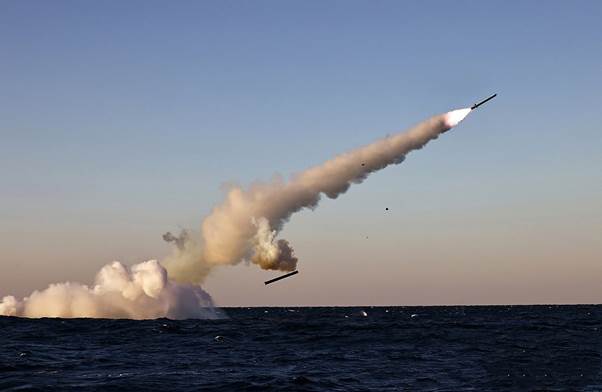
On 14 October, North Korea tested two types of strategic cruise missiles launched from a submarine in the waters east of the Korean Peninsula. Pyongyang presented the exercise as a test of the readiness of its underwater combat systems and the Navy’s ability to carry out strategic missions. Footage suggests the use of the submarine HERO KIM KUN OK, although the vessel has not been officially identified by KCNA.
What KCNA reported
The North Korean agency reported that the Missile Administration had launched two types of strategic cruise missiles and that the test had not affected the security of neighbouring states. The names of the weapons, their range, flight duration, accuracy or warhead configuration were not disclosed. The term ‘strategic’ in the phrase ‘ ’ indicates the role assigned by Pyongyang in nuclear deterrence, but does not prove that the missiles tested carried nuclear warheads.
Two different launch methods
The South Korean Joint Chiefs of Staff assessed that one missile was launched vertically and the other from a torpedo tube. KCNA footage shows one projectile emerging almost vertically from the water and another at a steep angle. The use of both launch methods from the same platform would allow for the combination of weapons of different sizes and profiles and would complicate early warning.
The submarine HERO KIM KUN OK
South Korean analysts believe the launches were carried out by the HERO KIM KUN OK, a diesel-electric submarine of approximately 3,000 tonnes, unveiled in September 2023 as a ‘tactical nuclear attack submarine’. The designation refers to its intended armament, not its propulsion: the vessel is derived from the older Romeo class and does not use a nuclear reactor. If this identification is correct, this would be its first public weapons test.
Which missiles might have been tested
KCNA did not specify the models. Based on the photographs, some analysts believe that one of the weapons could be the PULHWASAL-3-31, and the other a larger missile associated with the HWASAL-2 family or an improved version. Identification based on colour, air intake and body shape remains tentative; without official data or clearer images, the attribution cannot be considered definitive.
The submarine believed to have been involved in the missile launch, identified as the Hero Kim Kun Ok. 14 October 2026. Photo credit: KCNA
PULHWASAL-3-31
North Korea unveiled the PULHWASAL-3-31 in January 2024 and subsequently launched two of them from near the Sinpo base. These flew for just over two hours before striking island targets, according to the North Korean account. Public estimates place the range at between approximately 1,500 and 2,000 kilometres, though the performance has not been independently verified.
Known and estimated specifications
| Characteristic | PULHWASAL-3-31 | HERO KIM KUN OK |
| Type | Submarine-launched strategic cruise missile | Diesel-electric submarine modified for missile carriage |
| Status | Publicly tested since 2024; full operational capability unconfirmed | Unveiled in 2023; full operational readiness remains unconfirmed |
| Estimated range | Approximately 1,500–2,000 km; not independently confirmed | Not applicable |
| Propulsion | Jet engine; details have not been published | Diesel-electric, not nuclear |
| Payload | Described as ‘strategic’; possible nuclear or conventional role, unconfirmed for test | Designed to carry missiles with a potential strategic role |
| Launch method | Probably a torpedo tube; identification of the missile in the 2026 test is an estimate | Vertical launchers and torpedo tubes, according to the South Korean assessment |
| Estimated displacement | Not applicable | Approximately 3,000 t |
| Origin of the project | North Korean development from the HWASAL/PULHWASAL family | Conversion of a submarine derived from the Romeo class |
| Known limitations | Range, accuracy, reliability and warhead have not been independently verified | Noise level, range and stealth patrol capability have not been publicly demonstrated |
Why cruise missiles are difficult to intercept
Unlike ballistic missiles, cruise missiles fly at low altitudes and can follow evasive trajectories. A launch from the open sea can open up attack routes different from those on land and may force South Korea, Japan and US forces to monitor a wider maritime area. Vertical launch facilitates faster salvos, and the torpedo tube offers flexibility to existing platforms.
What South Korea observed
The Joint Chiefs of Staff in Seoul stated that they had monitored the activity before the launch, throughout the flight and until its conclusion, rejecting the suggestion that the test had gone unnoticed. The South Korean military does not publicise every detected cruise missile launch and has not provided details of the sensors used, citing the confidentiality of its cooperation with the United States.
From development test to readiness check
Pyongyang described the activity as an inspection of mobilisation readiness, rather than the first test of a new weapon. This wording is intended to convey that the system is nearing operational use. However, there has been no public demonstration of extended patrols, repeated launches under realistic conditions, secure communications with the submarine, or the ability to keep the vessel undetected.
The launch of cruise missiles from a North Korean submarine during tests on 14 October 2026. Photo credit: KCNA
Limitations of the platform
The HERO KIM KUN OK is a major conversion of an older design, with an enlarged superstructure to accommodate the launch tubes. These modifications may affect the vessel’s speed, stability, noise levels and range. Satellite analyses published in 2025 indicated that the vessel had not yet become fully operational and had not undertaken any significant patrols. A successful test confirms the integration of certain subsystems, but does not automatically demonstrate a reliable second-strike capability.
Strategic significance
A submarine force capable of launching nuclear missiles would provide North Korea with an additional axis of attack and complicate missile defence planning. However, the value of deterrence depends on the submarine’s survivability, the reliability of the weapons, communications, crews, logistical support and the ability to patrol covertly. For the time being, the test indicates progress towards this architecture, not its completion.
Regional context
The test comes at a time of heightened North Korean activity, following launches of ballistic and hypersonic missiles and South Korea’s testing of its own hypersonic vehicle. Submarine launches increase the surveillance burden on South Korea, Japan and the United States and may accelerate investment in anti-submarine sensors, maritime patrols and low-altitude air defence.
What to watch for
Key indicators include confirmation of the launch platform, identification of the two missiles, publication of the flight duration and range, further sorties by the submarine into the open sea, launches carried out entirely whilst submerged, and any ballistic missile tests. Repeated missions and extended patrols would demonstrate greater operational progress than a single, carefully prepared exercise.
Conclusion
The test on 14 October represents an important step in the integration of cruise missiles into the North Korean submarine force. The apparent use of a vertical launcher and a torpedo tube demonstrates an ambition to operate different types of weapons from the same vessel. However, the lack of performance data and doubts regarding the submarine’s readiness call for caution: Pyongyang has demonstrated a launch, but not yet a mature and permanently operational nuclear submarine force.
Sources consulted
- KCNA and the North Korean press – the press release and images of the test.
- South Korean Joint Chiefs of Staff, Yonhap and Reuters – tracking of the launches and assessment of the two launch systems.
- CSIS Beyond Parallel – the construction and operational status of the HERO KIM KUN OK submarine.
- Militarnyi, Army Recognition and regional analyses – possible identification of the missiles and technical implications.
Maritime Security Forum
The US Navy is testing the autonomous landing of drones on moving ships without GPS – Maritime Security Forum
The Naval Air Warfare Centre Aircraft Division has demonstrated that a tactical drone can carry out missions and return autonomously to a moving ship without GPS and without direct piloting. The system uses commercial cameras, motion sensors and algorithms that recognise the ship, estimate its relative position and anticipate deck movement. The result promises more resilient operations in areas affected by jamming, but the technology is still awaiting operational testing on fleet platforms.
What NAWCAD demonstrated
According to the US Navy’s official press release, the flight demonstrations confirmed that a tactical drone can navigate, carry out tasks and perform recovery operations on a naval platform that is moving in pitch, roll and vertical directions, even when satellite navigation is unavailable. The Navy did not disclose the drone model, the ship’s speed, the number of landings or the maximum sea state under which the system was tested.
Why landing on a ship is difficult
A ship’s deck is not a fixed airfield. Its position changes constantly with the waves and the ship’s manoeuvres, and the aircraft must adjust its trajectory, descent rate and moment of contact. For small drones operating from destroyers, frigates or auxiliary vessels, the limited space and turbulence around the superstructure further reduce the margin for error.
How the system works
The drone’s camera identifies the ship’s shape and visual landmarks on the deck. This data is combined with inertial measurements to calculate relative position and motion. Guidance algorithms estimate in real time when the deck will rise or fall and adjust the final approach so that contact occurs at an opportune moment. The emphasis is on relative navigation in relation to the ship, not on precise knowledge of absolute coordinates.
Operations in GPS-denied environments
In a high-intensity naval conflict, satellite navigation signals and communications links may be jammed, spoofed or interrupted. The ability to return to the ship using its own means eliminates a critical dependency during the recovery phase. It does not make the drone immune to electronic warfare, cyber-attacks or air defence, but it allows missions to continue when external control becomes unreliable.
Organic reconnaissance and surveillance
Arleigh Burke-class destroyers and other surface combatants have decks and hangars, but must share the space with helicopters. Autonomously recoverable tactical drones could provide local reconnaissance, identify maritime contacts, monitor coastal areas and verify routes without a remote pilot having to direct every landing.
Force protection and rapid response
A ship could send a drone to inspect an unknown contact, monitor the approach of a formation or survey a crossing point before the unit approaches. Automatic recovery makes short, repeated sorties more practical and reduces the need to use a manned helicopter for every surveillance requirement.
Distributed naval logistics
The same technology can support drones carrying urgent spare parts, medical supplies, batteries or electronic components between ships at sea. In the US concept of distributed maritime operations, vessels are dispersed over large areas and require their own sensors and logistical support. Autonomous drones can reduce reliance on aircraft carriers, remote bases and helicopters for small cargoes.
On-board software, not heavy shipboard infrastructure
Conventional solutions for drone recovery may require tracking radars, specialised deck equipment and costly modifications to the ship. NAWCAD transfers much of the functionality to the aircraft itself, using mission sensors and software. In principle, this approach allows integration across multiple ships by updating the drone, without the need to install a dedicated architecture for each platform.
Scalability, but not automatic universality
The Navy states that the software can operate with a wide range of unmanned system computers, from tactical multicopters to large aircraft. However, mass, wing or rotor configuration, downwash, approach speed and deck handling differ substantially. Success with a small drone does not automatically certify a resupply or combat platform; each aircraft–ship combination will require integration and certification.
From model to flight demonstration
Development included tests in a controlled environment, using a scale model of a Yard Patrol vessel, to verify visual recognition and relative positioning. NAWCAD states that this was followed by flight demonstrations and recoveries onto a moving ship. The photographs of the scale model illustrate the laboratory phase and should not be confused with evidence of a landing on a full-scale naval vessel.
Decisive tests are yet to come
The next stage is operational evaluation on the fleet’s platforms. The system must demonstrate repeatable landings from different directions, in rough seas, darkness, fog, rain, salt spray and variable light conditions. Safe procedures are also required for aborting a landing, avoiding obstacles, loss of communications and simultaneous operation with manned aircraft.
Transition to fleet programmes
NAWCAD is collaborating with the Navy’s Office of Tactical Unmanned Aerial Systems, the Collaborative Combat Aircraft programme and DARPA’s EVADE project. The team intends to extend the technology to tactical resupply drones and larger platforms. The research is funded by the Naval Innovative Science and Engineering Programme and the Office of Naval Research. No production contract, deployment timetable or number of aircraft has been announced.
What this would mean for small ships
If the technology is validated, frigates, destroyers, amphibious ships and auxiliary vessels could operate multiple types of drones without the need for large-scale recovery facilities. Commanders would gain organic aerial surveillance and light transport capabilities, whilst personnel could focus on mission planning and intelligence analysis rather than manually piloting each approach.
Limitations and risks
Visual navigation can be affected by fog, rain, darkness, smoke, sea spray, reflections and the ship’s camouflage. Algorithms must be protected against errors and cyber-attacks, and the aircraft must have fail-safe logic. Autonomous recovery does not eliminate the need for control of the ship’s airspace, the deck crew, maintenance and safety regulations.
What to look for
Key criteria will include tolerable sea and weather conditions, landing success rates, compatible drone types, integration with the ship’s systems, the time required for certification, and the cost compared to traditional radars and equipment. Only fleet trials will reveal whether the solution can progress from a technology demonstration to routine use.
Conclusion
The NAWCAD demonstration addresses a key challenge in unmanned naval aviation: returning to a moving deck when GPS and direct control are unavailable. The strategic value lies not only in automatic landing, but in the ability to deploy reconnaissance and logistics drones across a larger number of ships. However, the system is not yet a certified fleet capability. Success will depend on repeatable performance in real maritime conditions and secure integration with existing naval operations.
Sources consulted
- US Navy and NAWCAD – official press release on the GPS-free demonstrations.
- DVIDS and Seapower Magazine – description of the tests, funding and transition to programmes.
- Ocean News and Homeland Security Today – the visual navigation mechanism and potential applications.
- Defence Agenda and Army Recognition – analysis of maturity, limitations and operational requirements.
Maritime Security Forum
Italy and Greece are negotiating the transfer of two minehunters: a rapid solution ahead of the new generation CNG – Maritime Security Forum
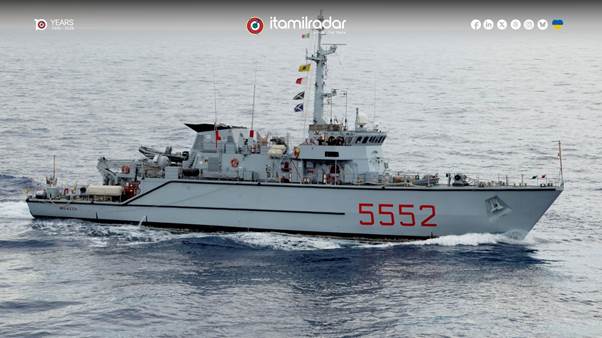
Italy and Greece are considering the transfer of two Italian minehunters currently in service, in an initiative that could rapidly bolster Greece’s countermeasures capability and facilitate Rome’s transition to the Cacciamine di Nuova Generazione vessels. The talks were confirmed by the Greek Defence Minister, Nikos Dendias, following his meeting on 5 October with his Italian counterpart, Guido Crosetto, though the vessels, costs and timetable have not yet been officially finalised.
A political discussion, not yet a contract
The negotiations took place in Venice, on the sidelines of the meeting of defence ministers from the Adriatic-Ionian Initiative. Athens requested that the transfer of two second-hand vessels be examined. By mid-October 2026, no agreement had been announced, and Italy had not identified any available vessels. Any transaction will depend on technical assessment, modernisation, crew training and logistical support.
Italy: an experienced but ageing fleet
The Italian Navy operates minehunters of the LERICI and GAETA classes. The hulls, made of glass-fibre-reinforced composite material, reduce the magnetic signature and are more resistant to underwater impacts. Variable-depth sonars, remotely operated vehicles and precision positioning systems enable the detection, classification and neutralisation of mines. The vessels can also be used to inspect wrecks, pipelines and submarine cables.
The MILAZZO and the VIESTE, both from the first LERICI series and commissioned in 1985, are considered plausible candidates as they are nearing the end of their operational life. However, neither Rome nor Athens has confirmed the identity of the two vessels. GAETA-class vessels would offer a longer service life and more modern sensors, but would probably be more difficult to hand over before their replacements arrive.
Greece: just two ships for a vast maritime zone
The Hellenic Navy relies on the EVROPI, formerly the HUNT-class HMS BICESTER, and the EVNIKI, formerly the OSPREY-class USS PELICAN. Both have been in service for more than three decades. In a theatre featuring numerous islands, ports, straits, energy terminals and submarine cables, two ships offer limited availability for simultaneous missions, maintenance and training.
Two Italian vessels could double the size of the specialised fleet and provide a quicker interim solution than a new construction programme. However, the value of the transfer depends on the condition of the composite hulls, engines, generators, positioning thrusters, sonars and neutralisation vehicles, as well as the availability of spare parts.
The Italian CNG/C programme
In 2024, Italy contracted for five new-generation coastal minehunters, with an option for a further three. The programme, carried out by Intermarine and Leonardo, has an initial value of approximately 1.6 billion euros and includes logistical support. The new vessels will be approximately 63 metres long and have a displacement of 1,300 tonnes, almost double that of the current classes.
The composite hulls will combine a low magneto-acoustic signature with resistance to underwater explosions. The planned equipment includes a cyber-resilient SADOC 4 command system, modern broadband sonar, radar and electro-optical sensors, multi-band communications, and the coordinated operation of ROVs, AUVs, USVs, UAVs and consumable mine-neutralisation systems. The modular deck can accommodate ISO containers for a hyperbaric chamber, logistics or unmanned systems.
The first vessel is scheduled for delivery at the end of the decade, whilst construction of the second composite hull began in 2026. This timetable means that Italy must retain sufficient legacy capacity until the new ships become operational. The transfer to Greece will only be possible if Italian operational readiness is not compromised during the transition period.
From conventional hunting to autonomous systems
The LERICI and GAETA classes operate in the vicinity of minefields, utilising low signature, sonar and ROVs. The CNG/C retains the protection offered by a specialised vessel, but extends its range through autonomous vehicles deployed ahead of the ship. This combination reduces crew exposure and enables seabed surveillance and the protection of critical infrastructure.
Specifications and comparative features
| Feature | LERICI | GAETA | EVROPI | EVNIKI | CNG/C |
| Role | Coastal minesweeper | Coastal minesweeper, second series | HUNT-class minesweeper | OSPREY-class minesweeper | New-generation coastal minesweeper |
| Displacement | Approx. 620–635 t at full load | Approx. 697–733 t at full load | 665 t fully loaded | 970 t | Approx. 1,300 t |
| Length | Approx. 50 m | 52.5 m | 60.3 m | 57.25 m | Approx. 63 m |
| Maximum speed | Approx. 14 knots | 14–15 knots | 15 knots | Official figures indicate 5.5 knots; other sources indicate approx. 10 knots | Approx. 14 knots |
| Crew | Approx. 47 | Approx. 50–51 | 50 | 49 | 40 + up to 10 specialists |
| Hull | Composite material, low magnetic signature | Composite material, impact-resistant | Glass-fibre-reinforced plastic | Composite material | Advanced composite material, low magneto-acoustic signature |
| Sonar | FIAR SQQ-14, depending on modernisation | SQQ-14T; some units modernised with Thales 2093 | Minehunting sonar; the current configuration of the ‘ ’ may vary | AN/SQQ-32 with variable depth | New broadband sonar for detection and classification |
| Underwater vehicles | MIN-77/PLUTO, depending on configuration | PLUTO, PLUTO GIGAS and consumable systems, depending on the upgrade | 3 PLUTO PLUS and 2 commercial ROVs | AN/SLQ-48 and 2 commercial ROVs | ROVs, AUVs, USVs and One-Shot Mine Killer systems |
| Self-defence armament | 20 mm cannon or machine guns, depending on the upgrade | 20 mm cannon or 12.7 mm machine gun, depending on the unit | 30 mm DS30B cannon, MG-3 machine guns and STINGER missiles | 2 × 12.7 mm machine guns, MG-3s and STINGER missiles | The final configuration has not been fully published |
| Additional equipment | Hyperbaric chamber, EOD divers, precision positioning | Hyperbaric chamber, divers, dual-purpose for the seabed | Mine neutralisation and identification capabilities | Mine neutralisation and identification capabilities | SADOC 4, radar and electro-optical sensors, multi-band communications, UAVs, modular deck and ISO containers |
| Status | Older vessels; potential candidates for transfer | In service, with successive upgrades | In service with Greece since 2000 | In service with Greece since 2007 | 5 contracted + option for 3; to enter service towards the end of the decade |
The real cost will be the modernisation
Even if the vessels were transferred free of charge or at a nominal price, the programme would require hull inspection, overhaul of engines and generators, checking of positioning thrusters, modernisation of navigation and NATO communications systems, sonar maintenance, and the replacement or reconditioning of underwater vehicles. Added to this are crew training, documentation, spare parts stocks and long-term support.
Compatibility and logistics
The advantage of an Italian vessel lies in shared NATO experience and the geographical proximity of suppliers. The disadvantage is the introduction of a third family of minehunters into a Greek fleet that already operates the HUNT and OSPREY. Without a multi-annual logistics package, the two vessels could drive up costs and complexity faster than operational readiness.
A broader model of Italian-Greek cooperation
The discussion follows the agreement on the transfer of the Italian FREMM frigates CARLO BERGAMINI and VIRGINIO FASAN. These two cases demonstrate the willingness of Rome and Athens to redeploy existing vessels to rapidly fill capability gaps. However, minehunters are specialised platforms, and the success of the transfer will depend more on sensors, ROVs and technical support than on the mere handover of the vessels.
Implications for Mediterranean security
Mines can block ports, straits and trade lanes with relatively few resources. In the Aegean Sea and the Eastern Mediterranean, a more robust Greek force would help to protect naval bases, energy terminals, cables and trade routes. The vessels could also contribute to NATO mine countermeasures groups, easing the pressure on allies.
What to look for
The decisive factors are the identification of the vessels, the results of inspections, their remaining service life, the modernisation package, operating costs, the availability of spare parts and the CNG/C timetable. It must also be clarified whether Greece is seeking merely an interim solution or long-term standardisation using Italian technology.
Conclusion
The transfer of two minehunters could offer Greece a rapid increase in capability and Italy an orderly decommissioning of its older vessels. However, the benefit is not automatic. The vessels will only be useful if their technical condition, sonars, underwater vehicles and logistical support justify the investment. At the same time, the CNG/C programme points the way forward for the sector: low-signature vessels that coordinate a network of autonomous systems and protect both maritime routes and seabed infrastructure.
Sources consulted
- Statements by the Greek Minister of Defence and reports from Greece regarding the bilateral discussion.
- The Italian Navy and the Hellenic Navy – technical data on the GAETA, EVROPI and EVNIKI classes.
- Intermarine, Leonardo and Italian industrial sources – the CNG/C programme and the new-generation fleet’s capabilities.
- ItaMilRadar and naval analyses – likely candidates and the context of Italian-Greek cooperation.
Maritime Security Forum